
Write the form, the pack and the changeover first
On a project with more than one recipe, a filling machine for spices is chosen from a file that already names the product form, the pack style and the changeover conditions. Public manufacturer pages sort spices into powders, flakes, granules, blends and whole pieces, and they sort packages into pouches, sachets and jars. Those pages are product lists. The record for the recipes you will actually run is the file you fill here.
The record is a matrix of product form by pack style, plus one changeover row per recipe. On each row, write how the material flows, whether a blend separates, what happens at the seal area, and which contact parts are washed. Leave a cell empty when nobody has watched that recipe yet. Leave accuracy off the sheet. A percentage from another product, another pack and another trial would describe that trial.
A blank spreadsheet under the matrix uses the same fields. Keep the header. Add a recipe row only after someone has looked at that recipe. Cells you cannot complete stay blank.
Record how each spice form actually moves
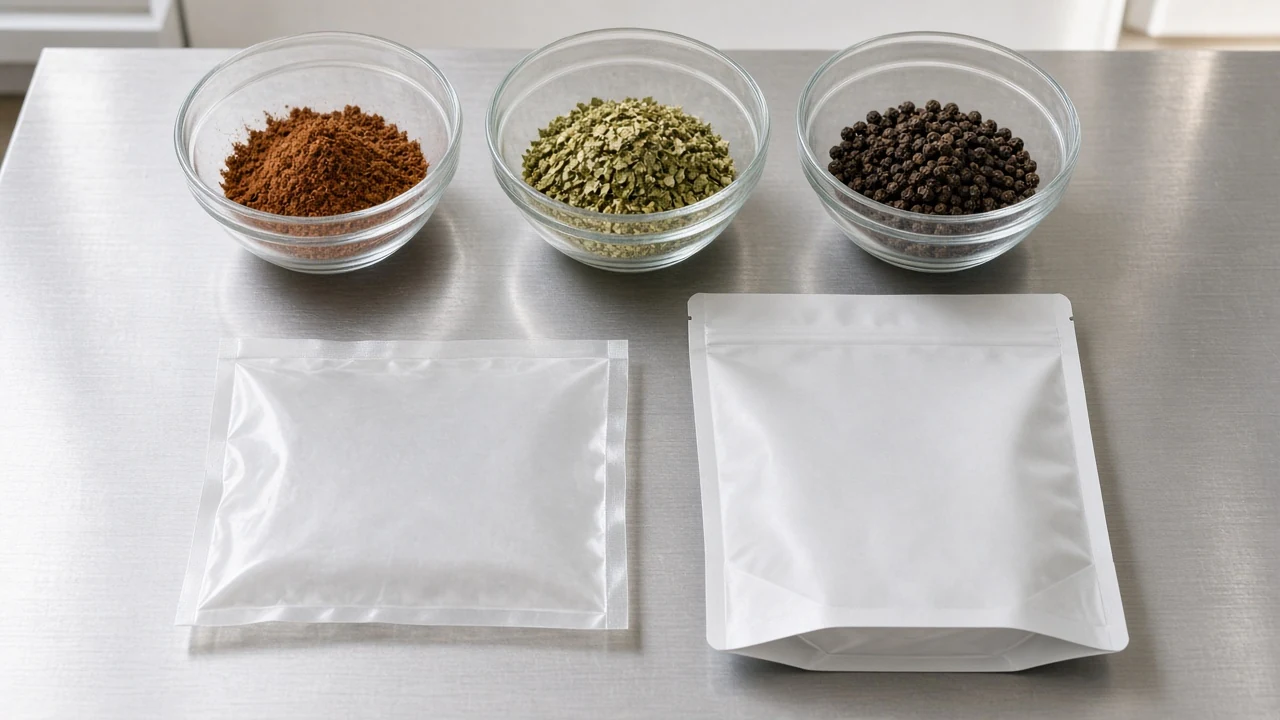
Start with the form the hopper will see. A September 2026 manufacturer description of spice packaging splits free-flowing pieces from powders that pack and cling. Whole peppercorns are the free-flowing example: they drop under gravity with little mechanical help. Cinnamon powder, ground cumin and fine paprika sit at the other end, where oil and a fine grind let the powder clump, bridge and stick to metal. Granulated garlic is placed between those. The same description says powder can cling to the hopper wall until only a narrow channel remains, and the dosing tool then stops receiving product. Write that behavior against the recipe name, and write how long the material had been sitting.
Flakes and granules get their own line. Public seasoning pages list flakes beside powders and whole spices. Granule-line pages name chili flakes, onion flakes, garlic granules, cumin seeds, and black and white pepper as products those lines accept. The pages identify the products. They do not tell you whether your flakes bridge in a narrow outlet or flood when the outlet opens. Watch a small amount leave the container and write the verb you saw: bridges, floods, breaks up, or drops cleanly. Add the largest piece you can see.
A mixed recipe needs a separation note as well as a flow note. Public descriptions treat a fine powder and a whole piece as different dosing jobs. One mixing-and-filling arrangement blends dry powders and then conveys them into the filler hopper. After that, fines and larger pieces can travel differently. Watch the blend as it leaves the supply container, and watch it again after it has sat in the hopper. Write together, separating, or not yet watched. If the recipe is a single grind with no larger pieces, write single form, so an empty cell is not read as a missed check.
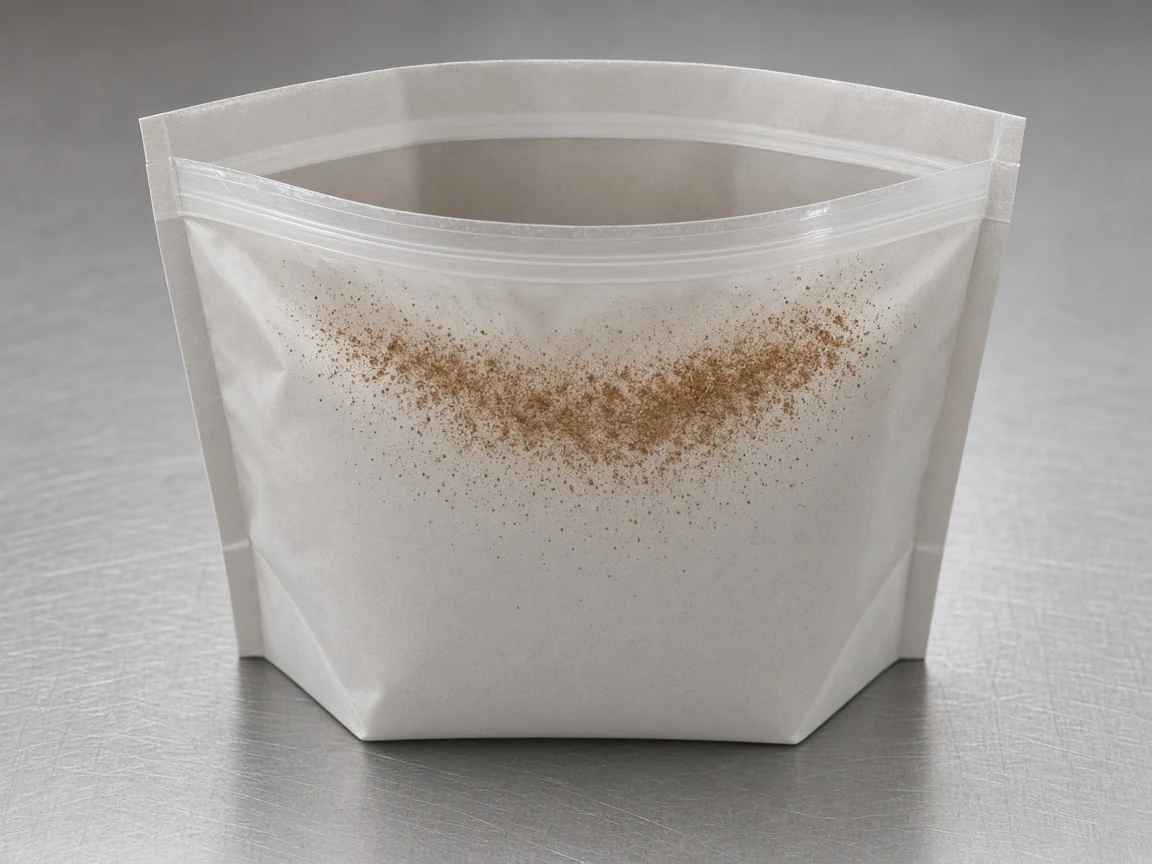
Oil and dust belong in the flow cell too. That spice-packaging description ties volatile oils and airborne dust to trouble at the seal later in the line. Note whether the powder coats a glove, hangs in the air, or leaves a film on the scoop. The note tells the seal section where to look. It is an observation from your sample, not a dust-class rating.
| Form on the row | Observed flow | Separation cell |
|---|---|---|
| Fine powder | Bridges, clings, leaves a narrow channel, or drops. Note oiliness, dust and how long it sat. | Single form, unless this powder is itself a blend of different grinds. |
| Flake or granule | Bridges, floods, breaks up, or drops cleanly. Note the largest piece. | Whether fines travel with the flakes, or not yet watched. |
| Whole spice | Drops freely or hangs up. Note irregular pieces such as cloves if they are in the recipe. | Whether whole pieces stay mixed with any powder in the same recipe. |
| Mixed recipe | One observation for the blend as filled, not an average of the ingredients. | Together, separating, or not yet watched. |
Name the pack style the machine has to close
Name the pack before you ask for a pouch packing machine for spices. The pack decides which surfaces touch the product and which parts move when the next recipe starts. Public spice pages describe a vertical roll-film route that forms pillow and gusset pouches. On that route, a width change is described as swapping the forming tube and collar. A premade-pouch route picks up a finished stand-up or zipper bag, opens it, fills it and seals it, and is described for plans that include more than one bag size. Stick and sachet routes dose into a small film packet. Jar and bottle listings cover spice powders and also pieces such as chili flakes, onion flakes, garlic granules and pepper.
The powder routes published on this site are film stick packs and dosing caps. If the real pack is a jar or a bottle, write that word in the pack column so the file stays accurate. The scope check will treat that pack as outside the routes published here. A pouch drawing still belongs in the file whenever the route is film, because dust and the seal land follow the way the pouch is made.
A powder filling machine for spices still has to name which pack it closes. The same chili powder in a pillow pouch, a zipper pouch and a stick is three pack cases, because the seal land and the change parts differ. Dosing method comes after this file. Auger, cup and weighing inputs are already laid out on the powder filling machines page. Open that page when one completed row is ready for a dosing trial. This guide stops at the row.
Fill the form-by-pack changeover matrix
Copy this grid into the selection file before you fill any recipe row. Each cell is a prompt. Where a route sits outside the packs this site publishes, the cell says so, and a jar project stays marked as a jar project.
Then add one row per recipe in the blank sheet, or copy the field list if you are writing on paper. The owner cell is a person's name. A row with no owner is a note. It is not a released changeover.
The download is that field list with an empty data row. Add recipes only after the observation exists. Keep any tolerance your quality team already uses in their specification, and point to it from the row if you need to. This sheet has no accuracy column.
| Form | Roll-film pouch | Premade pouch | Stick or sachet | Jar or bottle |
|---|---|---|---|---|
| Fine powder | Flow, dust on the seal land, hopper and dosing parts washed. | Same notes, on the spout and the bag seal lands. | Same notes, on the stick seal. | Outside the routes published here. Record it so a pouch file is not used by mistake. |
| Flake or granule | Piece size, bridging or flooding, pieces on the seal land. | Same notes, on the premade bag. | Same notes if the stick opening can take the piece. Otherwise write not this route. | Outside the routes published here. |
| Whole spice | Piece range, hang-ups, pieces on the seal land. | Same notes, on the premade bag. | Only if the stick opening can take the piece. Otherwise write not this route. | Outside the routes published here. |
| Mixed recipe | Flow of the blend, whether it separates, seal-area cleaning, parts washed. | The same four notes. | The same four notes. | Outside the routes published here. |
Log flow, separation, the seal area and the washed parts
Use these fields for every recipe. They match the spreadsheet header. Shared parts and dedicated parts are separate cells, because a hopper used by the next recipe is a different object from a screw that comes off and is washed.
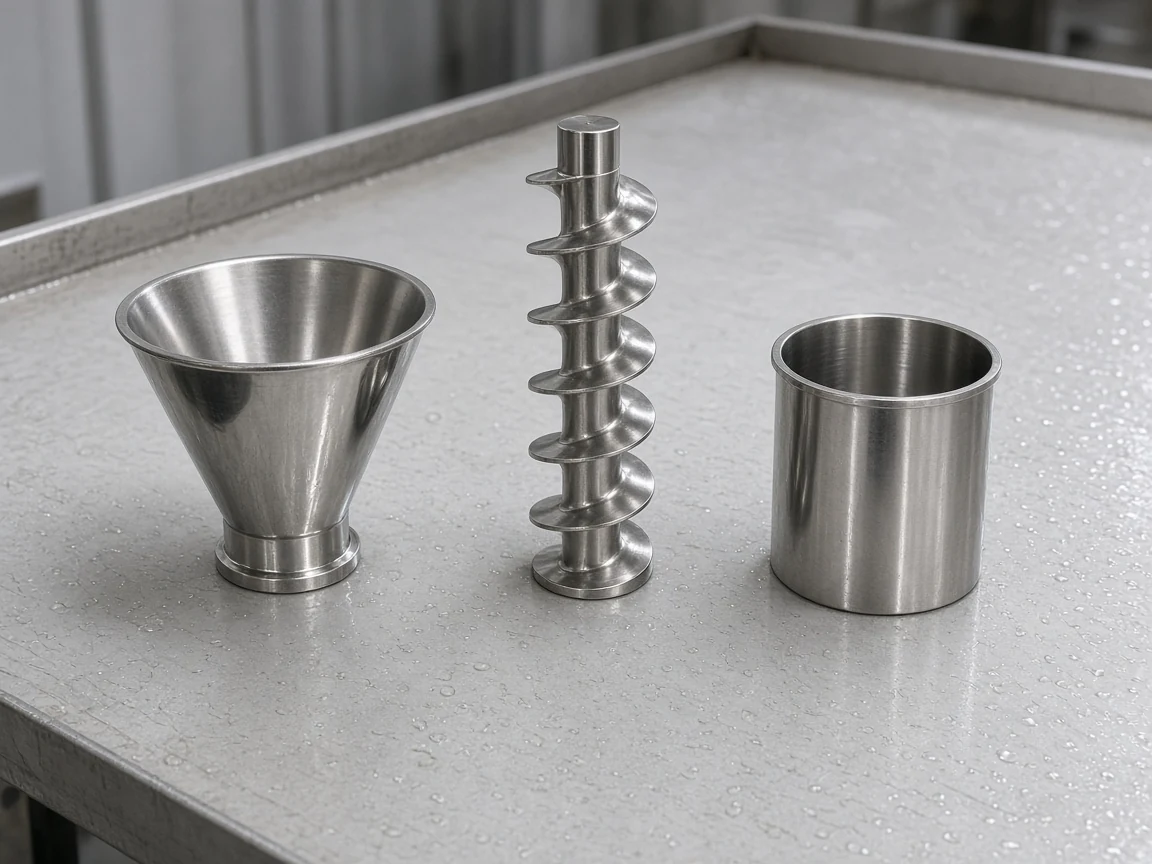
Manufacturer descriptions of spice changeovers name the hopper, the dosing screw and the forming tube as parts that should come apart, especially when the next recipe brings an allergen such as mustard or sesame. If the machine fills a premade pouch, ask whether a forming tube is even in the scope. When it is not, the washed list is the hopper, the dosing tool, and the spout or opener that touches the product. A shared hopper that is only scraped, and a dedicated screw that is removed and washed, are different changeovers. Write both.
The seal cells are separate from the wash list. Fine powder on the inner film before the jaws close is described as a cause of incomplete fusion: the polymer layers do not join, and the oils that carry aroma have a path out. Heat sealing is described as suitable when that land is clean. On each recipe, write what you saw on the land and the cleaning step you will actually run, whether that is a wipe, a vacuum at the fill point, or a stop while someone clears the film. The visual note records what you saw. Seal strength stays with the inspection method you agree with your quality team.
Whole pieces create a different seal note from dust. A clove, a peppercorn or a flake caught on the land is a piece in the seal, not a dust film. Write the piece. If you have not run that pack yet, write not yet run, and leave the cleaning step as the procedure still to confirm.
| Sheet column | What to write |
|---|---|
| recipe | The name production uses, and the batch if you have one. |
| product_form | Powder, flake, granule, whole, or the mix you actually have. |
| package_drawing | Drawing id, plus roll-film pouch, premade pouch, stick or sachet, or jar or bottle. |
| observed_flow | Bridges, clings, floods, or drops freely, and how long it sat in the hopper. |
| blend_separation | Together, separating, single form, or not yet watched. |
| contact_parts_shared | Parts the next recipe will use without a dedicated set. |
| contact_parts_dedicated | Parts swapped for this recipe. Say whether each one is washed or dry-cleaned. |
| cleaning_to_confirm | The procedure your quality team still has to agree, including allergen recipes such as mustard or sesame. |
| seal_area_observation | Dust or pieces on the seal land before closing, or not yet run. |
| changeover_check_owner | The person who signs the row before the next recipe starts. |
Send the product, the pack and the trial record
Send the actual product for each recipe, the pack style with its drawing, and the trial record with flow, separation, seal-area cleaning and washed contact parts. Use the production blend, or a labelled photo that shows the form of that blend. A picture of the retail jar leaves the hopper behavior and the seal land blank.
The Request a Quote page is where the file goes. We read it against the stick-pack and dosing-cap routes published on this site. A jar or bottle stays visible in the pack column so the reply can say that pack is outside those routes. If you want the sample handled before that conversation, the sample assessment page explains what to send and what a review does not establish.
Method and sources
Compiled in October 2026 from saved public manufacturer pages on spice packaging. Those pages describe flow differences between powders and whole pieces, dust on the seal land, roll-film and premade pouch routes, flake and granule product lists, and a mixing step ahead of the filler. They are supplier descriptions from saved copies. This site has not run those trials. Performance figures and supplier names from those pages are left out. The matrix, the field list and the instruction to leave a cell blank are editorial tools for your file.
Your product, your pack and the trial you record decide the equipment conversation. A completed row from one recipe does not transfer to the next recipe, even when both are sold under the spice name.
Common questions
What should be written before discussing a filling machine for spices?
A row for each recipe that names the form, powder, flake or whole, the pack style, and the changeover: flow, whether the blend separates, seal-area cleaning, and which contact parts are washed. This page does not put an accuracy figure on that row.
How should a powder filling machine for spices be recorded when some recipes are flakes?
Give the powder recipe its own row and the flake recipe its own row. Public pages treat fine powders and flakes as different applications. The powder row records clinging, bridging and dust. The flake row records piece size and whether fines separate from the flakes.
What belongs in a pouch packing machine for spices changeover file?
The pouch type, either a roll-film pillow or gusset or a premade stand-up or zipper bag, the seal-land observation, how that land is cleaned, and the contact parts washed between recipes. A width change on a roll-film machine is described publicly as a forming-tube and collar swap. Write that swap on the row when it applies to your drawing.
Can a spice jar or bottle be quoted from this page?
Jar and bottle routes appear in public spice listings. The powder routes published here are stick packs and dosing caps. Put jar or bottle in the pack column so the file stays accurate, and expect the scope check to treat that pack as outside those routes.
Why does this page give no fill-accuracy percentage?
The result depends on the recipe, the pack, the dosing setup and the way you measure. A single percentage would hide those conditions. Record the trial, and use a measurement method you and your supplier agree before anyone compares two setups.
What to send us
Swipe to compare all columns.
| Item | Why we need it | Example format |
|---|---|---|
| Actual product | The file starts from the recipe you will run, including its form and whether a blend separates. | Labelled sample or photo of each recipe, with powder, flake or whole noted |
| Pack style | The seal area and the change parts follow the package. | Drawing of the roll-film pouch, premade pouch, stick, sachet, jar or bottle |
| Trial record | Flow, separation, seal-area cleaning and washed contact parts are the changeover file. | Completed matrix row per recipe, with unseen cells left blank |
We reply within 24 hours.