
Explore the options
Automatic Liquid Filling Machines
Liquid filling machine options for premade pouches and film sachets, with the flow, foam control, dosing, sealing and cleaning questions to settle first.
Sauce & Paste Filling Machines
Plan a paste filling machine for ketchup, dressings and condiments around viscosity, suspended particles, hopper supply, clean cutoff and sachet sealing.
Powder Dosing & Filling Machines
Compare powder filling machine options for stick packs and dosing caps, covering blend feeding, auger dosing, dust control and seal checks for your product.
Granule Weighing & Bag Filling
Plan a granule filling machine for nuts, dried fruit and dry foods, covering feeding, weighing, film handling, sealing and finished-pack checks.
Integrated Filling & Packaging Lines
Define a filling and packaging line from product supply to finished-pack discharge, with module handoffs, controls, output balance and acceptance checks.
Dosing-Cap Filling & Sealing
How a dosing cap filling machine handles powder and honey cavities: component feeding, orientation, cavity tooling, rim protection and seal checks.
Choose the filling route from the finished package
A filling machine connects a product supply with a package that can be handled, closed and inspected. Begin with the finished item you intend to sell: a liquid pouch, a sauce sachet, a powder stick, a weighed food bag or a filled dosing cap. These formats lead to different handling sequences, even when the material inside belongs to the same broad industry. The equipment categories above provide a practical starting point for that decision.
Prepare a sample or drawing of the pack alongside the material description. Include the intended quantity, usable opening and closure method. Material plus package is the basic selection rule: together they identify the machine family worth reviewing before you compare dimensions or output. A photograph can introduce an idea, while a dimensioned drawing and representative materials make the subsequent configuration discussion more specific.
| Equipment route | Typical starting package | Main review input |
|---|---|---|
| Liquid | Supplied pouch or film-formed sachet | Flow, foam, supply and package opening |
| Paste | Sauce or condiment sachet | Particles, cutoff and seal-area condition |
| Powder | Stick pack or dosing cap | Blend feeding, dose and closure |
| Granule | Weighed dry-food bag | Piece condition, transfer and film |
| Integrated line | Agreed finished-item discharge | Module boundaries and interfaces |
Liquid and paste equipment starts with product flow
Liquid filling projects may use supplied pouches or sachets formed from a film roll. Describe how the product reaches the filling point, whether it foams during transfer and how it behaves when the flow stops. Products that pour easily at one temperature can behave differently under another production condition. Include the expected operating condition rather than relying on a retail product name alone.
For sauces and pastes, add observations about suspended pieces, separation and trailing product at the outlet. These details guide discussion of the hopper, transfer path, metering arrangement and nozzle. Visit the liquid or paste category to compare those questions. A suitable dosing arrangement still needs to work with the package opening and the sealing sequence; selecting the filler is one part of the overall process.
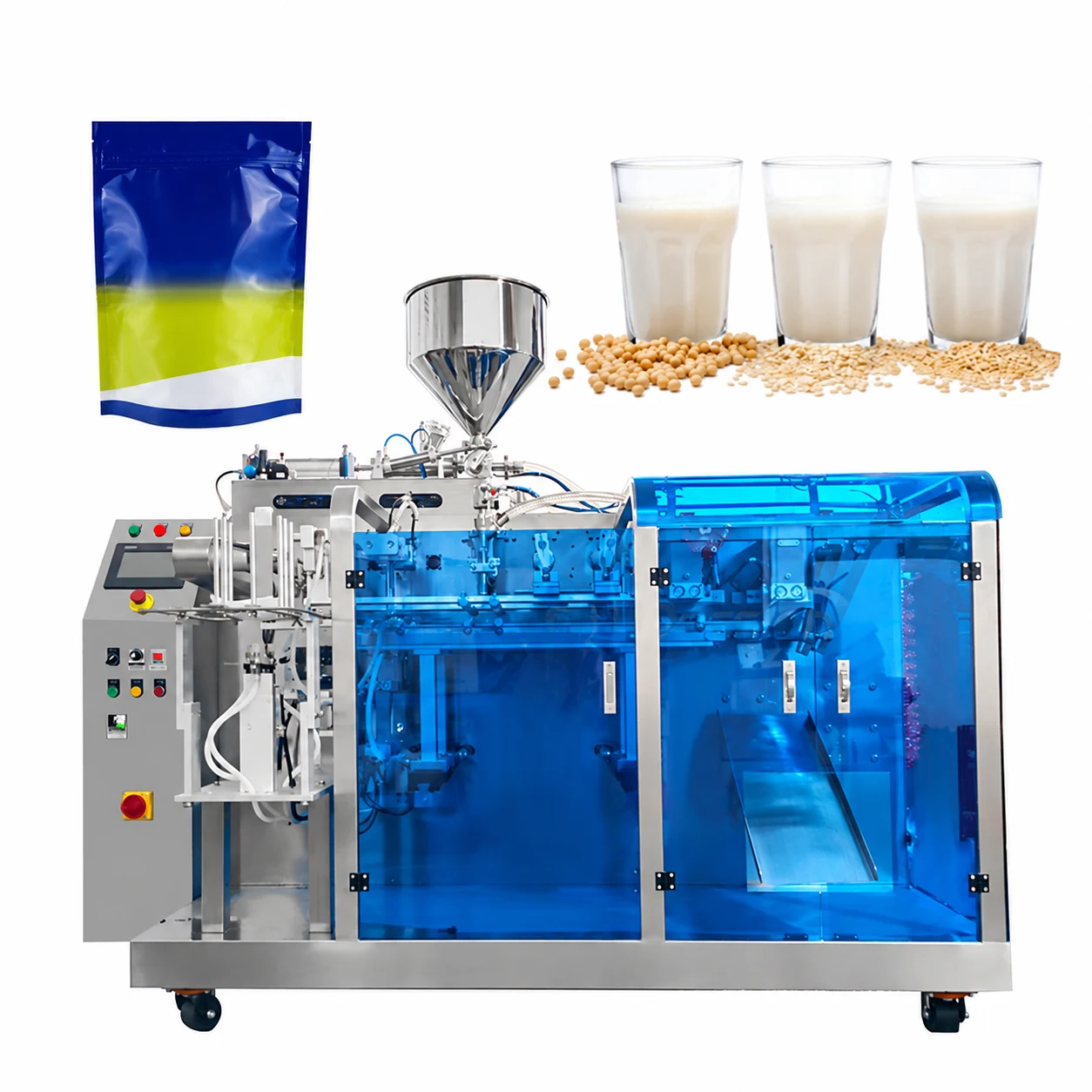
Powder and granule systems use different feeding questions
Powder projects often begin with how a blend flows into its dosing mechanism. Relevant examples include multi-lane stick packs and small powder-filled cap cavities. Describe settling, clumping, dust and any changes between batches. A sample of the complete blend is more useful than the name of its main ingredient because the feeding and packaging process encounters every component together.
Granule and dry-food projects place additional emphasis on piece size, weight distribution and product handling. A weighing and bagging arrangement must transfer the portion into the bag without creating an unacceptable amount of damage or trapped material. Use the granule category for nuts, dried fruit and comparable discrete products, and provide photographs showing both typical pieces and the largest pieces expected in production.
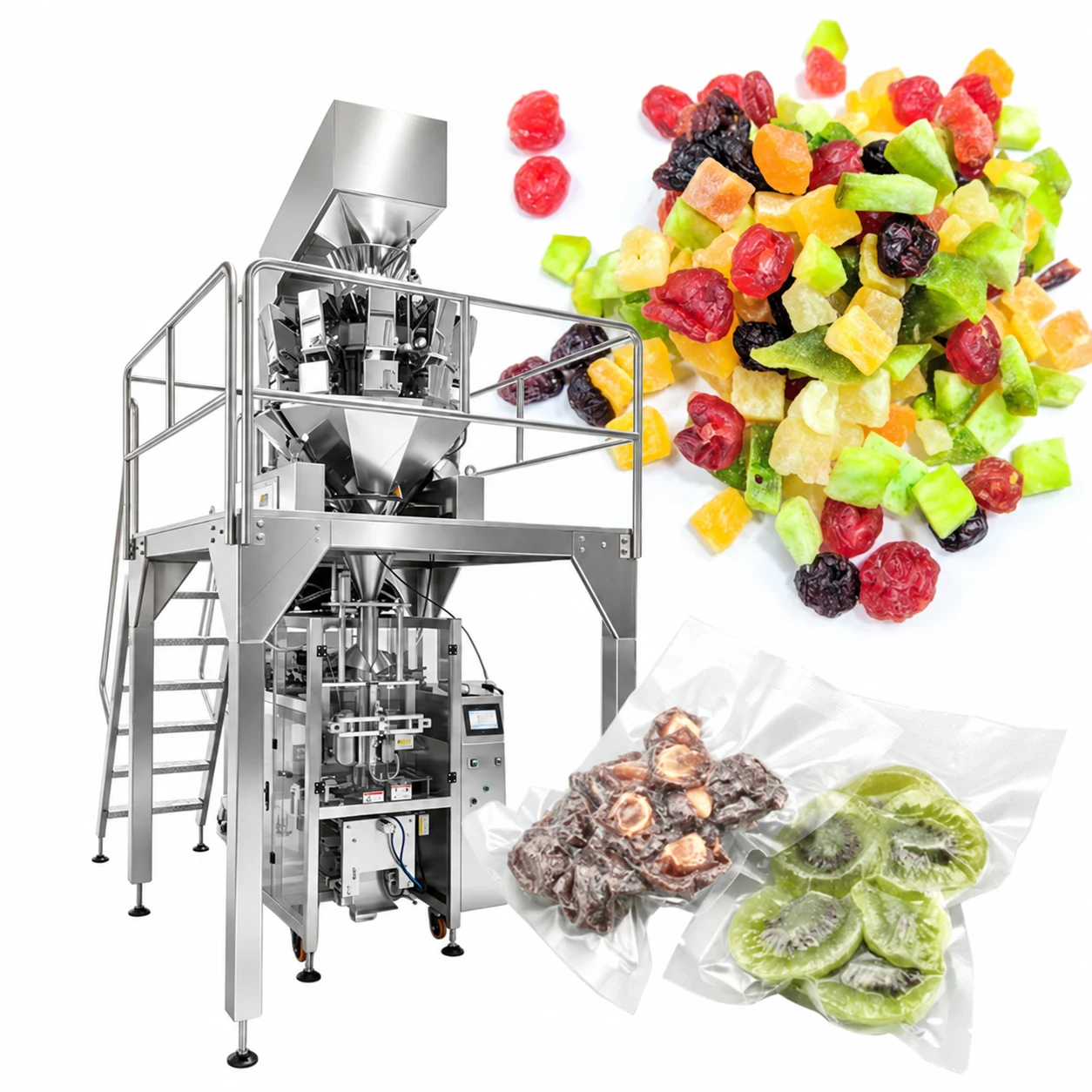
Decide whether the machine handles film or supplied packs
Film-based packaging equipment forms and closes the package during the machine cycle. A premade-pouch system instead starts with a supplied bag and must present, open, fill and seal it. Dosing-cap equipment handles a rigid component with a defined cavity and sealing rim. Film-formed, premade-pouch and dosing-cap routes therefore differ in tooling, material specifications, operator tasks and the sequence of checks used during a trial.
When comparing proposals, identify the incoming packaging material for each one. A roll specification cannot replace a premade-bag drawing, and a cap photograph does not define its sealing surface. Include artwork, print position and opening features where relevant. This keeps the discussion anchored to the actual pack and reduces the chance of comparing machines intended for different packaging routes.
Treat an integrated line as a list of connected tasks
A production line can include product feeding, filling, sealing, coding, inspection, collection and secondary packaging. Start by drawing where the proposed supply begins and ends. Identify equipment already installed at the factory and describe how it will communicate with the new machine. Transfer heights, available space and handling arrangements are useful early inputs, even before a final layout exists.
The filling-lines page explains how to organize this scope. Each module needs a defined purpose and an agreed interface with its neighbors. Discuss what happens when product supply pauses, packaging runs out or downstream equipment stops. A photograph of several machines together does not establish which modules, controls or inspection functions are included in a particular proposal.
Compare output using the same production conditions
An output discussion should name the product, portion, package and operating arrangement. For multi-lane equipment, distinguish the number of machine cycles from the number of finished packs: packs per minute equal cycles per minute multiplied by the number of active lanes, before any rejects. For a complete line, decide which point is used to count acceptable output. These details help make comparisons meaningful without treating an advertised family-level figure as a result for your application.
Include routine production events in the discussion: material replenishment, pack changes, cleaning and startup inspection. Ask how the proposed configuration will be assessed against your expected production schedule. A short demonstration can answer a specific technical question, while a longer agreed run may be needed to observe interruptions, operator work and the condition of finished packs over time.
Review changeovers and access before finalizing the layout
List the formats and recipes planned for the first production period. Group changes by what actually happens: a setting adjustment, a tooling replacement, a product-contact change or a different packaging supply. Ask which parts need removal and where they are cleaned, dried and stored. This turns a general request for flexibility into identifiable equipment and operating requirements.
Leave room around the machine for those tasks. Access for a film roll, pouch magazine, supply hopper or cap feeder can be as relevant as the machine's footprint. Include maintenance access and the route used to move components into the factory. The installation plan should accommodate the work people must perform throughout a normal shift, not only the position of the assembled frame.
Send a brief that supports a useful equipment proposal
Your first inquiry can be concise: identify the material, target quantity and unit, pack format, required output and destination. Attach drawings or photographs and explain any behavior that needs investigation. Mark details that remain provisional, such as artwork or an additional recipe. Our team can then suggest the equipment family to review and the samples needed for the next step.
Use the linked category and machine pages to refine that brief. They separate process descriptions from configuration questions so that you can compare options in context. The next useful outcome is an agreed scope covering product handling, packaging, utilities and checks. That scope provides a basis for a project-specific quotation and a clearer discussion with production, purchasing and packaging colleagues.
Common questions
What types of automatic filling machine are there?
Automatic filling machines are usually grouped by the material they dose and the package they fill. This site covers liquid, paste and sauce, powder and granule filling machines, plus integrated filling lines and dosing-cap filling systems. Within each family, the packaging route, such as a premade pouch, a film-formed sachet or stick pack, or a rigid cap, further defines the machine.
How do I choose between a liquid, paste, powder or granule filling machine?
Choose by how the product behaves at the filling point, not by its name. Free-flowing liquids, pumpable pastes with pieces, fine powders and discrete dry pieces need different feeding and dosing principles, such as piston dosing, auger dosing or combination weighing. If a product sits between categories, send a sample and describe its behavior so the right family can be reviewed.
Does an equipment photo show everything included in a filling machine quote?
No. Product images introduce an equipment family; they do not define a scope of supply. The written proposal should list the supplied modules, format tooling, controls, utilities and agreed verification checks. Compare quotations on that written list, and ask about any module you can see in a photograph but cannot find in the document.
Updated: