
Start with a written product and packaging brief
Choosing an automatic filling machine begins with a description of the finished pack you want to sell. A request for a machine that handles liquid, powder or granules leaves too many decisions unresolved. The same ingredient can be sold in a premade pouch, a narrow stick pack or a specialized dosing cap, and each format needs a different handling and sealing process. Start with one priority product and package, then identify which additional formats must be supported at launch.
Write a brief that includes the product name, normal filling temperature, target amount, package drawing, required output and destination. Add photographs of the existing pack and a short video showing how the material pours or flows. State whether packaging artwork, film construction and dimensions are final. If those details are still changing, ask the equipment team which decisions must be frozen before tooling is designed. This prevents an early machine selection from becoming an expensive constraint on the package.
Packaging World's liquid-filling Technology Minute identifies viscosity, fill accuracy, cleaning requirements and container type as linked selection factors. Use that combination when preparing the brief: a suitable dosing principle is only one part of a workable packaging process.
Describe the material as it reaches the dosing system
A product name alone does not define its filling behavior. For a sauce, record whether it contains seeds, fibers or pieces, whether it separates while standing, and whether it becomes thicker as it cools. For a beverage, explain any foaming observed during transfer. The useful question is how the material behaves at the proposed filling point, after the upstream mixing, heating or holding step, rather than how it behaves in a retail container.
For powders, provide information about flow, dust, bulk density and the tendency to compact during storage. For granules and dry foods, describe particle size, surface stickiness, fragility and the presence of mixed ingredients. The available equipment families include piston dosing for sauces, auger dosing for powders and combination weighing for dry products. Treat these as starting points for discussion. Ask for a review using representative material before selecting a dosing arrangement, particularly when the formulation changes between batches.
Choose the pack format before the machine layout
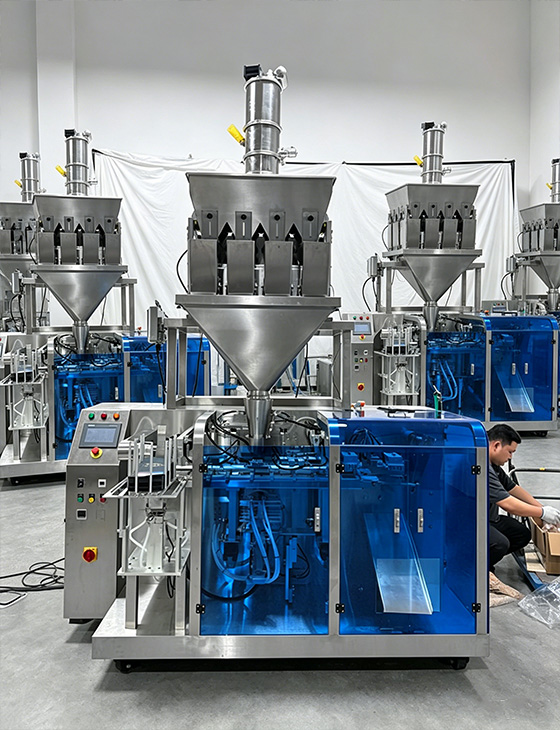
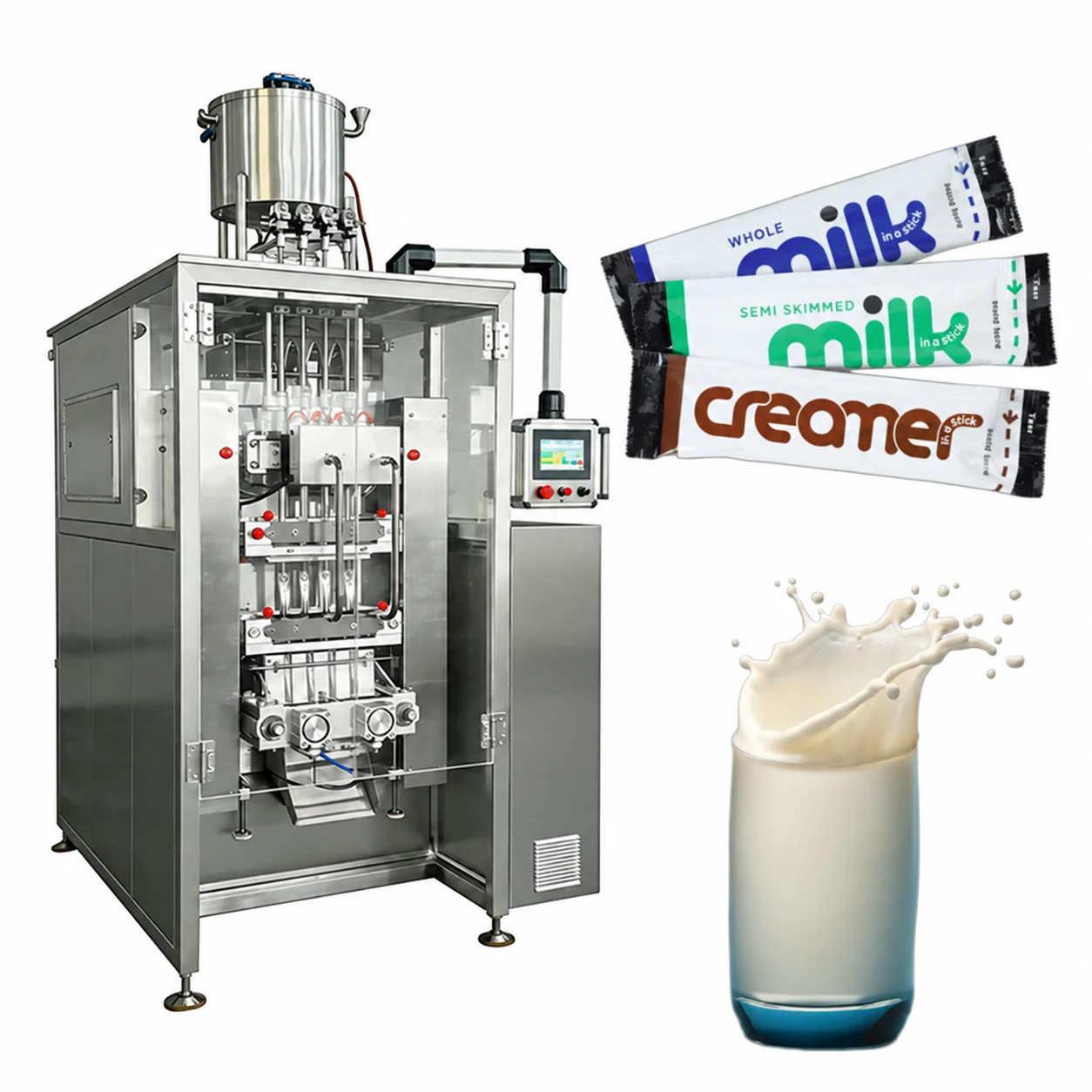
Premade pouches and film-formed packs enter the machine in different ways. A premade-pouch system receives a bag that already has its shape and must present, open, fill and seal it. A film-based system uses a reel and forms the package during production. Multi-lane stick-pack equipment creates several narrow packs across the web. A dosing-cap system fills a dedicated cavity in a closure. These four processes are distinct packaging routes and should appear as separate options in a selection brief.
Prepare a dimensioned drawing showing the filling opening, seal areas, overall dimensions and any zipper, spout, notch or special contour. For film, obtain the material construction and the converter's recommended sealing conditions. Include the smallest and largest packs you actually plan to produce. A wide adjustment range can sound attractive, but the practical questions are which parts must change, how long the change takes and whether each proposed format has been reviewed with its own product and packaging.
Specify the dose and the measurements that matter
State the target quantity with its unit and explain how the finished package will be checked. A volumetric dosing setting is not automatically the same as a net-weight result. If the commercial product is described in millilitres but acceptance is checked on a balance, agree how temperature, density and package tare will be handled. The equipment proposal should describe the measurement basis instead of relying on an unexplained accuracy percentage.
List separate requirements for the fill amount, package appearance, seal condition and coding. For a powder stick pack, a correct dose does not make a contaminated seal acceptable. For a sauce sachet, define the observations that matter around drips, product residue and pack presentation. For a cap cavity, review how the ingredient reaches the cavity and how the sealing rim is kept suitable for foil application. Ask the supplier to state which checks are included in a demonstration and which require separate validation.
Compare useful output instead of the largest speed figure
Specify output as acceptable finished packs per minute or per shift. A machine cycle, an individual lane's output and the total discharge from a line are different measurements. When comparing multi-lane equipment, ask how many lanes are active and whether the stated rate includes the agreed dose and pack length. For a full line, identify the slowest operation, including inspection and downstream handling.
Use a simple planning example to make the distinction clear. A hypothetical four-lane system running at 25 cycles per minute would create 100 packs per minute before rejects or interruptions. That arithmetic is not a rating for an offered machine. If a downstream station accepts only 80 packs per minute, the project needs a matching operating rate or an agreed accumulation arrangement. Also ask how replenishment, cleaning and format changes affect the production schedule; a short demonstration cannot establish a full shift's output.
Review feeding, cleaning and product changeovers
The filler must receive product consistently from the equipment before it. Describe the existing supply method, the available transfer height and whether material arrives continuously or in batches. Ask who supplies any hopper, pump, conveyor or powder feeder and how its controls communicate with the packaging machine. An otherwise suitable filling unit can still be difficult to operate if replenishment or access is left unresolved.
Prepare a changeover list covering product-contact components, forming parts, nozzles, settings and packaging materials. Ask the team to demonstrate access for cleaning and the sequence for removing and reinstalling parts. Separate mechanical format change from cleaning, drying, inspection and release for the next product. If ingredients require segregation, have your production and quality teams define the cleaning requirements. A quick-release component can help access, but it does not establish that your cleaning process is effective.
Define the complete equipment scope
Draw the process from incoming product and empty packaging to the point where your team receives the finished goods. Mark dosing, package handling, filling, sealing, coding, inspection and discharge as separate responsibilities. Then add any wrapping, cartoning or case handling that the project needs. A photograph of a connected production line does not tell you which of those modules are included in a quotation.
Ask for an itemized equipment list and an interface drawing. Confirm who supplies mechanical transfers, electrical connections, control signals and guarding at the boundaries between machines. Identify any equipment you will retain and provide its dimensions and operating rate. This exercise makes it easier to compare proposals: one may cover a complete process while another covers only the central packaging machine. Both can be valid offers, provided their delivery boundaries are clear.
Check the factory layout and operating access
Measure the installation area, entrance route, available height and the space needed around the machine. Include the operator position, film loading area, access to the control cabinet and removal paths for parts that need maintenance. Plan where product and packaging will be staged, where finished packs will collect, and how people can move through the area during normal operation. A machine footprint alone does not answer these questions.
Provide the proposed power supply and available compressed-air information, then ask for utilities for the selected configuration. If a vacuum, extraction or temperature-control module is proposed, include its services and maintenance access in the layout. Discuss downstream equipment at this stage rather than after the filler arrives. The useful deliverable is an agreed installation drawing with connection points and responsibilities, which can be checked by the people who will prepare the site.
Use samples to resolve the important uncertainties
Request a sample review with a written objective. For example, you may need to understand powder feeding consistency, sauce passage through a valve, product damage during a drop, or seal appearance with a particular film. Agree which product and packaging will be supplied, what will be observed, and which measurements will be recorded. Confirm the sample quantity and receiving instructions before shipping anything.
When reviewing the result, check that the product, package, dose and equipment configuration match the brief. Keep the raw observations alongside the summary. If the demonstration uses substitute material or a different pack, record the difference and identify what still needs verification. A useful review ends with a decision: accept the proposed approach, revise a module, adjust the package or run an additional check. It should not leave a broad suitability claim without supporting conditions.
Turn the selection into a reviewable proposal
Before approving a purchase, bring the decisions into one configuration document. Include the intended products and formats, agreed operating conditions, equipment list, tooling, utilities, inspection plan, training scope and delivery responsibilities. Ask for drawings and documents for the actual configuration. If a later change affects the product, pack or output requirement, review its effect on the machine before accepting it as a minor adjustment.
You can begin this process with a concise inquiry rather than a completed engineering specification. Send your product description, target dose, packaging drawings or photographs, desired output and destination through the project contact link. Our team can use those details to narrow the discussion to the relevant pouch, sachet, powder, weighing or specialized filling family. The purpose of the first conversation is to establish a shared brief that can support a useful technical proposal.
Common questions
What is the first step in choosing a filling machine?
Write a product and packaging brief before comparing machines. Include the product and its filling condition, the target amount and unit, a dimensioned pack drawing, the required acceptable output and the destination. The brief points to the dosing principle and packaging route; comparing machines before it exists usually means comparing equipment designed for different jobs.
Can one filling machine handle liquids, powders and granules?
Usually not in a single configuration. Liquids, powders and discrete granules need different dosing principles, such as piston dosing, auger dosing or combination weighing, along with different feeding and product-contact parts. Ask which modules are proposed for each material and verify the package and cleaning process, rather than relying on a broad equipment-family description.
What is the difference between piston, auger and weighing fillers?
They dose different materials. A piston filler draws in and pushes out a set volume, which suits pumpable liquids, sauces and pastes. An auger filler turns a screw to meter powders. A combination (multihead) weigher selects pieces to reach a target weight, which suits nuts, dried fruit and other discrete dry products.
Updated: