
Define where the proposed line begins and ends
An integrated filling and packaging line connects several operations into a defined production sequence. Depending on the project, that sequence may include supply, dosing, package handling, sealing, coding, inspection and secondary wrapping. Begin by identifying the incoming product and packaging components, then describe the finished item at the agreed discharge point. This creates a boundary that can be discussed and priced.
List equipment that already exists and the tasks expected from the new supply. A liquid pouch line, a dry-food weighing installation and a dosing-cap line can have very different interfaces. Treat each as a specific process rather than assuming that the word integrated defines the same collection of modules. The written scope should name the actual operations and responsibility for each connection.
Map the product and packaging streams
Draw the route of the product separately from the route of its packaging. Product might arrive through a hose, transfer hopper or weighing system; packaging might enter as film, supplied bags or loose cap components. Identify where those streams meet. The drawing does not need final dimensions to reveal missing tasks or dependencies that should be discussed early.
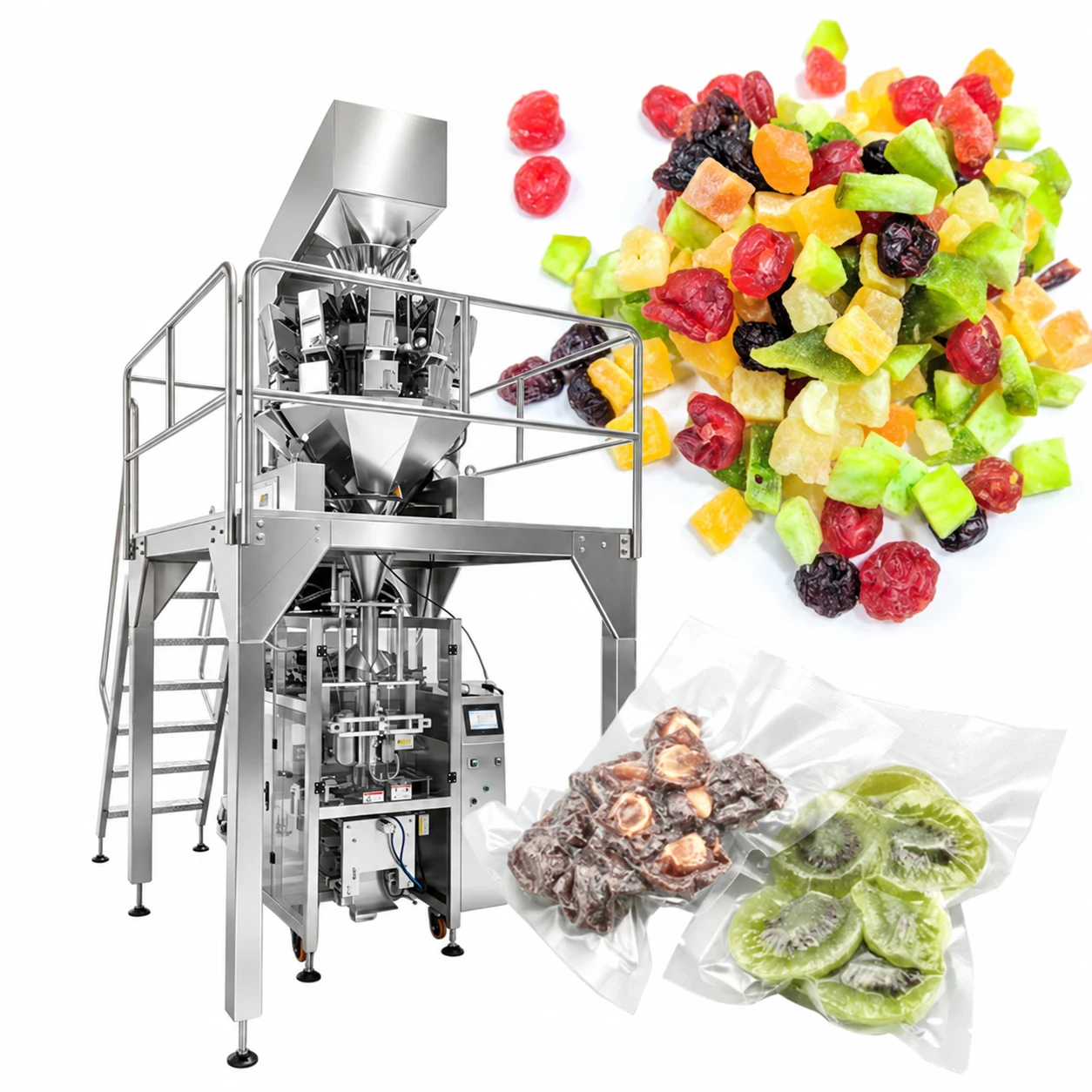
For dry foods, include feeding and transfer into the bagger. For liquids, include the supply arrangement and connection to the dosing unit. For caps, include component presentation and any additional closure parts. Ask who supplies and controls each interface. A complete sequence helps ensure that the central filling machine is reviewed under conditions representative of the surrounding equipment rather than as an isolated demonstration.
Understand the handoffs between neighboring modules
At each transfer, define what moves, how it is supported and what orientation the next operation requires. Useful details include height, available space and the condition of the product or pack. A filled pouch might need a different discharge arrangement from a rigid cap or a row of stick packs. These differences should appear in the layout and equipment discussion.
Consider pauses as well as continuous operation, because a stop at one module either stops its neighbors or requires accumulation between them. Ask what happens when one module stops, when an operator replenishes packaging or when downstream collection is unavailable. Discuss any accumulation or controlled stopping arrangement proposed for the line. Avoid assuming that two modules with similar advertised speeds will work together under every operating condition without reviewing their transfer and control requirements.
Coordinate controls and operator responsibilities
A line proposal should explain the relationship between the individual machines and any shared controls. Ask where operators start the sequence, adjust formats and view faults. Identify which information is exchanged at the interfaces and what the operator needs to do after a stop. These details are particularly useful when new equipment connects to an existing installation.
Define the scope of documentation and training around actual tasks. Include material loading, approved adjustments, routine inspection and the agreed recovery procedure. Make responsibility for interface commissioning explicit when several suppliers are involved. The aim is a production arrangement that the site team can understand and operate, with the required technical review completed for the equipment and its intended environment.
Balance output at the agreed collection point
Line performance should be described at a defined point using acceptable finished items, and sustained line output cannot exceed the rate of its slowest operation. A filler’s cycle count, a wrapper’s operating rate and a final collection count may represent different stages. State the product, portion, packaging format and measurement period. This makes it possible to compare offers on the same basis and to interpret a demonstration result accurately.
Discuss the production schedule as well as the target rate. Include expected replenishment, format changes, cleaning and inspection tasks. Ask which operation is expected to limit the proposed arrangement under the agreed conditions. If future expansion is planned, identify the additional product or format and the interface requirements that would change, rather than treating a general upgrade claim as a defined engineering scope.
Include inspection and secondary packaging deliberately
Coding, quantity checks, visual inspection and individual wrapping can be included in a line discussion, but each needs its own purpose and specification. Decide what information or defect each operation is intended to address. Explain the handling requirements for accepted and rejected items, and identify which records the production team needs to keep.
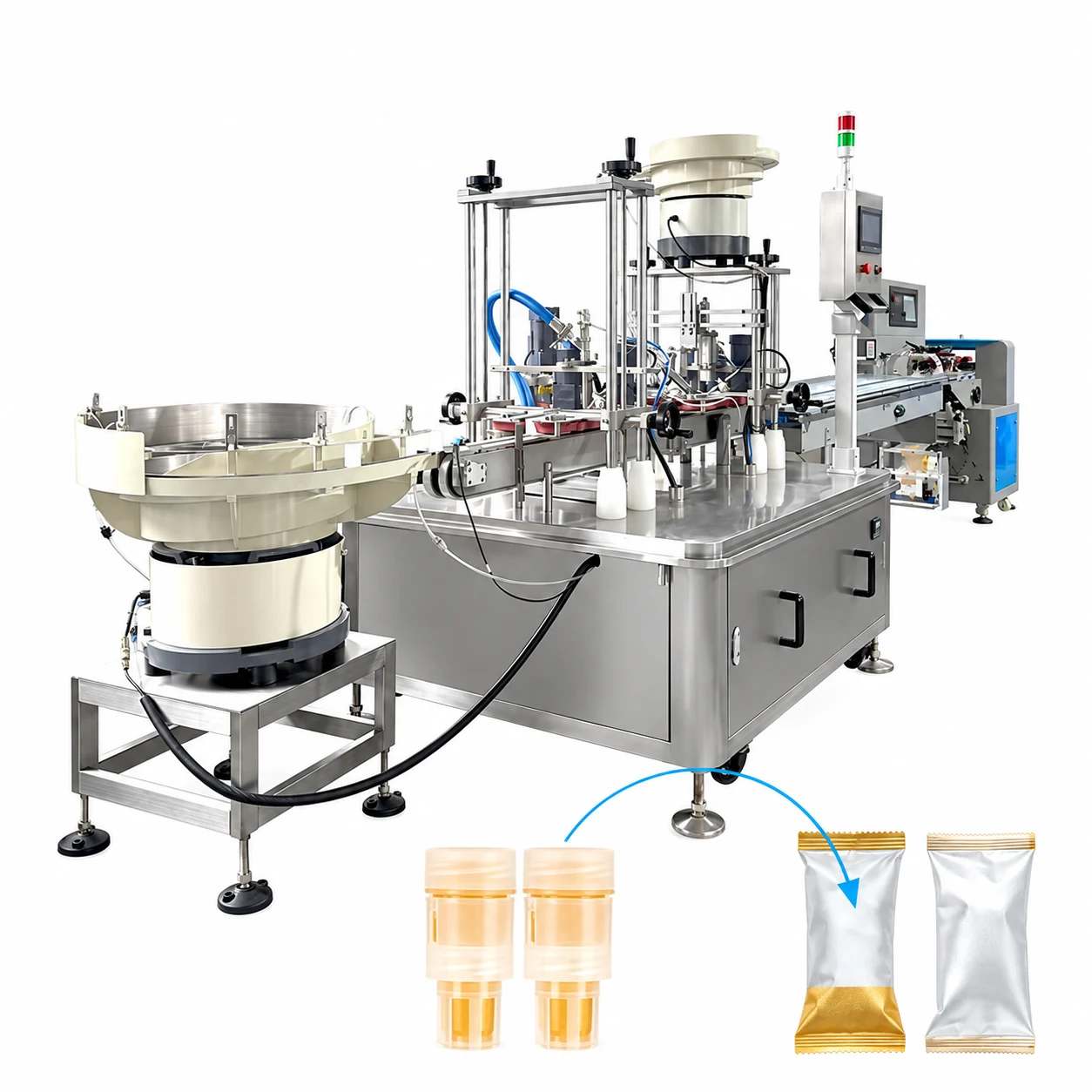
The honey dosing-cap example illustrates why the boundary matters: filling a cap cavity, sealing it and wrapping the finished component are distinct tasks. A full-line image can introduce these stages, while the project proposal must identify which are supplied. For any format, agree the condition and orientation of output before connecting it to counting, cartoning or another downstream operation.
Review installation space and changeover work
Prepare a site layout showing available space, access routes and existing equipment. Add supply points, operator positions and the movement of packaging materials. Include room for opening guards, changing rolls, refilling hoppers and removing contact parts. The installed arrangement should accommodate recurring work as well as the machine frames shown on a floor plan.
List the formats and products that will change during normal operation. Ask which modules need coordinated adjustments and how the setup is recorded. Consider whether a change at the filler also requires a different conveyor guide, inspection setting or wrapper format. A line changeover review becomes more useful when it follows one actual product transition from clearance through restart and the first acceptable finished items.
Build the proposal and acceptance plan from the same scope
Send a process sketch, product and packaging details, desired output, site constraints and destination. Identify existing equipment with interface information where available. Separate mandatory startup functions from later options so the discussion can focus on a concrete first phase. Our team can use that brief to review equipment families, module boundaries and the samples or drawings needed next.
Use the agreed scope to prepare the acceptance discussion. Specify the materials, operating conditions, measurement point and checks for the finished output. Record any temporary substitutes used in a trial and the questions still open for installation. A proposal, layout and verification plan built around the same sequence provide a clearer basis for comparing equipment and coordinating the people responsible for bringing the line into production.
Common questions
What is an integrated filling line?
An integrated filling line connects product feeding, filling and sealing with downstream operations such as coding, inspection, collection or wrapping, so they run as one coordinated sequence. There is no standard module list: a liquid pouch line, a dry-food weighing line and a dosing-cap line have different interfaces, so the written scope must name every operation and connection.
What should an integrated filling line quotation include?
It should list each supplied module, the interconnections and controls, the format tooling and the agreed discharge point where the supply ends. Product supply, inspection, wrapping and downstream handling should appear as individual items marked included, optional or excluded. That makes two line quotations comparable even when their scopes end at different points.
Can new filling equipment connect to machines we already own?
That depends on the interfaces, which need a project-specific review. Share the existing layout, transfer heights and dimensions, the pack orientation and condition at the handoff, and any control-interface information you have. The proposal should then state who is responsible for mechanical transfer, control signals and commissioning at each connection.
Updated: