
Explore the options
Liquid Premade-Pouch Filling Machine
Follow a premade pouch filling machine for liquids from bag presentation and opening to dosing, sealing and discharge, plus the inputs a trial should confirm.
Sauce Sachet Filling & Sealing Machine
Review a sauce sachet filling machine from hopper and piston dosing to film handling, clean cutoff, four-side seal packs and cleaning access for changeovers.
Match the liquid with its packaging route
An automatic liquid filling machine prepares a measured portion and transfers it into the intended package. The range discussed here focuses on flexible packaging, including supplied pouches and film-formed sachets. Beverage products, sauces and personal-care liquids provide useful starting applications, but the formulation and package must be reviewed together. A product that flows readily into a wide opening may need a different arrangement for a narrow portion pack.
Start with the finished package drawing and the product condition at the filler. Specify whether the pack arrives premade or is formed from roll stock. If your project uses bottles, jars or tubes, identify that format in the inquiry so the handling and closing scope can be assessed separately from the pouch and sachet examples on this page.
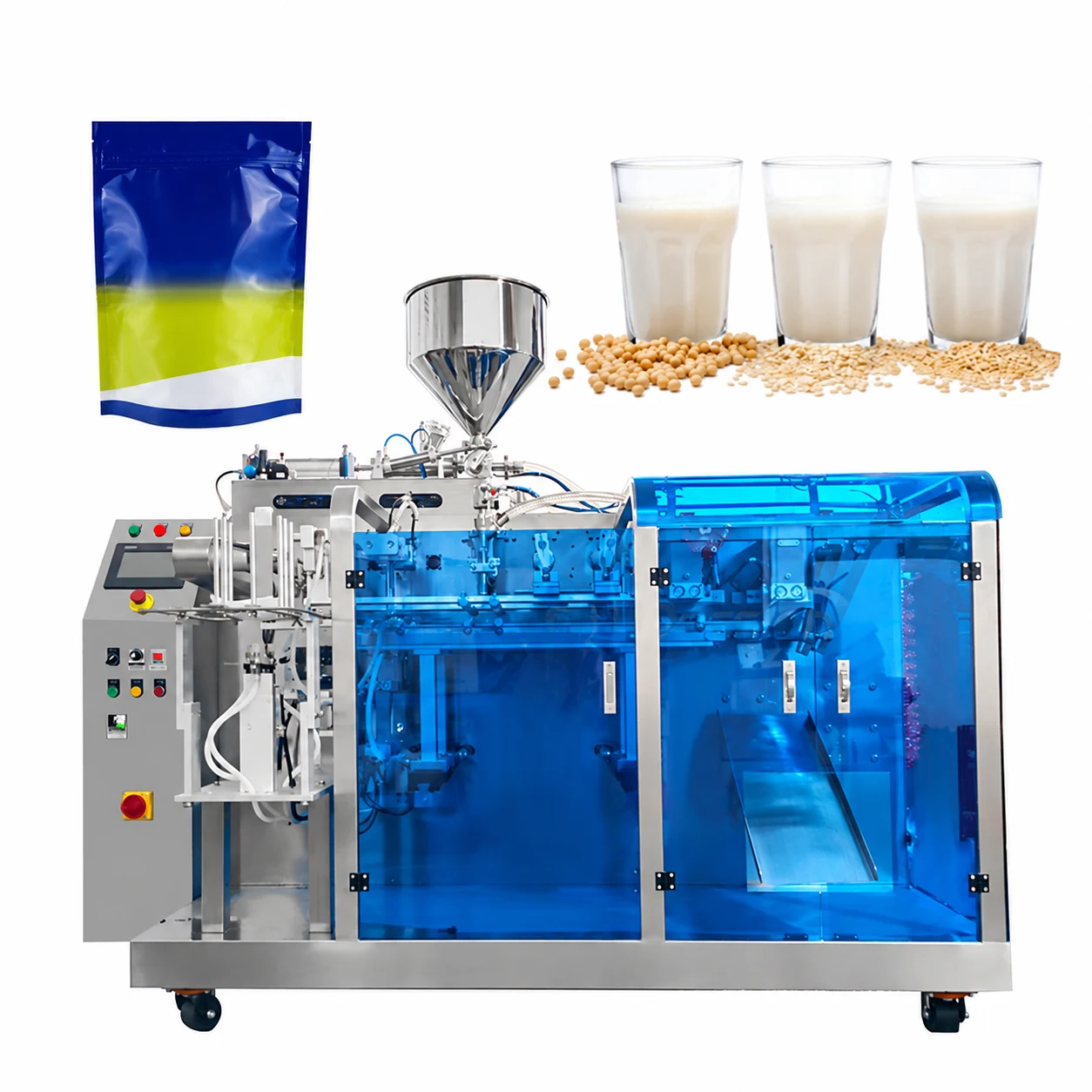
Define the supply conditions at the filling point
Describe how the liquid moves from preparation or storage to the machine. Useful details include the available supply height, transfer method, holding time and normal filling temperature. Explain whether the product separates while waiting or changes after circulation. The discussion should cover the product arriving at the dosing inlet, which may differ from a freshly prepared sample viewed in a small container.
Provide the intended batch size and replenishment method as well. A machine trial that receives a steady supply can answer different questions from a production run that involves frequent refilling. Identify who supplies the tank, transfer equipment and connecting pipework. Agree those boundaries early so that the proposed filler is assessed with realistic upstream conditions and sufficient access for routine operation.
Connect metering and nozzle behavior
The metering arrangement determines how a portion is prepared; the nozzle and package position determine how that portion enters the pack. Review these functions together, because an accurate portion that splashes or trails at the nozzle still produces an unacceptable pack. A proposed liquid path should state the dosing principle, contact materials and intended adjustment method. If the target is expressed by weight, agree how results will be measured rather than treating a volumetric setting as a direct weight reading.
Observe the beginning and end of each fill during a representative trial. Ask whether the product splashes, trails from the outlet or leaves residue where the package will close. Nozzle geometry, movement and timing belong in the configuration review. The objective is a repeatable portion in a pack that can proceed through the next operation, with the required cleanliness around the seal.
Review premade-pouch handling from the magazine onward
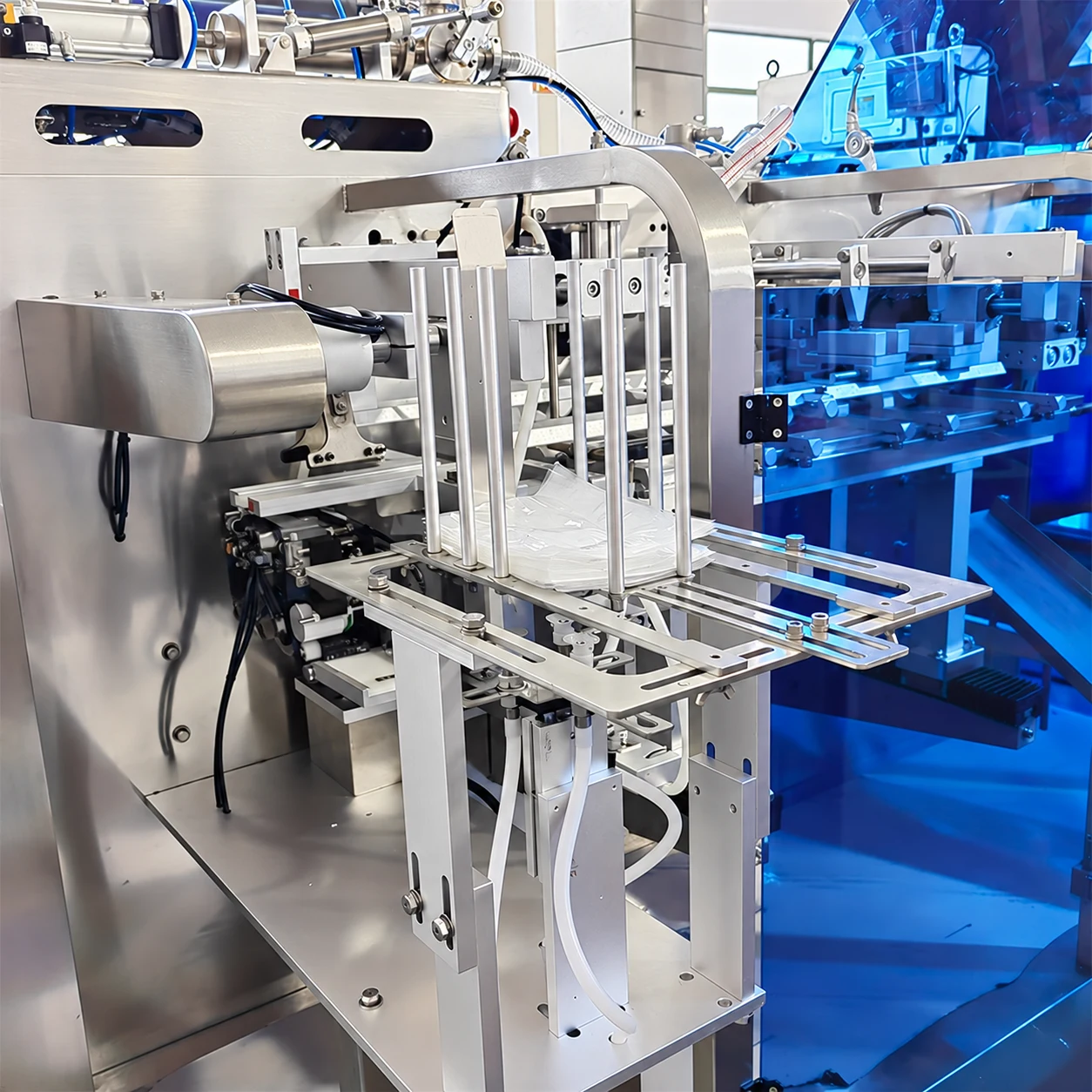
A premade-pouch process starts with bags supplied to the machine, followed by presentation, opening, filling and sealing. Bag stiffness, dimensions and opening features are useful inputs because the equipment handles the actual flexible component. Provide production-intent samples rather than assuming that any pouch with the same outside width will behave the same way in the magazine and opening station.
Describe gussets, zippers, spouts or hanging features explicitly. Ask which features are within the proposed handling scope and which require additional tooling or a different configuration. During a review, observe empty bags as well as filled output: reliable presentation and a suitable opening are necessary before dosing can be assessed meaningfully. The liquid-pouch machine page develops this sequence in more detail.
Compare small sachets with larger liquid pouches
A film-formed sachet combines packaging material transport, pack formation, filling and seal completion. Compared with a supplied pouch, this introduces roll dimensions, print registration and sealing layout into the equipment discussion. Share the intended film structure, finished dimensions and artwork position. Include the space needed for the portion and any requirement for a tear feature or date code.
The sauce-sachet example is a useful starting point for pumpable liquid and paste portions. Keep the requested seal format explicit when comparing it with a pouch system. A neat-looking sample does not by itself establish a production window for a different film or formulation. Agree which pack characteristics will be checked and make the representative packaging material part of the sample assessment.
Consider foam, particles and recipe changes
Foaming liquids require observations at three points: transfer into the supply, dosing into the pack and closure of the seal. Record where bubbles appear and whether they persist long enough to affect filling or sealing. Discuss supply and nozzle options against those observations; a generic description such as anti-foam is less useful than an agreed trial question. Share the formulation condition and practical measurement method needed to compare candidate arrangements.
For liquids containing pieces, identify the largest particle, concentration and acceptable condition after filling. For multiple recipes, describe differences in flow and cleaning needs. Grouping several products under one brand does not establish their compatibility with the same valve, hose or outlet. The configuration should identify which recipes are included and what adjustments or contact parts change between them.
Make cleaning and format changes visible in the proposal
Ask how the product-contact path is accessed, drained and reassembled. Include the hopper, metering chamber, valve, hose and nozzle where these form part of the offered system. State your cleaning procedure and available utilities so the equipment discussion can address practical access and material compatibility. Avoid assuming that an enclosed machine or stainless exterior defines a particular cleaning method.
List the package sizes to be run and ask which adjustments are settings, mechanical positions or replacement parts. Consider how leftover product and packaging are cleared before the next recipe. A changeover review should include restarting and checking the first acceptable packs, because production planning needs the complete sequence rather than only the time taken to move a guide or select a recipe.
Agree the evidence needed for your application
A liquid-filling assessment can examine portion measurements, package opening, end-of-fill behavior, seal condition and finished-pack handling. Choose the questions that matter to your product and define the sample quantities and run conditions required. Include what will be recorded during a pause or replenishment. This creates a useful link between a proposed configuration and the production team’s acceptance discussion.
For an inquiry, send the formulation description, normal filling temperature, portion and unit, packaging samples, expected output and destination. Add the existing supply arrangement and any additional recipes or pack sizes. Our team can use these details to narrow the equipment family and outline the next review. Confirm the final dosing method, tooling and performance conditions in the project specification.
Common questions
What is an automatic liquid filling machine?
An automatic liquid filling machine meters a set quantity of liquid and delivers it into a package without manual pouring, usually within a sequence that also opens or forms the pack and seals it. The liquid examples on this site fill premade pouches and film-formed sachets; bottles, jars and tubes need a separate handling and closing review.
Should a liquid dose be set by volume or checked by weight?
Agree the basis before any trial, because many liquid fillers meter by volume while acceptance is often checked on a balance. If the target is stated in millilitres but checked in grams, define how temperature, density and package tare are handled. Treating a volumetric setting as a direct weight reading makes trial results hard to compare.
What needs cleaning on a liquid filler during a product change?
Everything in the product-contact path: the hopper or tank, metering chamber, valve, hoses and nozzle where these are part of the supplied system. Ask how each is accessed, drained and reassembled, and state your own cleaning procedure and available utilities. A stainless exterior or enclosed frame does not by itself define how the machine is cleaned.
Updated: