
Explore the options
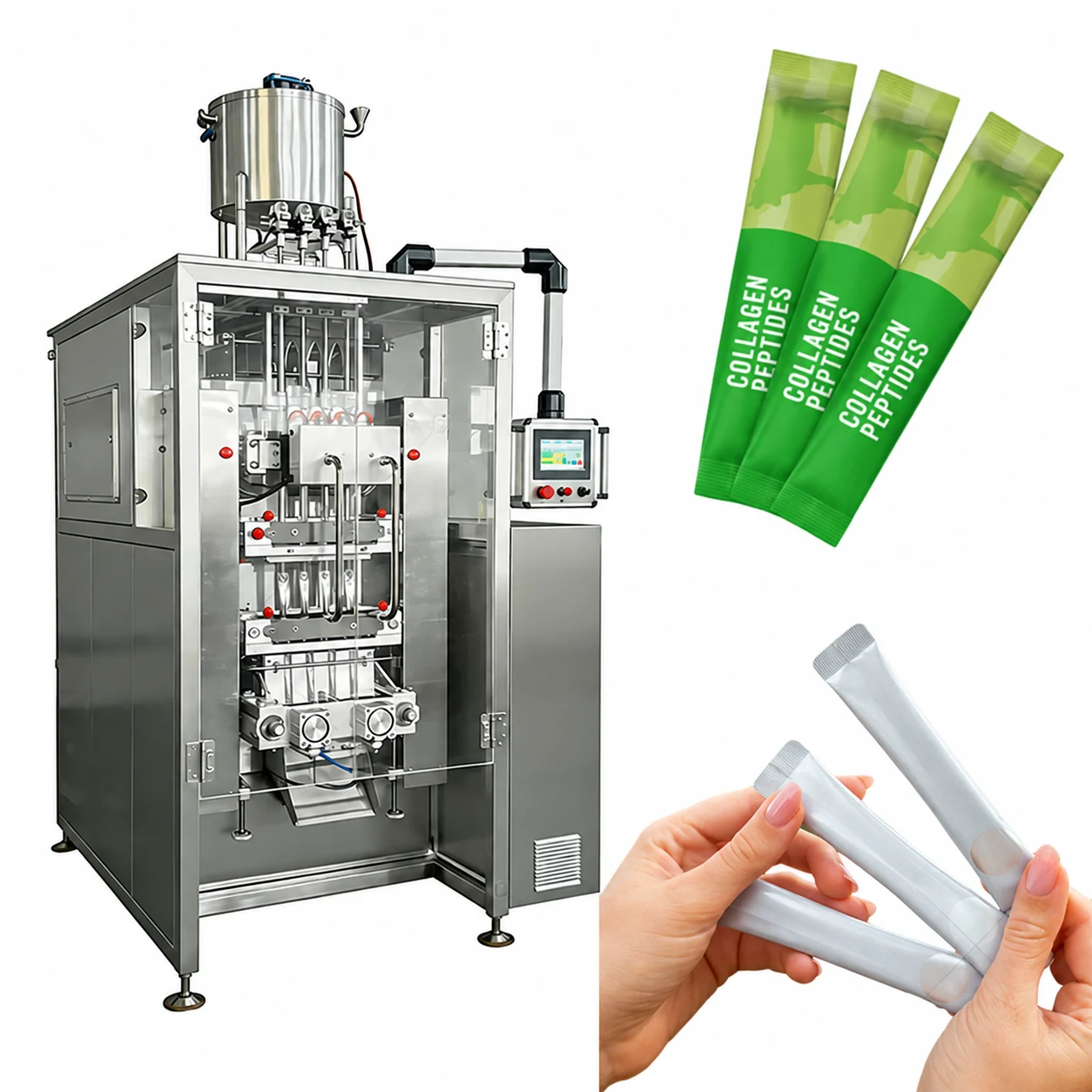
Multi-Lane Powder Stick-Pack Machine
See how a multi-lane stick pack machine doses powder blends across lanes, with feeding, lane layout, auger tooling, film registration and seal checks.
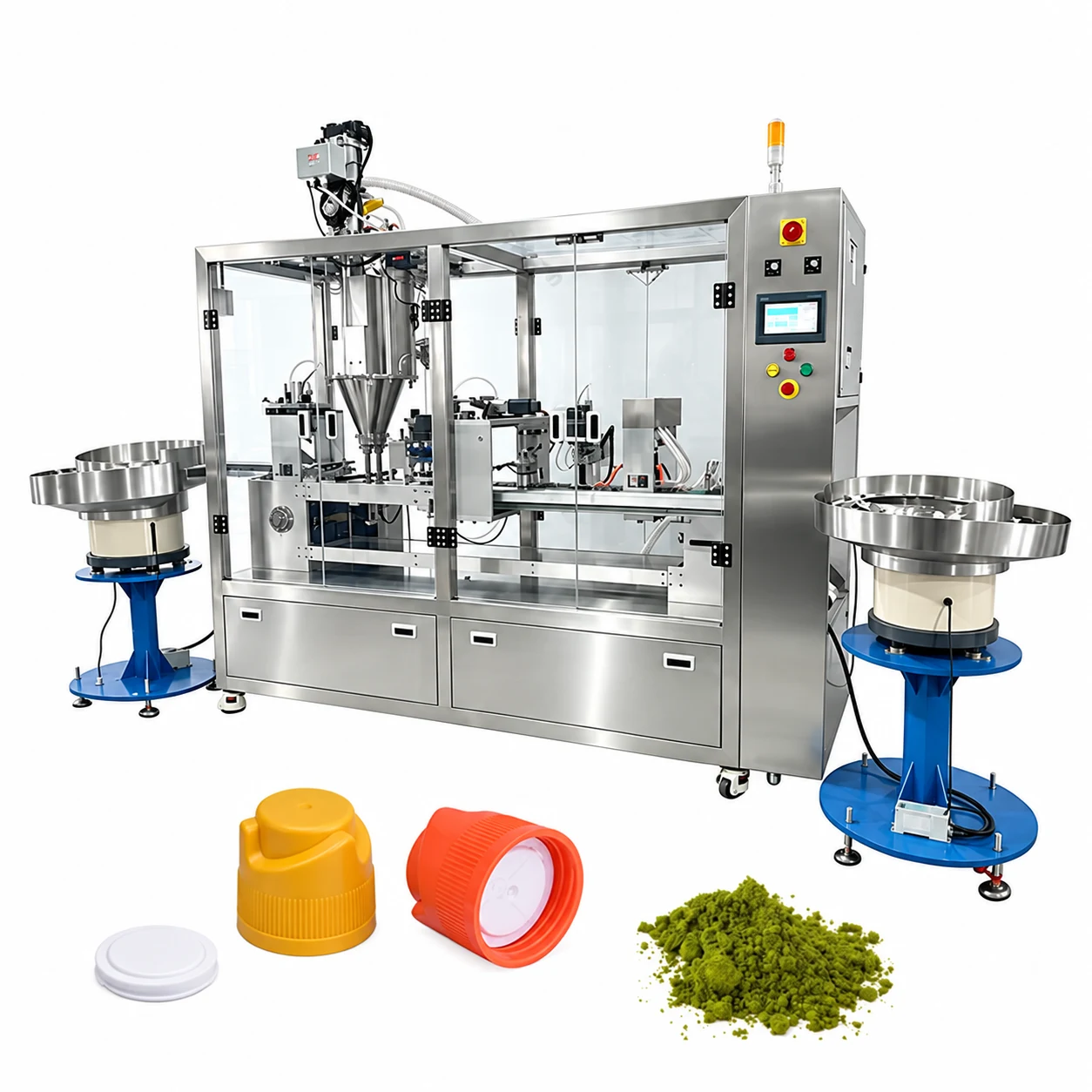
Matcha Powder Dosing-Cap Filling System
Plan a matcha dosing cap filling system around cap orientation, fine powder micro-dosing, rim protection and foil sealing checks before you request a review.
Define the powder and the pack together
A powder filling machine meters a dry material into a package that must then be closed and handled. The families on this page include multi-lane stick packs and specialized dosing caps. Collagen blends, drink powders and matcha illustrate different applications, but each requires its own product and packaging review. A fine powder description does not establish a universal dosing or sealing setup.
Begin with the intended portion and finished package. Provide the full blend description, normal storage condition and observations about flow. Include a drawing of the stick pack or cap cavity, rather than only a photograph of the retail product. These inputs help determine which equipment route and sample questions should be discussed before a detailed configuration or output target is agreed.
Observe how the blend reaches the dosing hopper
Describe the path from the material container to the filler. A powder may be delivered manually, through an intermediate hopper or through a separate feeding arrangement. Identify what is already available at the factory and what needs to be included. Explain how the material behaves during transfer, particularly if it settles, bridges, clumps or creates visible dust.
Ask how refill events will be handled during a trial and during production. Record the condition of the sample and the time it has spent in the proposed supply arrangement. A demonstration with a freshly poured sample may not cover all the conditions experienced over a longer batch. The feeding discussion should therefore include routine replenishment and any observations that justify an additional sample assessment.
Review auger dosing with representative material
Auger dosing, in which a rotating screw meters powder from a hopper through a tube, is an equipment route for discussion with fine powders and blends. The selected tooling and operating arrangement need to match the target quantity and powder behavior. Ask which parts are used for the proposed portion and what changes when another recipe or dose is introduced. An adjustment range becomes useful when tied to a defined blend and package.
Evaluate actual portions using an agreed measurement procedure. Specify the scale, sampling method and treatment of empty packaging when weight is the relevant measure. A dosing setting is an operating input, while the collected portion is the result being checked. Keep those two records connected during the review so that changes in product condition, tooling or settings remain visible in the assessment.
Understand what multiple lanes add to stick-pack production
A multi-lane stick-pack machine arranges several packaging channels across a film web. Dosing and forming must be coordinated with the chosen lane arrangement, film width and finished pack dimensions. Share the required stick drawing, print repeat and opening features. The configuration discussion should identify the intended number of lanes and how each lane is supplied and checked.
Total pack output and machine cycles describe different things: one cycle of a multi-lane machine produces one pack per active lane. When discussing performance, name both the lane arrangement and the actual acceptable output being measured. Keep sample results traceable to their lanes so that an average does not hide differences across the machine. The dedicated multi-lane powder page explains this sequence and the information needed to compare proposed layouts and tooling.
Treat dosing caps as a separate powder-packaging route
A dosing cap contains a shaped cavity rather than a flexible stick pack. Its feeding, positioning and closure interfaces depend on the actual component. Supply dimensioned drawings and production-intent samples, including the sealing rim and the intended foil or membrane. A cap that looks similar from the outside may still require different nests, guides or filling access.
For matcha and comparable small powder portions, discuss how the dose enters the cavity and what happens around the rim before sealing. The powder and cap need to be evaluated together. The dosing-cap category and matcha machine page provide a focused starting point. Do not transfer a stick-pack configuration or sample result to a cap project without reviewing those different packaging interfaces.
Keep dust and package closure in the same discussion
Powder escaping from the intended product path can affect housekeeping and the condition of the sealing area. Describe where dust occurs and what needs to be observed during filling and closure. Ask which product-contact and dust-management arrangements are included in the proposed scope, and identify utilities or collection equipment that must be supplied separately.
Use representative film or cap components when reviewing the finished package. Agree the checks for seal appearance, trapped product, exterior cleanliness and handling after discharge. A portion measurement alone does not describe whether the package is ready for the next operation; a correct weight does not make a pack with powder in its seal acceptable. The equipment review should connect feeding, dosing and closure rather than demonstrating each function with unrelated materials or operating conditions.
Plan recipe changes and contact-part access
List the powders and portions planned for the machine, including differences in ingredient blend and packing format. Ask how the hopper, dosing tooling and product-contact components are accessed for cleaning and inspection. Identify which parts are shared and which are dedicated to a recipe or format. Storage and identification of those parts are practical topics for the production plan.
Explain the site's intended cleaning method and expectations for product clearance between batches. A changeover can include material removal, component work, packaging replacement and checks before restarting. Define these steps together with the supplied documentation and operator training scope. Broad statements about quick cleaning or universal compatibility are less useful than a reviewed sequence for the products your team actually intends to run.
Build a powder-equipment brief around measurable questions
Send the complete blend description, target weight, package drawing, required output and destination. Include available density information, photographs of the powder and observations about transfer or settling. State whether the project concerns a stick pack, another film-formed portion or a dosing cap. If several formats are planned, identify which one is the first production priority.
Our team can use this information to narrow the equipment family and propose the samples needed for review. Agree the trial questions and measurement conditions before using the results to compare configurations. The final scope should list feeding, dosing tooling, package handling, sealing, inspection and any additional modules. Product formulation decisions and release requirements remain separate from the description of the packaging equipment.
Common questions
How does an auger powder filling machine work?
An auger filler doses powder by turning a screw inside a tube for a controlled amount of rotation, so each portion depends on the tooling, the settings and how consistently powder feeds into the screw. That is why the review uses the complete blend: its flow, settling and dust behavior decide how a given auger setup performs.
Why do you need a sample of the complete powder blend?
Because the machine doses the finished formulation, not its main ingredient. Added flavors, carriers or fine particles can change flow, settling and dust, so a result obtained with one ingredient may not describe the final blend. Send a representative sample of the blend, or record the limitations of any substitute used in a trial.
Is a stick-pack machine or a dosing-cap system better for powder?
Neither is better in general, because they make different finished packages. A stick-pack machine forms narrow film packs, often on several lanes, while a dosing-cap system fills and seals a powder portion inside a rigid closure cavity. Choose by the product the consumer receives, then review each route with its own drawings, components and trials.
Updated: