
Begin with the pieces you need to package
A granule filling machine connects product feeding, portion measurement and package formation for dry-food bagging. Nuts, dried fruit and other discrete food pieces are useful examples for a weighing-and-bagging discussion. The relevant characteristics include size distribution, surface condition, fragility and whether pieces tend to stick together. These observations help define the questions for a representative product assessment.
Provide photographs and samples showing the normal variation, not only a selection of uniform pieces. Include the target portion and expected packaging format. A description such as mixed dried fruit should also explain whether the mixture arrives ready for packing or needs a separate preparation step. That distinction helps establish where the proposed equipment begins and what it is expected to handle.
Connect feeding and weighing before selecting the bagger
A weighing arrangement needs a suitable supply of product at its inlet. Describe how material will be lifted or transferred from storage and whether it arrives continuously or in batches. Include any available supply equipment in the discussion. Feeding, distribution and portion release should be reviewed together because they form the path the product follows before entering the package.
The source equipment family includes multihead weighing with vertical bagging: a combination weigher selects a group of weighed portions that together reach the target, and a vertical form-fill-seal machine forms, fills and seals the bag. Treat the chosen weighing configuration as a project decision based on product and portion, rather than a fixed choice for every granular food. Ask how the sample will be presented during an assessment and what information will be recorded. A representative feeding arrangement makes the weighing observations more useful for the eventual production layout.
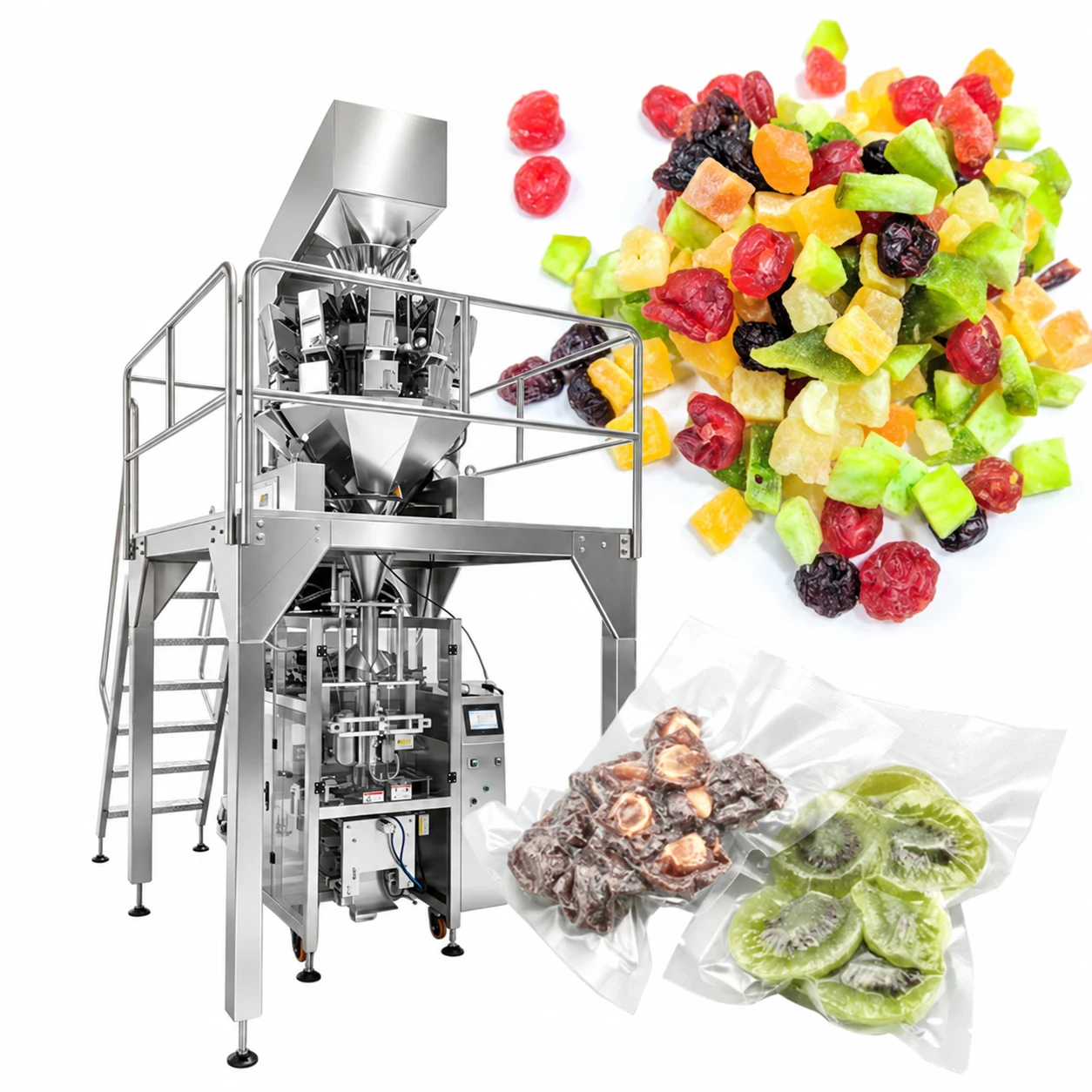
Examine product transfer and damage at each step
Look at the route between supply, weighing and the forming tube. A product can pass through several transfers before reaching the bag, and each is an opportunity to observe breakage, sticking or separation. Define what acceptable product condition means for your recipe. A count of filled bags does not show whether delicate pieces reached the package in the intended state.
For mixed products, discuss how the existing mixture is prepared and what characteristics need checking in the collected packs. Do not assume that one overall weight result describes the mixture inside. If ingredient proportions or piece appearance are important, include those observations explicitly in the review. Agree which tasks belong to the packing equipment and which remain part of upstream preparation.
Match the film path to the finished bag
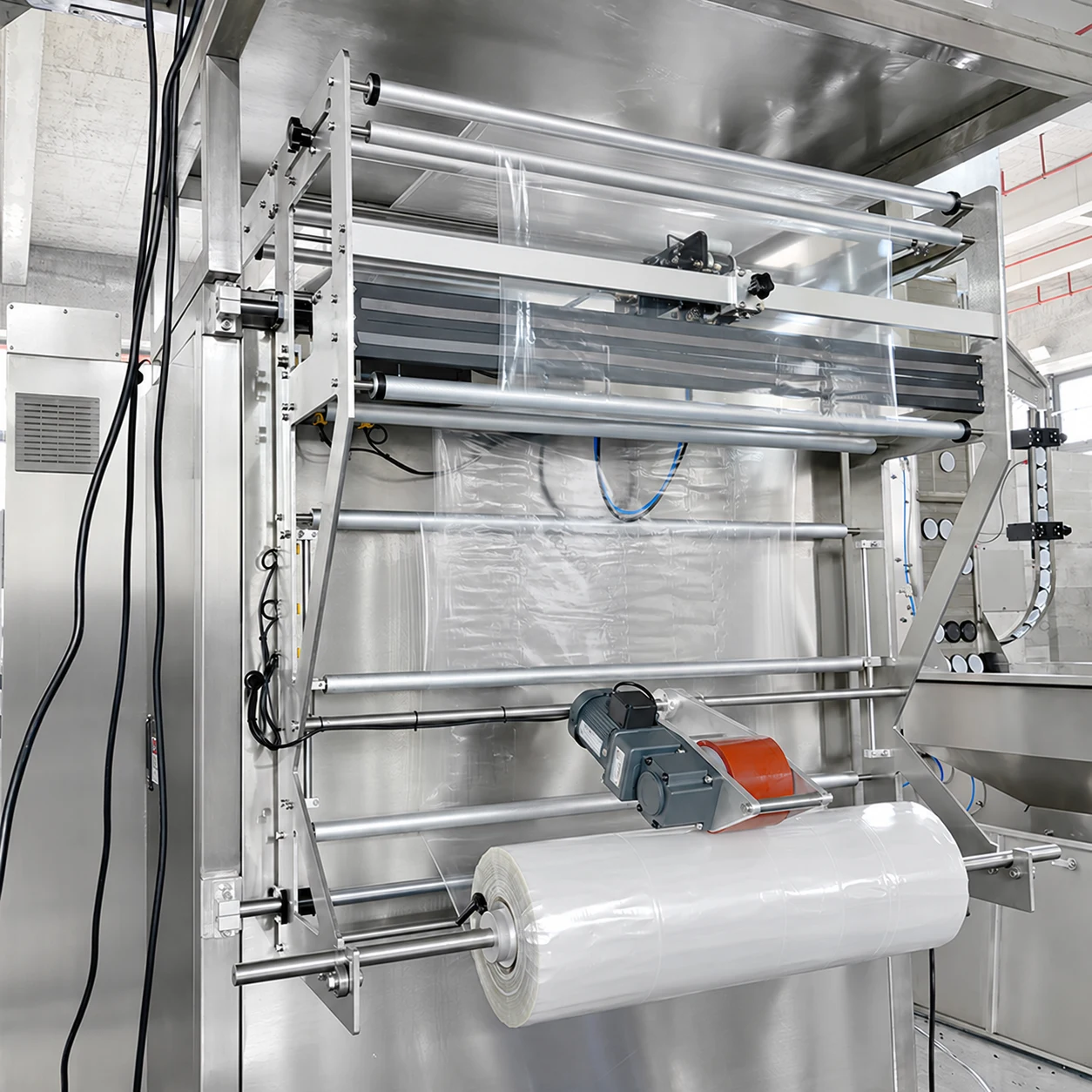
Vertical form-fill-seal equipment works from a film roll to create, fill and close the bag. The roll, forming arrangement and finished dimensions need to be considered together. Send the film specification, print repeat and a finished-pack drawing. Include any features that change the tooling or handling sequence, such as a particular bag shape or opening requirement.
A film-transport image helps explain the route through rollers and guides, but it does not establish compatibility with every material. Use the intended film in the configuration review and ask what settings or parts correspond to each bag size. The forming and sealing discussion should reflect the product portion as well, including the space needed for pieces to settle before the package closes.
Keep pieces clear of the sealing area
The transfer into the bag needs to work with the closure sequence. Observe when the portion reaches the package and whether pieces remain near the seal area. Pieces trapped in the closing area can weaken or open a seal, so, depending on product behavior and pack dimensions, this can be a useful focus for the sample run. Specify the checks for trapped product, finished dimensions and the appearance of the collected pack.
Vacuum, gas-flush or other atmosphere-related options require a separate scope discussion. State the intended process requirement and the tests your packaging team needs. Identify which modules and utilities are included in an offer. An equipment photograph or the presence of an optional module does not establish a shelf-life result for a particular food, film and storage condition.
Define the scope of inspection and downstream handling
After filling and sealing, packs may need coding, weight checks, collection or transfer into another packaging step. Decide which operations are part of the proposed supply and which already exist at the site. Include the required pack orientation and transfer height. A line drawing should show where responsibility changes between machines or suppliers.
Explain how nonconforming packs will be identified and handled where inspection equipment is included. Agree the records or sample checks needed to evaluate the system. The goal is a clear production sequence from loose product to the defined discharge point. This helps avoid an incomplete comparison in which one proposal includes finished-pack handling while another ends immediately after the bag leaves the sealing section.
Plan product changes, film changes and operator access
List the products and bag sizes expected during a normal week, including the formats used most frequently. Ask how product-contact surfaces and transfer parts are reached for cleaning and inspection. For sticky or coated products, describe residue observed in the current process. Include the site’s intended cleaning method in the discussion of materials and component access.
Film changes and product replenishment also need space and a practical working position. Review roll loading, hopper access, removal of contact parts and the route for collecting output. A compact footprint has to be considered alongside those routine tasks. Identify the change parts and setup records needed for each agreed format so operators can return to a documented arrangement after cleaning or maintenance.
Prepare a weighing-and-bagging assessment
Send the product sample, target weight, bag drawing, film information and required acceptable output. Add piece-size variation, fragility, stickiness and any mixture requirements. If production already exists, explain the problem you want to resolve, such as damaged pieces, difficult transfer or inconsistent pack appearance. This gives the sample review a concrete purpose and a defined comparison.
During the assessment, record portion measurements alongside the condition of the product and package. Include representative replenishment and restart events where relevant to the planned operation. Our team can then discuss the weighing, transfer and bagging arrangement in the context of those observations. The final proposal should identify included modules, tooling, utilities and the conditions under which its performance will be evaluated.
Common questions
What machine is used to weigh and pack nuts, dried fruit or other granules?
Discrete dry products are commonly packed with a combination (multihead) weigher feeding a vertical form-fill-seal bagger. The weigher makes up each portion by weight, and the bagger forms the bag from film, fills it and seals it. Whether that arrangement suits your product depends on piece size, fragility, stickiness and the target portion.
What samples should I send for a granule weighing trial?
Send a representative production batch that shows the normal range of piece sizes and surface conditions, not a hand-picked uniform selection. Include the target portion, the bag film or drawing and the product condition you consider acceptable after transfer. Photographs of typical and largest pieces help the team plan feeding and transfer before the sample arrives.
How should a mixed product such as trail mix be checked after packing?
Check the characteristics your customers notice, not only total bag weight. Clarify whether the mix arrives ready for packing, then agree checks for ingredient distribution, piece condition and portion weight on collected bags. One overall weight result can hide an uneven mixture, so record these observations separately during the trial and keep them with the settings used.
Updated: