
Start with the formula and the intended user experience
A cosmetic or personal-care filling machine has to deliver a usable portion while keeping the appearance and handling qualities expected from the product. Shampoo, conditioner, body wash and lotion can behave differently during transfer and filling. Describe the formula category, its normal filling temperature, the target amount and the intended package. Include handling information relevant to the equipment review without relying only on a marketing description of the product.
Our starting scope on this page is flexible-pack liquid and paste filling. Sachets and small pouches can be used for samples, travel portions or individual applications. Bottle, jar and tube projects involve different container-handling steps and should be described separately. A successful review of a sachet configuration does not automatically establish a suitable complete line for another container format.
Observe shampoo foaming throughout the transfer path
For a shampoo project, explain where foam is observed today: during mixing, vessel transfer, hopper replenishment or discharge into the package. Record whether visible bubbles remain after the product waits and whether the behavior changes between formulas. These observations help define the questions to address in a sample review of the supply arrangement, dosing motion and outlet position.
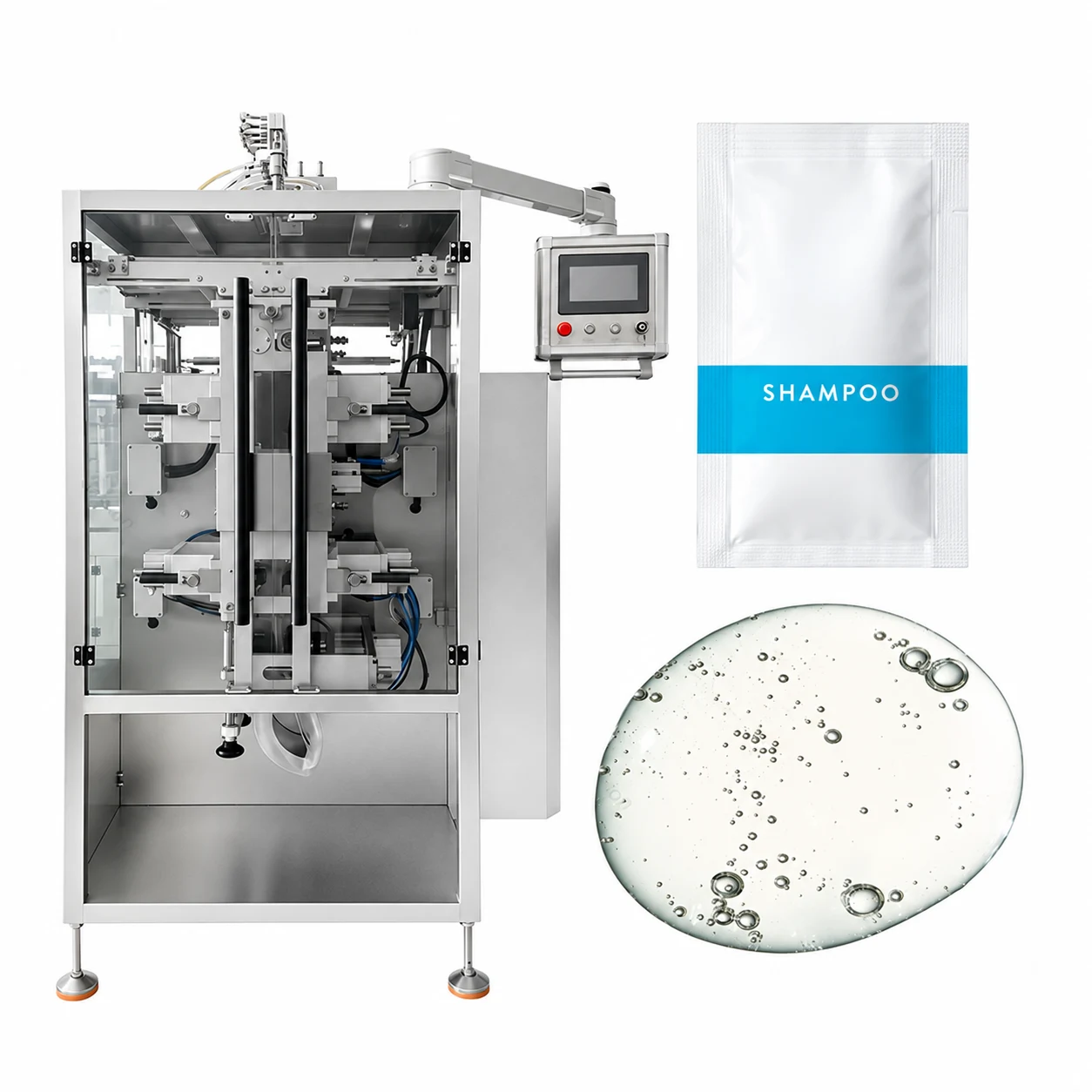
Anti-foaming nozzle arrangements and controlled dosing are equipment options to discuss, but their effectiveness should be assessed with the actual formulation. Keep the target amount, pack opening and operating condition consistent when comparing trial settings. Note any residue near the sealing area as well as the appearance of the filled product. A photograph of a shampoo sachet is useful for communicating the desired format; it does not show how a particular formula will behave in production.
Review the full packaging specification
Provide a dimensioned drawing for the sachet or pouch, including its opening, seal widths and any easy-tear feature. Ask the packaging converter for the material construction and the conditions needed to form the intended seal. Artwork registration, code placement and cut position should be reviewed with the same drawing. A sample portion that looks attractive on a design screen still needs to work through the physical packaging sequence.
Define how the finished pack should be opened and used. Include any appearance checks for wrinkles, contamination around the seal and consistent cutting. If several pack sizes are planned, distinguish adjustments from replacement format parts. Confirm which size is supplied at startup and which additional tooling is included. This keeps packaging development and equipment selection connected as the project moves toward a proposal.
Treat lotion flow and dose shut-off as separate questions
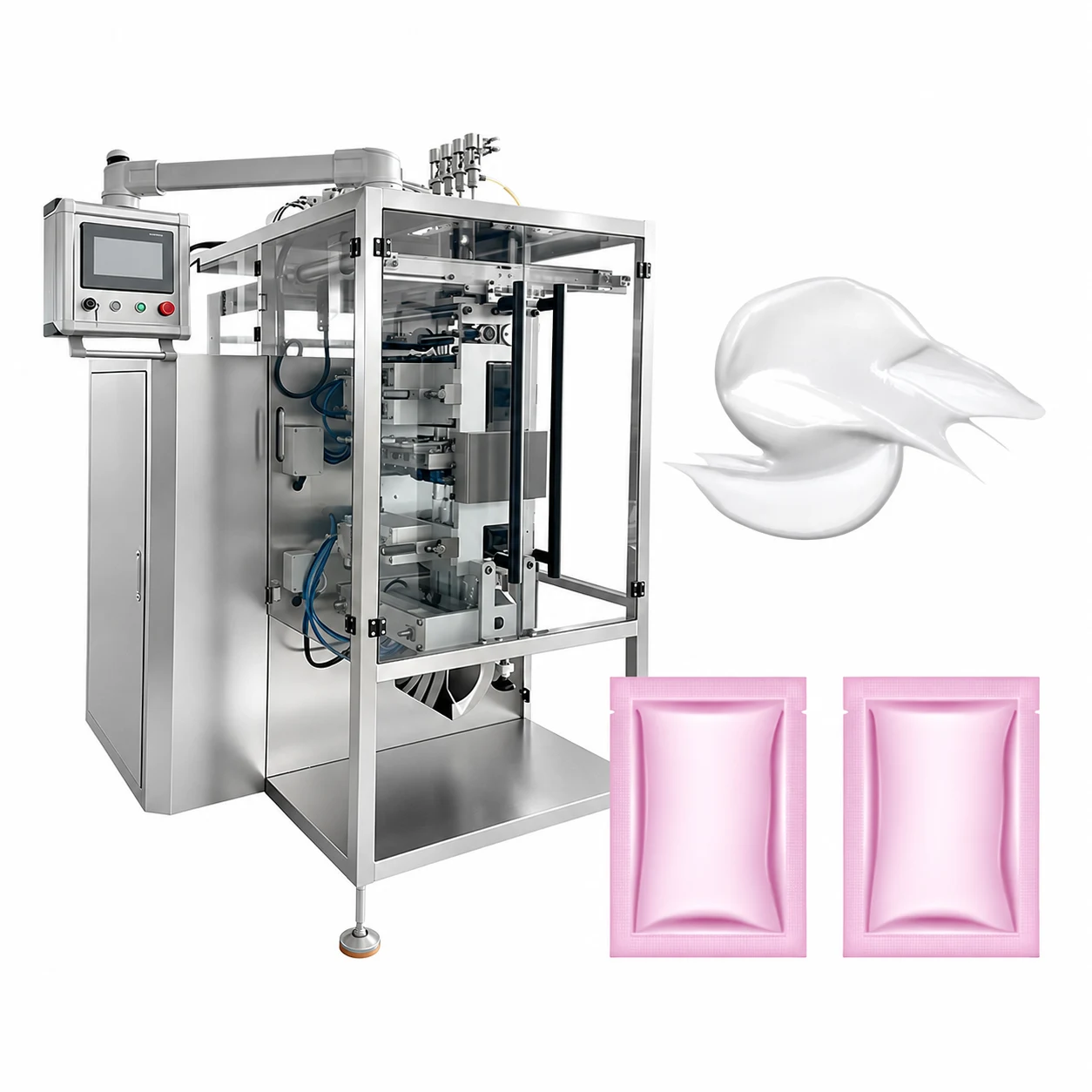
Lotions and creams can require a different assessment from a freely flowing liquid, because thicker products are more likely to string or trail at the outlet when a dose ends. Describe the product texture and what happens after mixing, transfer and waiting in the supply vessel. If the formulation is sensitive to the handling process, have the product team define the observations that matter during a trial. Discuss the proposed piston-dosing arrangement and any temperature or mixing options as part of the configuration review.
Watch the end of the fill as well as the start. Product that trails from the outlet may affect pack presentation or reach the sealing area. Record this behavior at the agreed dose and operating condition, then review possible changes with the equipment team. An outlet described as anti-stringing is a feature to evaluate, not evidence that every lotion will stop flowing in the same way. Retain the trial notes with the corresponding formula and packaging samples.
Check product-contact materials and cleaning access
Map the parts that touch the formulation, including the supply vessel, connections, seals, valves and outlets. Identify the materials and component information needed by your technical team to review compatibility. Where a formulation has special handling requirements, make them part of the brief before the equipment arrangement is selected. Do not assume that a general stainless-steel description answers every contact-material question.
Review how the contact path is emptied, accessed, cleaned and inspected. Ask which parts are removed and which cleaning steps rely on assembled circulation, if that is proposed. The product and quality teams should define the procedure and the evidence needed before a new batch begins. A quick-release connection can improve access, but the time to complete a full formula change also includes cleaning, checks and preparation for restart.
Organize frequent formula and artwork changes
A sampling or contract-packaging schedule may combine several fragrances, colors, textures and printed films. List the planned combinations instead of requesting unlimited flexibility. Identify which changes affect contact parts, which require a different pack size and which only change artwork. Keeping this matrix with the proposal helps the team see what must be available when the machine enters service.
Prepare a line-clearance routine for product, packaging and coding information. Operators need a reliable way to identify the active formula and pack, confirm the intended settings and separate material remaining from the previous run. Include storage and identification of format parts in the layout. For scheduling, compare the complete changeover sequence rather than the time required to adjust a single guide or select a stored setting.
Assess portion consistency and presentation together
Agree how a finished portion will be measured and which cosmetic-pack checks determine acceptance. If a target is expressed in volume but a balance is used for checking, document the measurement basis for the actual product. On multi-lane equipment, identify the lane and collection time for each sample. Keep individual results rather than only an overall average that could conceal differences between filling positions.
Combine those measurements with observations of seals, cutting, coding and product residue. Record interruptions, formula replenishment and adjustments during the trial. Assess output as acceptable packs within a stated period and at a defined point after the included operations. This creates a useful record for deciding whether the configuration needs revision and avoids treating a brief mechanical demonstration as a complete production assessment.
Prepare the next discussion with the equipment team
Send the formula category, target portion, filling conditions, package drawing, proposed film and required acceptable output. Include photographs or a short handling video that show foaming, dripping or trailing behavior you want to examine. State how often formulas and packaging designs will change, and identify the supply or collection equipment already installed at the site.
Our team can use this information to discuss a liquid or paste sachet arrangement and the questions for a representative sample review. Mark unfinished formula or artwork details as provisional so their effect on tooling remains visible. The next step is a configuration outline with the dosing path, packaging modules, change parts and evaluation conditions. The related equipment pages and WhatsApp project link below provide a starting point for that conversation.
Common questions
Can a sachet filling machine also fill bottles or tubes?
Not without a separate review. Bottles, jars and tubes need container feeding, handling, closing and transfer steps that flexible-pack equipment does not include. This page covers sachets and small pouches for liquids and pastes, and a successful sachet trial does not establish a complete line for another container format.
How do you fill shampoo sachets without excess foam?
Start by recording where foam appears, whether during mixing, transfer, hopper refill or discharge into the sachet, and whether bubbles persist. The supply arrangement, dosing motion and nozzle position are then assessed in a trial with the actual formulation. The useful check is whether the dose stays consistent and the seal area stays clean.
Can one filling setup run several lotions and fragrances?
It can be planned for several, but each product and pack combination needs its own review. Prepare a matrix of formulas, fragrances and pack sizes, then check contact-material compatibility, cleaning, format parts and operating conditions for each. The changeover plan should also include line clearance of product, packaging and coding information.
Updated: