
Define the complete blend, not only its headline ingredient
Choosing a supplement powder filling machine begins with the blend that reaches the dosing system. Collagen, whey protein, drink mixes and other powdered formulations may share a retail category while behaving differently during handling. Include the complete formula category, particle characteristics, normal storage condition and target portion. A sample of the main ingredient alone may not represent the finished blend that the machine must portion.
Our application scope includes multi-lane powder stick packs and specialized powder dosing-cap formats. These routes solve different packaging tasks, so begin with the intended finished package and how the consumer will use it. Keep the equipment review focused on feeding, dosing, handling and sealing. Product composition, quality release and market claims remain separate decisions within the wider product-development process.
Review feeding from storage to the dosing hopper
Describe how the powder will arrive at the line, the size of its supply containers and the proposed transfer method. Record visible settling, clumping, dust or difficulty emptying the current container. If material waits before filling, include that waiting period in the sample discussion. The important condition is the blend at the dosing point, not only its appearance immediately after manufacture.
Ask which feeder, hopper and transfer connections are included in the equipment scope. Where agitation or dust extraction is proposed, review the purpose and interfaces of those modules with the actual blend. Identify the refill sequence and the observations needed after replenishment. These details provide a practical way to investigate changes in portioning and help the team distinguish a dosing adjustment from an upstream supply problem.
Coordinate powder dosing with multi-lane stick-pack formation
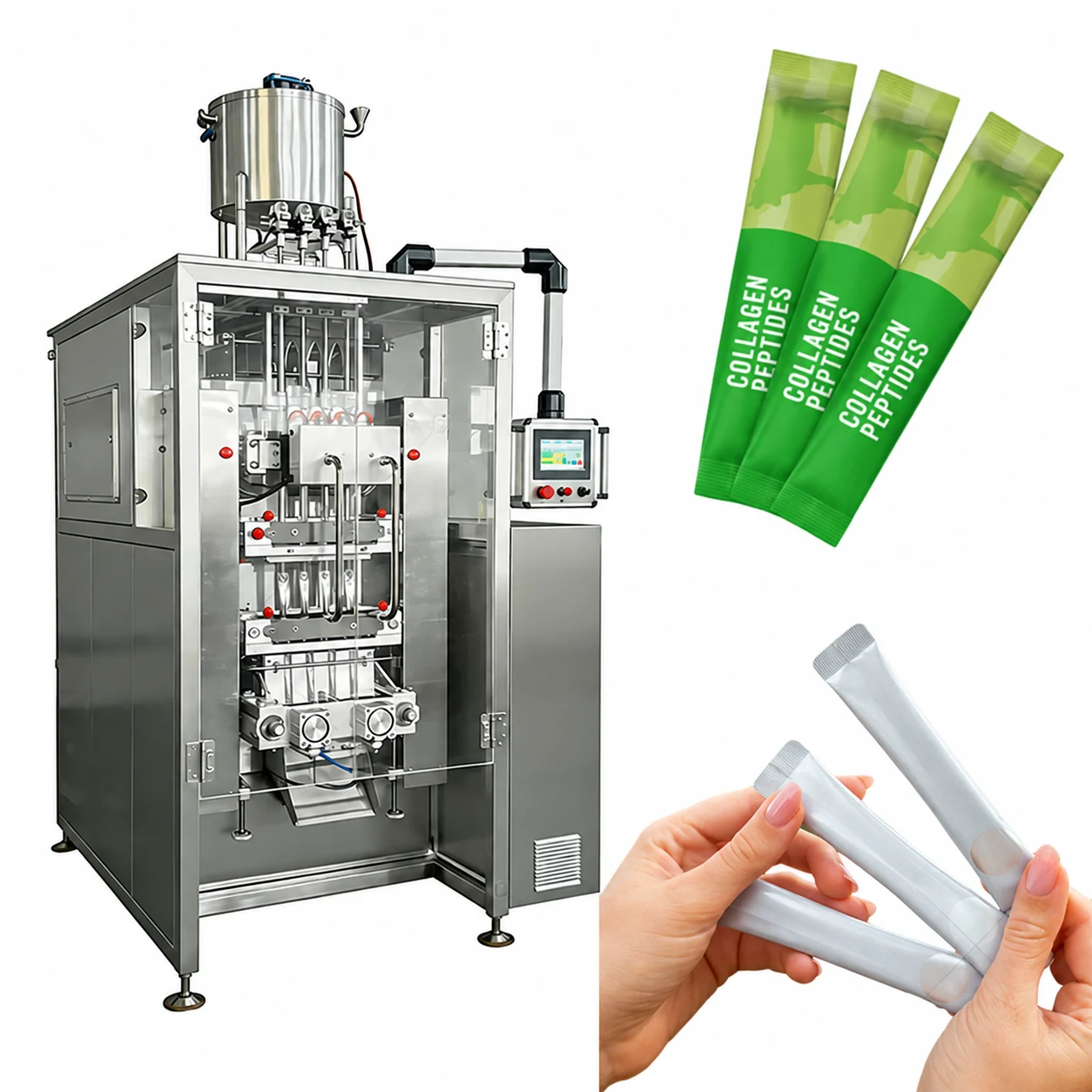
A multi-lane powder system combines repeated dosing positions with film forming, sealing and cutting. Auger dosing is one available approach for powder blends. Review the intended fill quantity, pack width and length together because the package and dosing arrangement must work within the same cycle. Provide the film construction and any print-registration, tear-notch or cut-shape requirements early in the discussion.
For a configuration with several active lanes, identify how each lane will be checked during a sample review. Collect labeled packs at agreed times and retain the individual measurements. Do not rely only on the combined average or total discharge count. If an ingredient or flavor changes the blend, record that difference and determine which feeding, dosing or sealing questions need to be checked again before extending an earlier result to the new product.
Keep powder away from the seal and inspect the finished pack
The net amount is only one part of a successful powder package. Observe whether dust or loose particles reach the sealing area, whether the film tracks as intended and whether the cut and opening feature are consistent. Agree what will be inspected and record the pack condition alongside its measured quantity. Use the actual film and blend where possible so the review addresses the intended combination.
If a sample trial uses substitute powder, document the substitution and the unanswered questions. A free-flowing material can demonstrate movement without resolving the handling of a more cohesive blend. Review proposed extraction or cleaning arrangements in relation to the observed issue and their effect on the complete process. A feature description does not itself establish seal integrity or storage performance for a finished supplement product.
Assess dosing caps as a separate packaging route
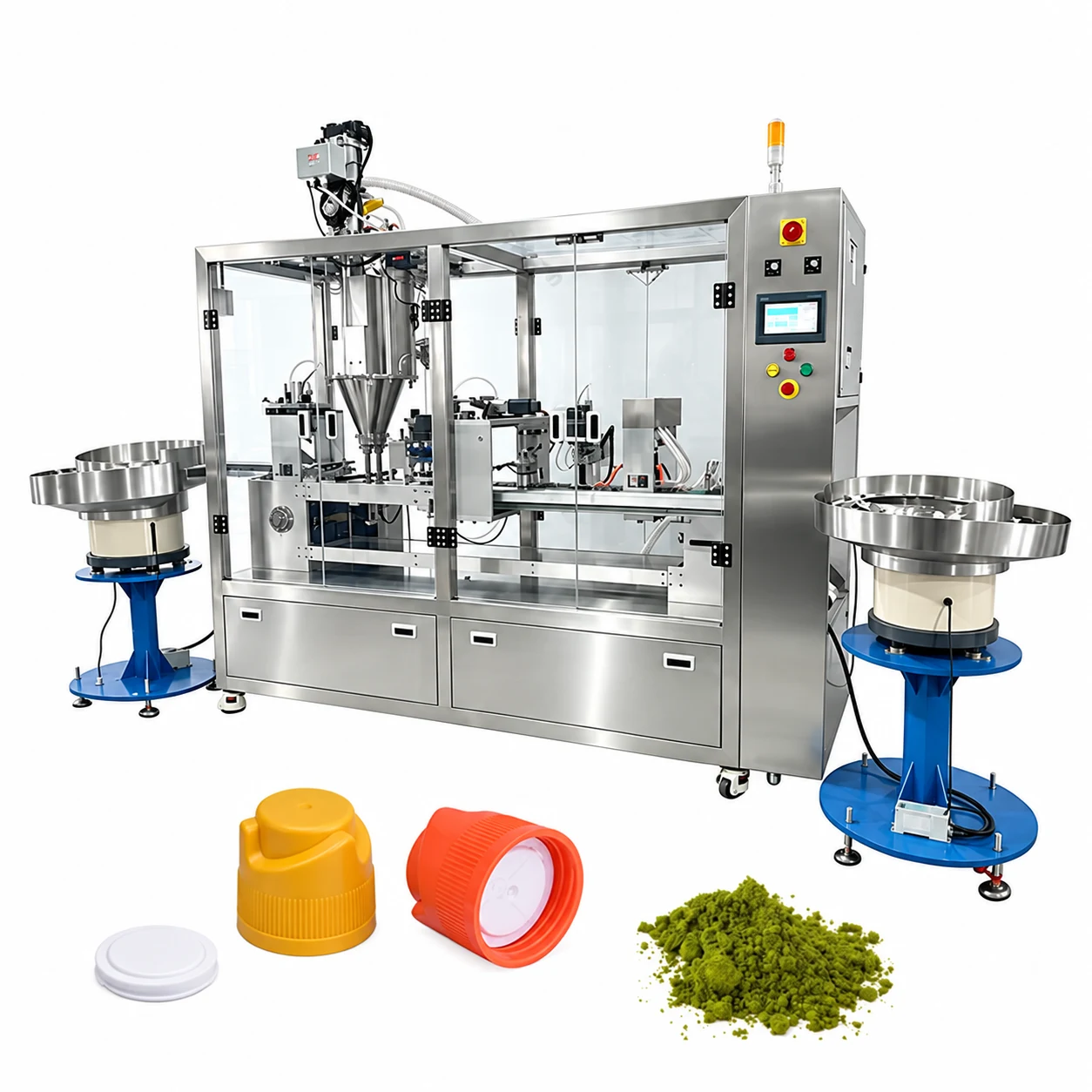
A dosing cap places a portion in a dedicated closure cavity rather than a conventional sachet. Powder-cap equipment can combine component feeding, cavity positioning, small-quantity dosing and foil sealing, with other steps defined by the selected configuration. This route needs drawings of the actual cap components and sealing interface. Treat the cavity, powder quantity and closure assembly as one packaging development task.
Review how powder reaches the cavity, how its rim remains suitable for sealing and how components move between stations. Include the arrangement for checking the filled and sealed component before downstream handling. A cap that looks similar externally may have a different internal volume or seal geometry. For a new design, agree which tooling dimensions must be fixed and which functional checks belong in a trial using production-representative parts.
Define quantity measurements and batch identification
State the target amount with its unit and explain how net content will be determined. Record the measurement equipment and the approach to package tare with the person responsible for quality checks. For a small dose, the method must be appropriate to the amount being assessed: the balance should resolve differences well below the variation you need to detect. Keep the sample identity, lane or station, time and relevant operating conditions alongside each result.
Plan the coding and batch information needed on the finished package and identify which equipment supplies it. During trials, record changes to settings and distinguish startup material from samples collected under stable conditions. Retain the raw observations with the summary so a later review can reconstruct what was actually tested. A clear measurement and identification plan supports a useful technical decision without relying on an unexplained accuracy percentage.
Plan contact-part changes and product clearance
List the powder-contact components that need attention between blends, including feeders, hoppers, dosing parts and transfer chutes. Discuss access, removal and reassembly with the operators who will perform the work. Identify ingredients that require segregation or make cleaning more demanding. The site's product and quality teams should establish the cleaning procedure and the checks needed before the next blend enters the line.
Include remaining powder, packaging reels and coding information in the changeover plan. If additional contact-part or format sets are proposed, record their identification and storage requirements. Separate mechanical adjustment from cleaning, inspection and restart checks when estimating the production schedule. This is especially useful when a line alternates short runs of different formulations rather than producing one unchanged blend for long periods.
Turn the formulation and pack into a project brief
For an initial inquiry, provide the blend description, target portion, stick-pack or cap format, packaging drawings and required acceptable output. Add available information about flow, settling and dust, and explain how product is supplied today. Identify additional flavors or formats planned for startup and mark future options separately. Include the installation location and any existing feeder, coding or collection equipment.
Our team can use those details to discuss a powder-dosing configuration and the scope of a representative sample review. Agree material quantities and packaging samples before arranging shipment. The practical next step is a written outline of the feed path, dosing and sealing process, tooling, optional modules and measurements. Use the related powder equipment pages or the WhatsApp inquiry link to share the information and identify what still needs clarification.
Common questions
What packaging machines are used for supplement powders?
Supplement powders on this site use two routes: multi-lane stick-pack machines that form, fill and seal narrow film packs, and dosing-cap systems that place a powder portion inside a sealed closure cavity. Collagen, protein and drink-mix blends may need different feeding and dosing even when their portions look similar, so each blend is reviewed individually.
How should net content be measured for small supplement doses?
Agree the method before the trial. State the target and unit, the balance used and how package tare is determined, and keep sample identity, lane or station, time and settings with each reading. For small doses the method must suit the amount being measured, otherwise measurement variation can mask real filling variation.
Does the filling machine apply batch codes to supplement packs?
Only if coding is included in the scope. Specify the batch and date information required on each pack, where it appears and which equipment supplies it. During trials, separate startup material from samples collected under stable conditions, so batch records and trial results reflect what was actually produced and tested.
Updated: