
Several stick packs share one coordinated process
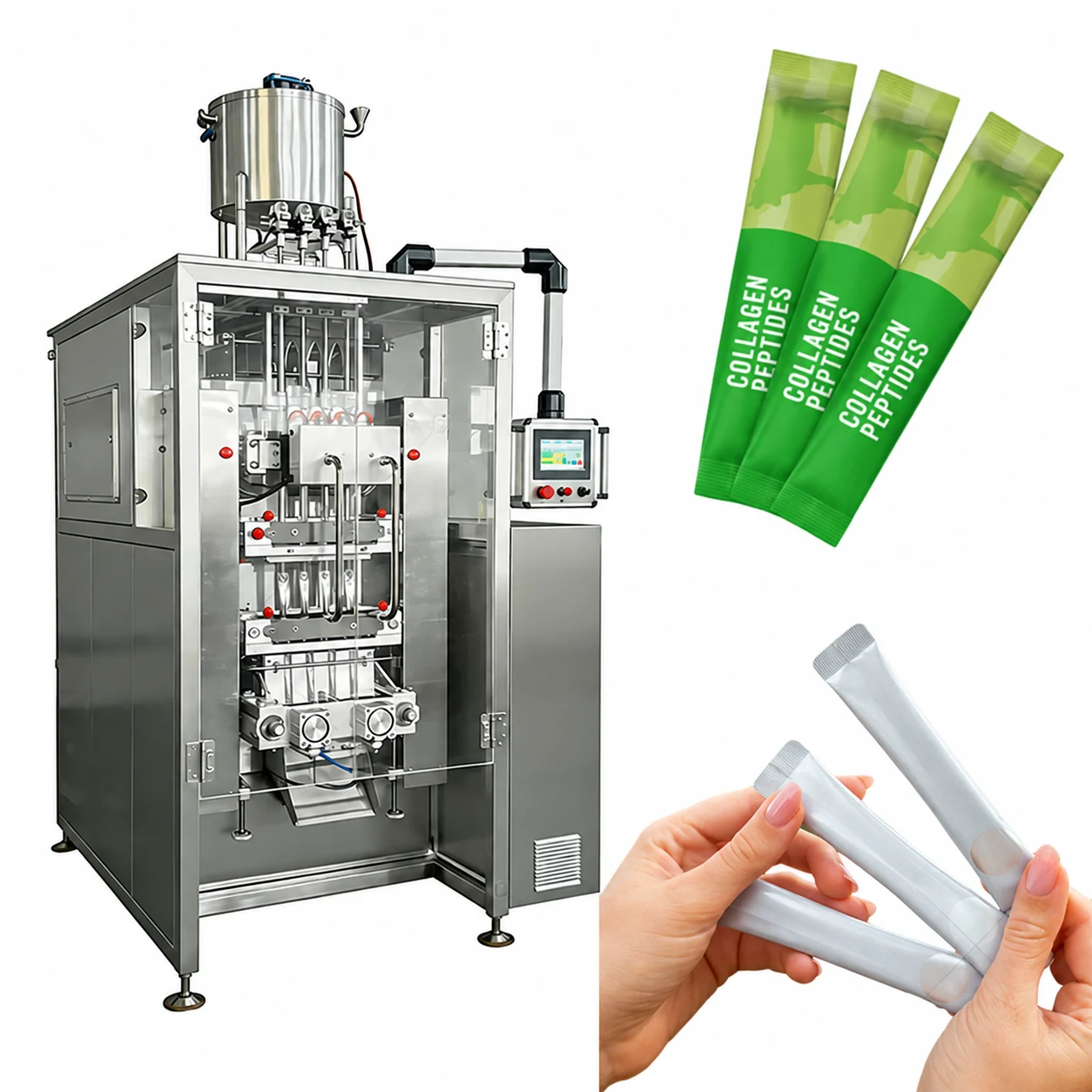
A multi-lane powder stick-pack machine arranges multiple narrow packaging channels across a film web. Product dosing works with film transport, forming, sealing and cutting to create individual portions. Collagen and drink-powder blends are example applications for this equipment family. The proposed lane arrangement must be matched to the finished stick dimensions and the way the material is delivered.
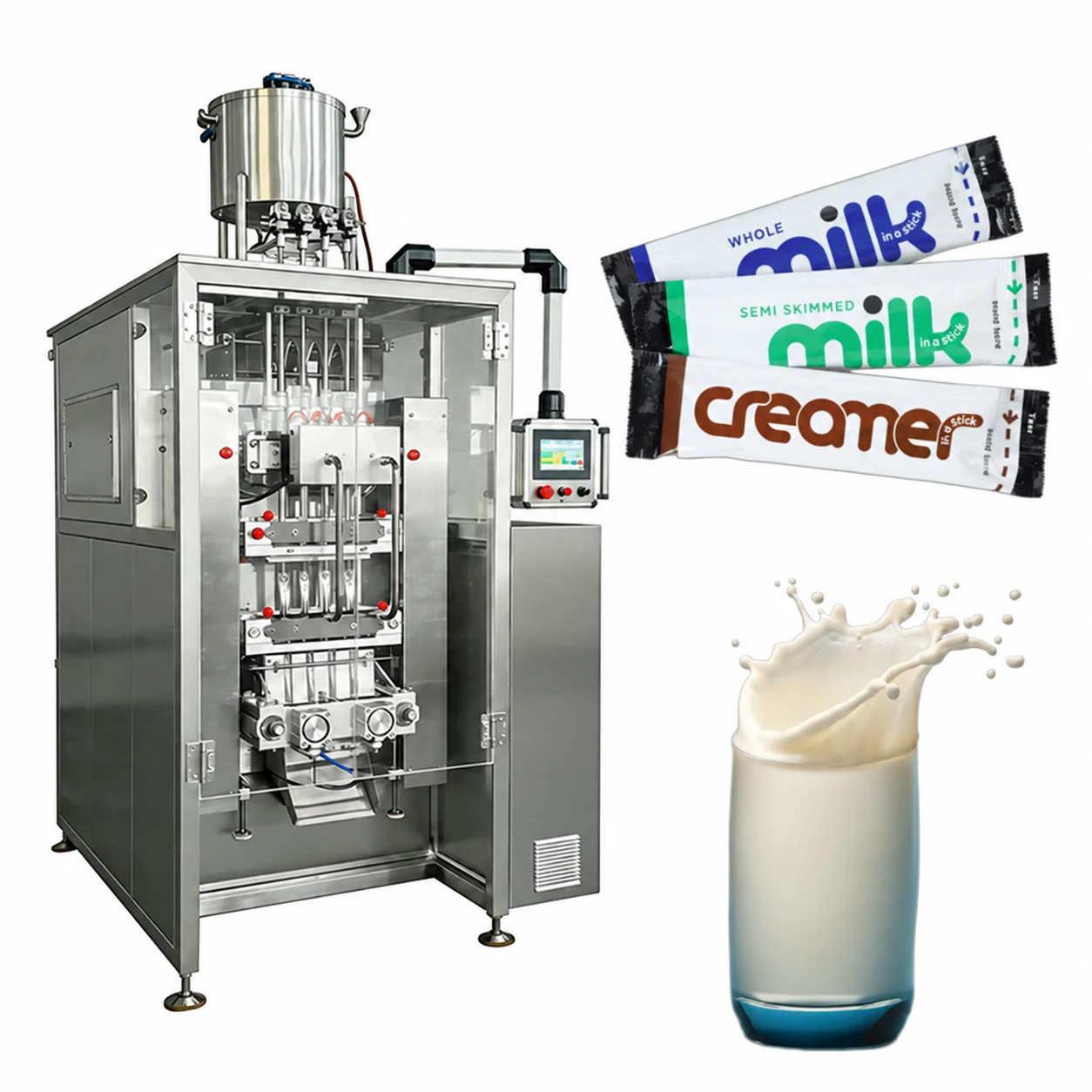
Start with a drawing of the intended stick, its target weight and the complete powder blend. Specify the packaging material and the required opening or cut features. A machine illustration provides an overview of the family; it does not fix the number of lanes or the tooling supplied for your application. Those details should be established together in the project configuration.
Keep the blend and its feeding conditions consistent
Describe how the powder reaches the dosing hopper and how replenishment occurs. Include the expected material condition, storage history relevant to the trial and observations about flow, settling or clumping. The machine will encounter the full blend, so a sample of one ingredient is not an adequate substitute unless the limitations are clearly recorded.
Discuss how the proposed feeding arrangement serves the lanes during operation. A useful assessment can include observations before and after a refill, particularly where supply interruptions are part of normal production. Record the settings and product condition used for each group of measurements. This helps distinguish questions about the dosing tools from questions caused by the way material is presented to them.
Match the lane arrangement to the packaging drawing
The number of lanes should be considered with film width, stick dimensions and the required tooling. Provide print repeat information and the intended position of the seal and cut. Include the smallest and largest sticks planned for startup, then identify which format will run most frequently. These inputs make the layout discussion more specific than a request for maximum lane count.
Ask what changes when another stick size is introduced. The answer may involve settings, forming components, sealing parts or other format-dependent adjustments. Document the approved combinations of pack dimensions and tooling. More lanes are useful only within a configuration that can feed, form and close the intended packs, with an inspection and operating arrangement appropriate to the product.
Review dosing tools and lane-specific measurements
Auger-based dosing is a route to discuss for the powder family. Tooling and settings should be reviewed against the blend and portion, with an agreed method for collecting and weighing samples. Identify how results are assigned to their lanes and how empty-pack weight is handled. This makes differences between lanes visible during assessment instead of hiding them inside one overall average.
For each sample set, record the operating condition and any adjustment made. A useful result connects product, tooling, settings and measured output. If another blend or dose is required, assess whether it falls within the reviewed configuration or needs different parts. Avoid transferring a result from one recipe to another solely because both products use a similar-looking stick pack.
Coordinate film movement, sealing and cutting
The packaging sequence needs to place the portion inside a pack that can be sealed and separated correctly. Review the film specification, print registration and finished cut position alongside dosing. Observe the condition of the seal area and the external surfaces of the collected sticks. Powder around the closing region is a different observation from a weight result and should be recorded separately.
Specify any easy-open feature, corner shape or code position in the packaging brief. Ask which features are included in the proposed tooling and which are options. Evaluate the intended film where practical, because the drawing alone does not describe its behavior during transport and closure. The agreed checks should cover the finished stick rather than only the operation of an individual mechanism.
Plan contact-part access and format clearance
Ask how the hopper and dosing components are opened, removed and returned to their operating positions. Describe the site's cleaning procedure and expectations between products. Include storage and identification for tools that are dedicated to particular blends or formats. Access to the product path should be discussed with the planned operator tasks and the available working space.
A changeover also involves packaging. Explain how film, print information and collected packs will be cleared before the next run. Include the first-pack inspection and lane-specific quantity checks after restarting. This turns a broad request for quick changeovers into a practical sequence that can be reviewed with production staff and connected to the documentation supplied with the machine.
State output as acceptable sticks under defined conditions
Machine cycles and total sticks are different measures: total sticks per minute equal cycles per minute multiplied by the active lanes, and acceptable sticks exclude rejects. Define the proposed lane count, product, dose and film whenever discussing rate, and identify the point where acceptable finished output is counted. If packs are grouped or collected downstream, include that arrangement in the scope. A cycle display does not by itself establish the number of acceptable sticks available for the next operation.
Consider normal interruptions when discussing daily production. Product replenishment, film replacement, checks and cleaning all belong in the operating plan. A sample run can be designed around the events most relevant to the project. The result should state its duration and conditions, so it can be interpreted as evidence for that reviewed configuration rather than a universal capability of the machine family.
Prepare a stick-pack project for review
Send the full blend, target weight, finished stick drawing, film specification, required output and destination. Include additional recipes and formats planned for the same machine. Explain any current problem with feeding, dust, cutting or pack appearance. Photographs can introduce these issues, while representative material and packaging samples support a more focused configuration assessment.
The next step is to agree the lane layout, dosing tools, product supply and packaging features worth evaluating. Ask for the proposal to identify controls, utilities, included inspection and format parts. Use the trial record to keep unresolved questions visible. A clear scope gives purchasing and production teams a shared description of what the offered multi-lane system is intended to produce.
| Review item | Information to confirm |
|---|---|
| Powder | Complete blend and representative flow observations |
| Stick pack | Finished drawing, film structure and print repeat |
| Lane layout | Proposed lane count matched to film and tooling |
| Dosing | Target weight, tools and lane-specific sampling |
| Changeovers | Recipes, pack sizes, contact parts and format tools |
| Output | Cycles distinguished from acceptable finished sticks |
Common questions
What is a multi-lane stick pack machine?
A multi-lane stick pack machine forms, fills, seals and cuts several narrow film packs side by side from one film web, with a dosing position for each lane. It produces more packs per machine cycle than a single lane, but every lane has to be fed, dosed and checked. The lane count is agreed for each project.
How many lanes does a stick pack machine need?
The lane count follows from your required output, stick dimensions, film width and product supply, so it is agreed per project rather than fixed in advance. Start from the acceptable sticks needed per shift, then check whether the feeding arrangement can serve every lane and whether downstream equipment can accept the combined output.
Why should stick-pack samples be weighed lane by lane?
Because a combined average can hide one lane running above target while another runs below it. Label samples by lane and collection time, keep the individual readings, and record the settings and material condition for each group. Lane-specific results show whether an issue sits in one dosing position or in the shared powder supply.
What changes when I switch to a different stick size?
Expect a mix of settings and parts. A new stick width or length can affect forming, sealing, cutting and dosing components, while other changes may only need adjustment. Provide the new drawing and film details, and ask for the proposal to list which format parts are included and which are additional.
Updated: