
Fill a dedicated cap cavity with a powder portion
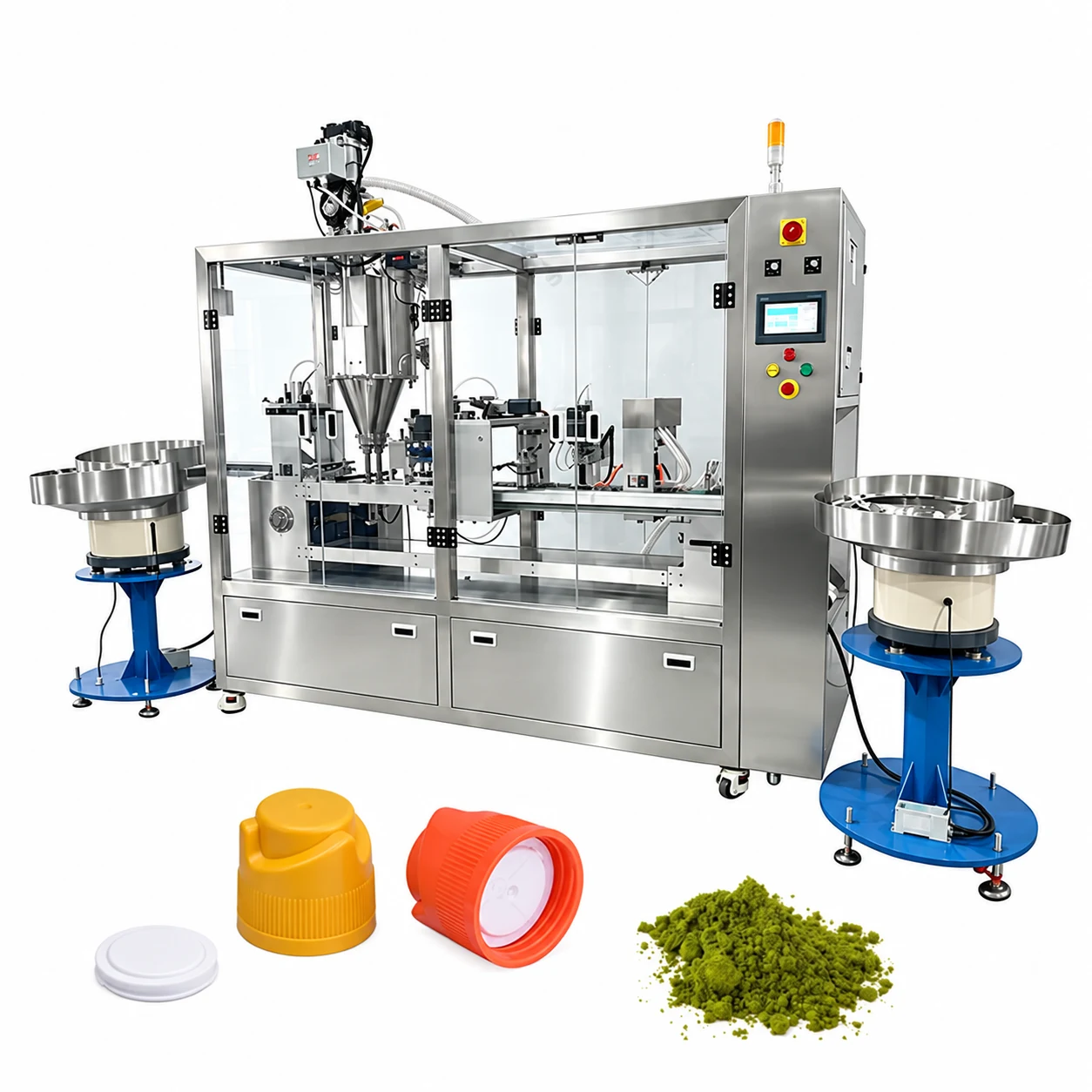
A matcha powder dosing-cap filling system places a portion of powder inside a purpose-designed closure cavity and prepares that component for sealing. It is a specialized alternative to putting the powder into a flexible stick pack. The equipment sequence must work with the geometry of the cap and the behavior of the powder at the same time.
The starting inputs are a dimensioned cap drawing, production-intent components and the intended matcha portion. Include the sealing material and explain how the consumer is expected to open or activate the package. This page introduces the equipment family and its review points. The actual feeding arrangement, dosing tooling and sealing scope need to be agreed for the component and product being developed.
Present each cap in the required orientation
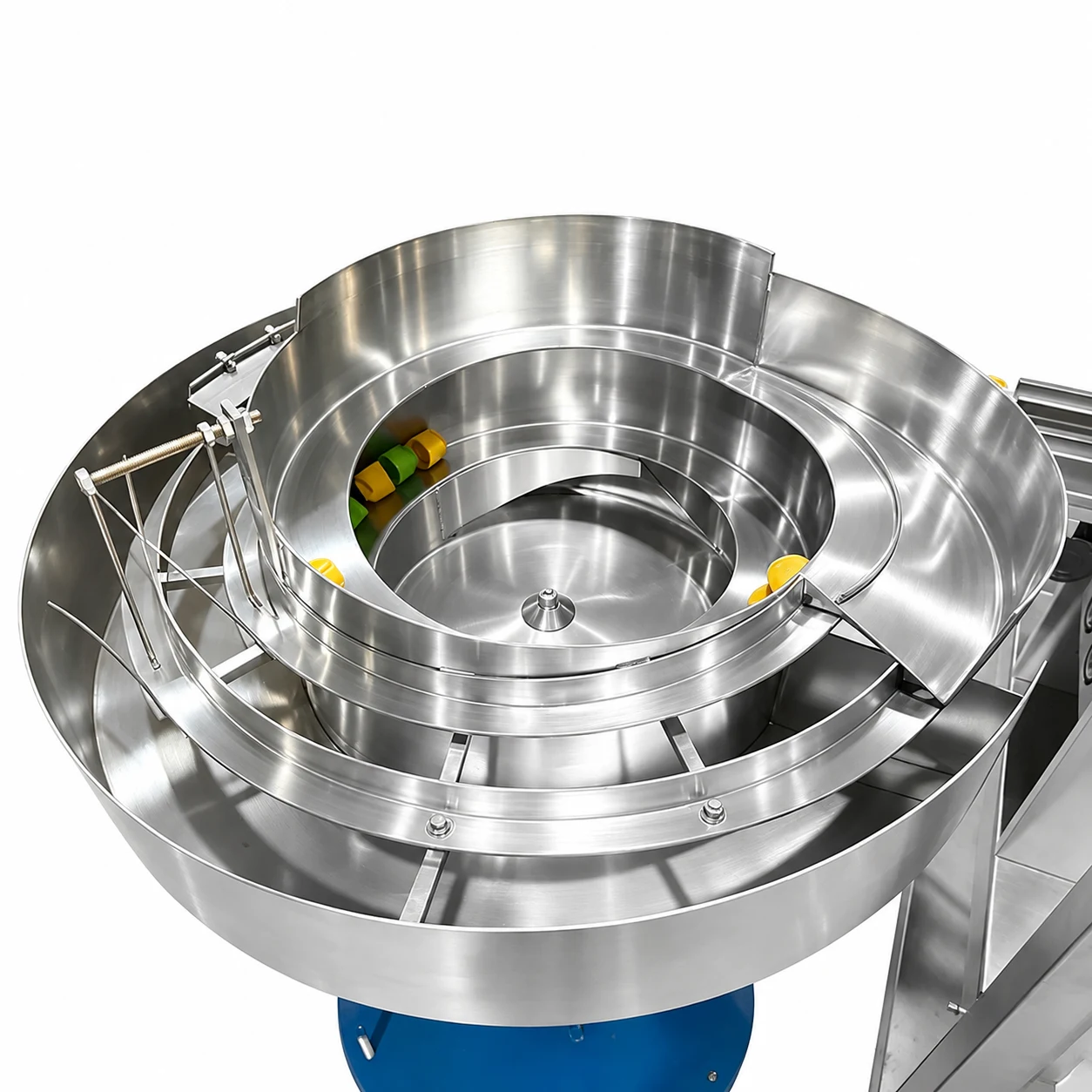
Cap handling begins before powder reaches the cavity. A feeding arrangement needs to present the component so it can be transferred and supported at the filling position. The bowl-feeder image below shows one component-presentation approach. Its track geometry and tooling are format-dependent, so the actual cap samples remain necessary for an equipment review.
Provide components with the same material and surface condition planned for production. Identify prototype differences and dimensional revisions rather than assuming they are irrelevant to handling. Ask how the proposed arrangement responds to missing or incorrectly presented parts and what detection is included. Record those functions in the scope so the component path can be evaluated alongside the dosing and sealing sequence.
Describe matcha under the expected feeding conditions
Give the team a representative powder sample and explain how it is stored and transferred at the site. Include observations about clumping, settling and visible dust. If the product is a blend, provide the complete formulation description needed for the equipment discussion. A sample of plain matcha may not represent another powder mixture intended for the same cap.
Describe the proposed refill method and the time powder may remain in the supply arrangement. During assessment, record the material condition and any changes in feeding behavior. These observations help frame questions about the hopper and dosing tooling. The useful comparison is between defined operating conditions, rather than an assumption that all green powders behave alike because the finished retail portions look similar.
Review micro-dosing with the cap in position
The dosing outlet must deliver the portion into the usable cavity while the cap is supported by its tooling. An auger-based micro-dosing arrangement is a route for discussion with this equipment family. Review outlet access, target quantity and the condition of the filled component together. The cavity drawing and actual powder sample should both be available during this review.
Agree how portions will be measured and how empty component weight will be handled. Record the tool, settings and product condition for each sample group. The smaller the target quantity, the larger the share of each reading that measurement error and component weight variation can represent, which makes the measurement method especially relevant to interpreting results. Do not infer a specific accuracy from the term micro-dosing; the proposed configuration needs an agreed test and acceptance discussion using the intended powder and packaging.
Keep the sealing rim suitable for the membrane
Fine powder left on the rim can prevent the membrane from sealing fully, so powder outside the cavity can become a concern at the sealing interface. Observe where product goes during delivery and whether material reaches the rim. Discuss any proposed dust-management arrangement and identify the required utilities or collection equipment. The assessment should evaluate the cap after filling as well as the measured portion inside it.
Provide the foil or membrane specification alongside the cap material and rim dimensions. Agree checks for placement and finished closure condition with the packaging team. A machine can perform a sealing operation without that operation alone establishing the storage performance of the consumer package. Keep the equipment review and the broader packaging evaluation connected, with clearly defined materials, conditions and responsibilities for each.
Define discharge, coding and further assembly
Explain what happens to the filled and sealed cap next. It may be collected, individually wrapped or transferred to another assembly operation. Specify the required orientation, handling method and discharge point. If another supplier provides downstream equipment, include its interface information and identify who is responsible for coordinating the connection.
Coding or inspection functions should be listed individually in the proposed scope. State what information needs to be applied and what a check is intended to identify. Include the handling of rejected components where relevant. This makes the line boundary explicit and avoids assuming that every function visible in a broad equipment illustration is included with a particular dosing-cap configuration.
Plan cap changes and powder clearance
List additional cap geometries or powder portions planned for the project. Ask which changes affect the feeder track, holders, filling outlet or sealing tooling. A different cavity can introduce several coordinated adjustments, so the format review should follow the component through the entire sequence. Identify the parts and setup records supplied for each agreed format.
Review access to the powder hopper and contact components for material removal and cleaning. Explain the site's intended procedure and the working space available. Include how parts are dried, stored and returned to their operating positions where those tasks apply. After reassembly, the restart plan should check cap presentation, portion delivery and closure condition before the machine returns to the agreed production arrangement.
Build a trial around the actual powder and closure
Send the cap drawing and samples, target powder weight, representative matcha, membrane information and required output. Include the intended activation mechanism, destination and downstream sequence. If the cap design is still changing, identify its revision and the decisions that remain open. This helps separate an early feasibility discussion from a review of production-intent equipment and tooling.
A focused assessment can follow presentation, dosing, rim condition and sealing in order. Record measurements and observations with the components and operating conditions used. Our team can then discuss the proposed configuration and unresolved questions. The resulting specification should define format parts, supplied modules, utilities and verification conditions, without using a product illustration as evidence of tested accuracy, package life or a completed customer installation.
| Review item | Information to confirm |
|---|---|
| Component | Cap and cavity drawings with revision identification |
| Powder | Representative matcha or complete intended blend |
| Dose | Target weight and agreed measurement procedure |
| Seal | Rim material, membrane specification and opening method |
| Handling | Feeding, holders, discharge and downstream interface |
| Verification | Presentation, quantity, rim condition and closure checks |
Common questions
How is matcha powder filled into a dosing cap?
The cap is fed and oriented, held in tooling at the filling position, dosed with a small powder portion and then sealed with a foil or membrane. Auger-based micro-dosing is one route discussed for this step. Each stage depends on the actual cap geometry and powder, so the feeding, dosing and sealing scope is agreed per project.
What does micro-dosing mean for filling accuracy?
Micro-dosing describes a small-portion application; it is not a guaranteed tolerance. With small targets, the measurement method strongly affects the result, so agree the target, the balance, the handling of empty component weight and the acceptance conditions for the actual powder and cavity before any accuracy figure is discussed or compared.
How do you keep matcha powder off the cap's sealing rim?
Treat rim cleanliness as a trial check alongside portion weight. Observe where powder goes during delivery, review outlet access to the cavity, and discuss any dust-management arrangement and the utilities it needs. A filled cap with powder on its rim is a sealing concern even when the portion inside is on target.
Updated: