
Quick Specs
Swipe to compare all columns.
| Input | Where it comes from | Why it changes the piston-or-pump choice |
|---|---|---|
| Product at its normal filling condition | Your batch, described as it reaches the filler, with temperature | Flow changes with temperature, and the comparison must use the product the machine will actually see |
| Largest particle and how much of it | Your measurement, or "not measured" | Public descriptions split piston and pump types mainly on particles |
| Metering unit named in each quote | Supplier proposal | "Pump" is not one technology; the pump type decides what sets the dose |
| Feed path from hopper to outlet | Supplier drawing or parts list | Every part the product touches belongs to the comparison, not only the piston or pump |
| Outlet and cutoff behavior | Your trial observation | Product trailing toward the seal area spoils a pouch or sachet even when the dose is right |
| Parts to drain and parts to remove | Supplier parts list | Cleaning effort differs by path, and one maker's pump FAQ says its pump must be disassembled to clean |
| Fill target and unit | Your specification | Both routes dose by volume or time unless a weight check is added |
What is the difference between a piston filler and a pump filler?
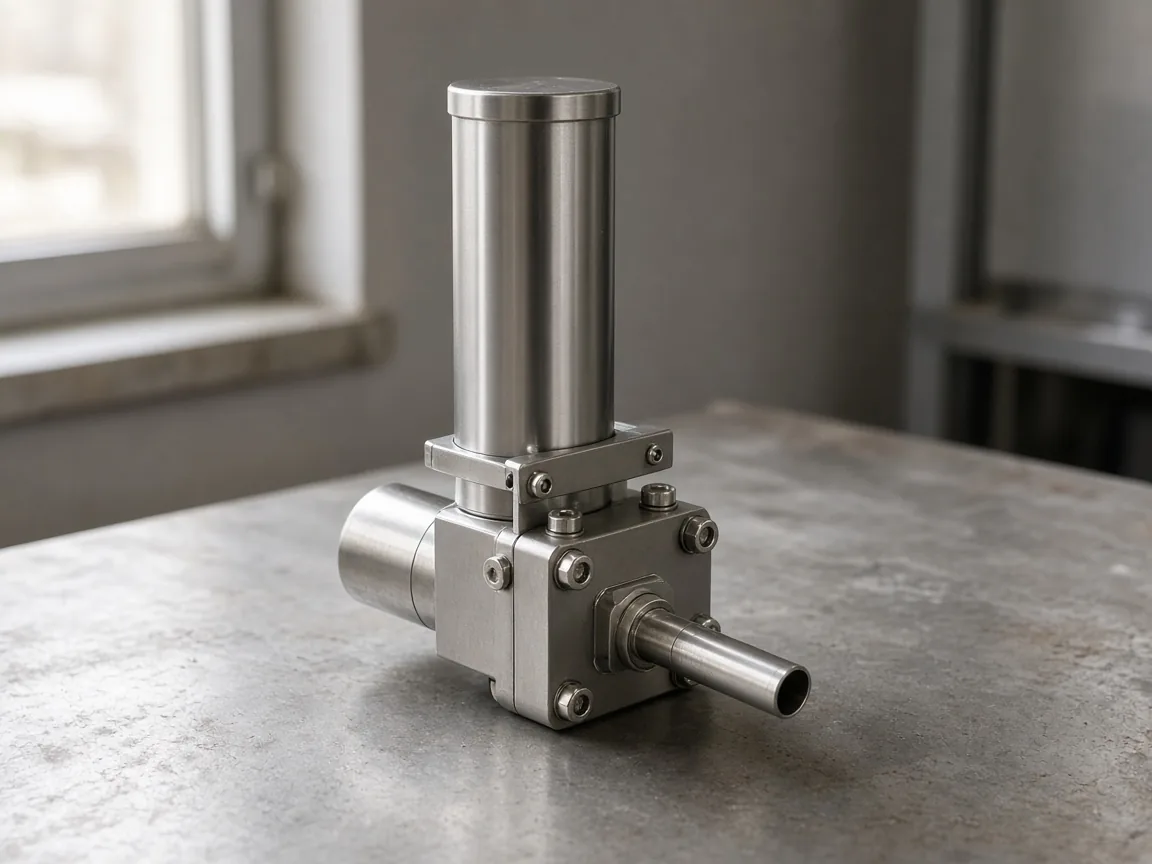
Comparing a piston quote with a quote that only says "pump filler" leaves you with two prices and no way to tell what each machine measures. A pump filler is not one technology: the pump type decides what sets the dose. A piston filler works in two strokes. On the intake stroke the piston pulls product from the supply into the cylinder; on the discharge stroke it pushes that product out through the valve and nozzle. The length of the stroke sets the volume, so the dose is fixed by the geometry of the cylinder and how far the piston travels.
A gear pump filler moves product through a pair of rotating gears, and the rotation creates a flow from the supply tank to the nozzle. With servo control, the maker we read says the rotation is set according to the required fill volume. A time-based metering pump filler controls the dose with a timer instead, and the maker we read describes timer settings in hundredths of a second for controlling liquid level. A screw pump filler described by another maker runs continuously, with a valve that directs product either to the fill nozzle or back into the supply hopper. Those are three different answers to the question "what decides how much goes into the pack?", and a single "pump" label hides all of them.
Piston fillers are themselves described as volumetric machines, so "volumetric versus piston" is not a real contrast. The useful question is what each machine uses to define the volume: a stroke, a rotation, a time, or a valve opening on a running flow. Piston units are also offered with pneumatic or servo drives. One maker describes the servo version as giving more control over piston movement, speed, recipes and filling profiles, and the pneumatic version as the simpler approach. The drive is a separate choice from the metering principle; do not let a servo label on a pump quote stand in for the pump type.
Which pump does the quote actually name?
Ask every supplier to name the pump type, then compare quotes row by row in the table below. Each filled cell paraphrases one or more public equipment descriptions we opened. A blank cell means none of the descriptions we read covered that point. Ask the supplier to fill it rather than borrow a value from another machine. The peristaltic row is blank on purpose: buyers meet the name in quotes, but none of the descriptions we opened explained it.
Two arrangements also show up in pump quotes. One maker describes rotary pump fillers with an individual positive-displacement pump head for each fill head, which tells you how many pumps you are buying but not which pump type each head uses. Vacuum fillers sometimes appear in the same search results, but they are not pump fillers: the maker we read describes them as drawing liquid into the container by vacuum and stopping at a set level, which needs a rigid container and does not suit high-viscosity products or particulates. For the pouches and sachets on this site, a vacuum filler is outside the comparison.
| Metering unit | What moves the product | What sets the dose | Particles, as publicly described | Outlet and cutoff features described | Cleaning detail described |
|---|---|---|---|---|---|
| Piston | A piston in a cylinder: intake stroke draws product in, discharge stroke pushes it out | Stroke length | Described as possible when the pathway, valve and nozzle are sized for them | One-way valve against backflow; butterfly valve option for products with particulates; nozzle options for stringing, dripping and foam; positive-off nozzles | Changeover cleaning described by one maker as more involved than for vacuum fillers |
| Gear pump | A pair of rotating gears | Controlled gear rotation, servo-set to the fill volume | Described as generally better for particle-free products | ||
| Rotary lobe pump | Named by one maker as worth considering for some particle-containing products | ||||
| Screw pump | A continuously running pump; a valve sends product to the nozzle or back to the hopper | Nozzle kept just below the rising product surface by a servo container lift, to prevent air pockets | One maker's FAQ says its grease pump must be disassembled to clean | ||
| Time-based metering pump | A pump; one maker's unit also offers gravity filling on the same frame | Timer setting | |||
| Peristaltic pump |
Does your product point to a piston or a pump?
Start with the product, not the machine. Across the descriptions we read, piston filling is the usual starting point for thick products and for products with particulates, such as sauces, creams, gels and spreads. A gear pump is usually suggested for smooth, uniform, particle-free products. When the product carries pieces, the descriptions point either to a piston fitted with a larger pathway, valve and nozzle, or to another pump type; one maker names a rotary lobe pump for some particle-containing products. This is a starting point compiled from public descriptions, not a ranking, and two of the makers we read say outright that neither technology is better for every product.
The descriptions also disagree, which is a reason to test rather than read. One piston-filler maker says piston units suit thick, chunky and hard-to-flow products. One pump-filler maker says its rotary pump fillers give better speed and control than traditional piston fillers on thicker products, and calls its screw pump the fastest, most accurate way to package thick products. Both are sellers describing their own machines. When two makers claim the same product range, the only way to settle it is your recipe running through each proposed path. One piston maker also presents its machines as filling thin products as well as thick ones with few change parts, while another says very thin, free-flowing liquids may need extra flow-control accessories on a piston filler. If your product is thin, ask how the piston path controls dripping before you assume it fits.
Temperature belongs in the same conversation. One maker describes an optional heater package that lowers a product's viscosity so it flows through the machine, with a mixer to keep the temperature even across the tank. Another notes that honey becomes harder to pump as it cools. If your product thickens on standing or in a cold room, record the temperature at which it reaches the filler, and ask whether either quote depends on heating it. On this site, the paste filling machine page lists the hopper, valve and cleaning inputs we review for sauces and pastes going into sachets.
If your product has pieces, measure the largest one and estimate how much of the product they make up. Write "not measured" when you have no figure. A sauce with seeds and a smooth sauce under the same name can need different valves and outlets, and the record below keeps them on separate rows.
Trace the product path from hopper to outlet
Compare the whole product path, not just the piston or the pump. Every part the product touches can block particles, hold residue, trap air or drip at the end of a dose, and each one has to be drained, removed and cleaned at a recipe change. A piston quote and a pump quote can carry the same hopper and nozzle and still differ in the metering chamber, the valve and the hoses in between. Ask each supplier to list the contact parts in their proposed path in order, from supply to outlet.
Use the table to turn each station into a question you can put to both suppliers. The cells are questions, not answers. They do not say which technology handles a station better, because the descriptions we read do not support that for a general comparison.
Two items in this table carry most of the weight. The metering unit row is where a vague quote shows up, because a pump quote that cannot say what sets the dose is not comparable yet. The hoses row is where cleaning effort hides, because a short drawing of the machine rarely shows every fitting the product passes through. If a supplier marks a part as optional or leaves it out, write that down too.
| Station | Piston quote: ask | Pump quote: ask | Write down |
|---|---|---|---|
| Hopper or supply | How does product reach the cylinder inlet, and does it need heating or mixing? | How does product reach the pump inlet, and does it need heating or mixing? | Supply method, temperature, holding time |
| Metering unit | Cylinder size and stroke range for your fill target | Pump type, and what sets the dose: rotation, time or valve | Unit named in the quote |
| Valve | Valve type, and whether a larger or particulate valve is proposed | Whether a valve diverts or stops flow, and where | Valve named in the quote |
| Hoses and connections | Which hoses and fittings carry product, and how they come apart | Which hoses and fittings carry product, and how they come apart | Parts to remove |
| Nozzle or outlet | Nozzle type for stringing, dripping or foam | Nozzle type for stringing, dripping or foam | Outlet named in the quote |
| Drain points | Where the path drains at the end of a batch | Where the path drains at the end of a batch | Parts to drain |
How do the outlet and cutoff change the comparison?
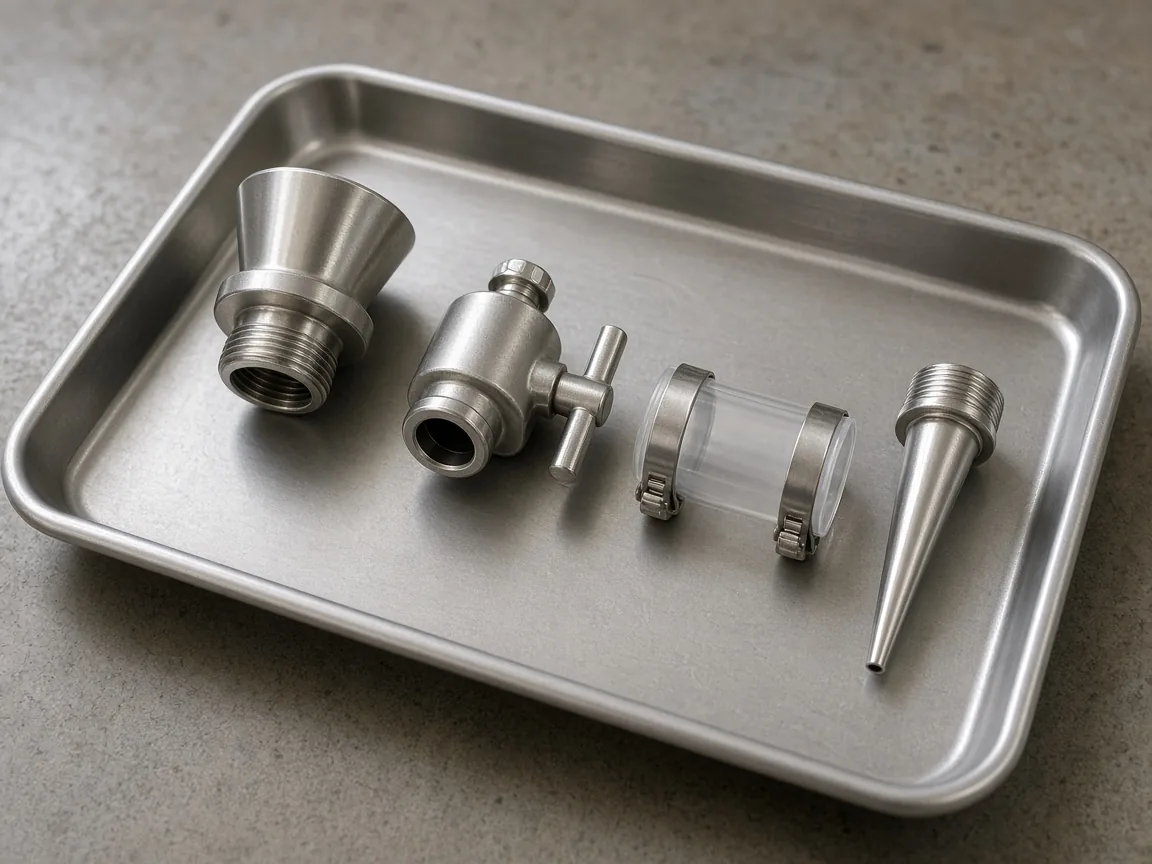
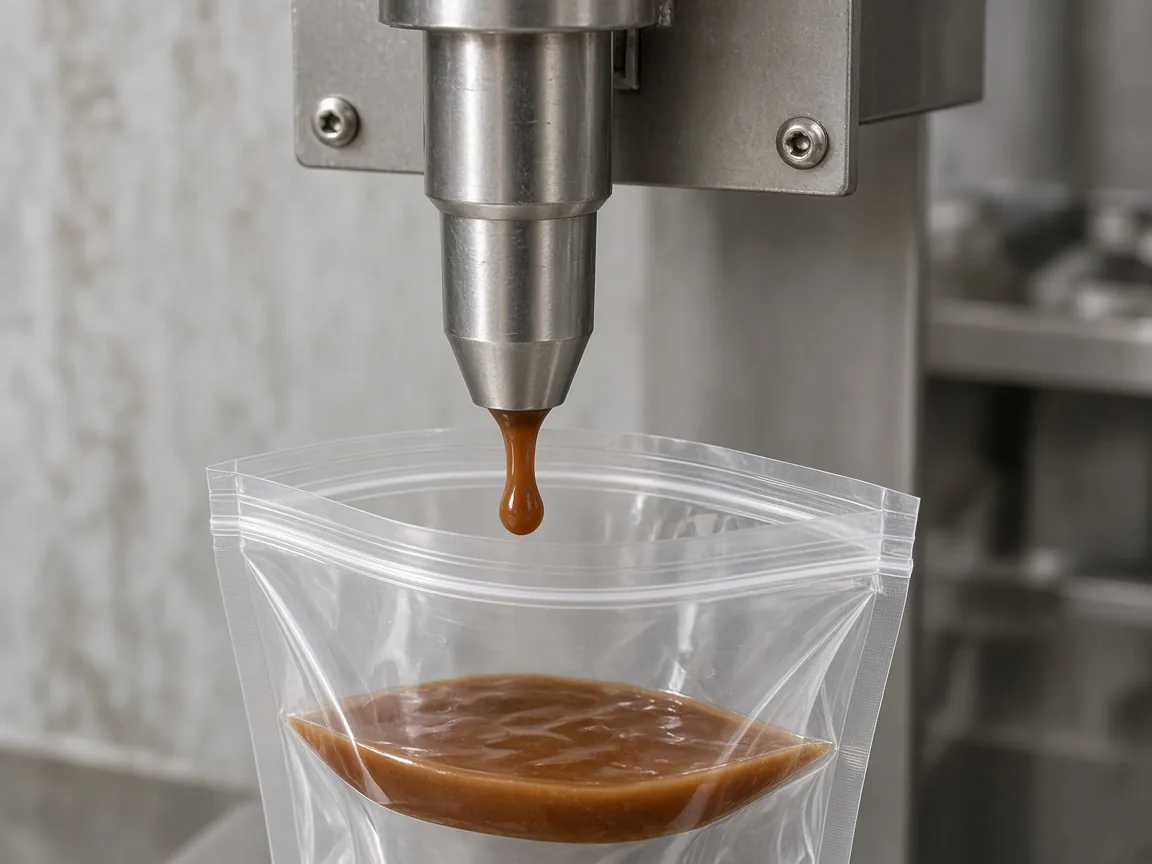
A correct dose can still spoil a pouch or sachet if product trails from the outlet toward the area that has to be sealed. Watch the end of every dose during a trial, under both quotes. The outlet options listed in public descriptions are a menu of questions to ask, not proof that a particular machine solves the problem. One piston-filler maker lists honeycomb nozzles for products that string or drip, extended nozzles that fill from the bottom up to reduce foam, and positive-off nozzles. One screw-pump maker describes a servo container lift that keeps the nozzle just below the rising product surface to prevent air pockets.
Those features are described for containers, and the machines on this site work with premade pouches and film-formed sachets. Ask how any outlet feature in a quote applies to your pack: where the nozzle sits relative to the opening, how long the gap is between the end of the dose and the next movement, and whether trailing product reaches the seal area. On this site, piston metering is described as one route for the sauce-sachet machine family. A pump-metered setup for a pouch or sachet machine would need to be confirmed in writing for your product.
Record what you see in plain words: clean stop, short tail, drip after the dose, splash, foam at the opening. Note the product temperature and whether the run included a pause, because a product that settles during a stop can behave differently on restart. Those notes go in the trial observation column of the record below, next to the metering unit that produced them.
Blank piston-or-pump record
Use one row for each metering unit you are considering, under the same product and the same normal filling condition. If the product, the batch or its temperature changes, start a new row instead of editing the old one. Leave a field blank when you have no information for it. A blank field shows the next person what is still missing, and a guessed value hides it.
Fill in the product, the metering unit type and the feed path first, because they define what the row is about. Then add the valve or pump model named in the quote, the particle measurement if you have one, and the outlet and cutoff behavior you observed. The cleaning columns separate parts that only need draining from parts that have to come off, and the procedure column holds your site's cleaning steps, which the supplier still has to confirm against their parts. The last column marks each item as included, optional or unknown in the quote, so a missing valve or nozzle does not quietly drop out of the comparison.
The record does not score either row. It makes sure the piston row and the pump row describe the same product under the same condition before anyone reads a difference into them.
| Product and normal condition | Metering unit type | Feed path | Valve or pump model to confirm | Particle measurement, if available | Outlet and cutoff | Parts to drain | Parts to remove | Cleaning procedure to confirm | Trial observation | Included, optional or unknown |
|---|---|---|---|---|---|---|---|---|---|---|
What this page does not decide
This page compares metering units and the product path around them. It does not choose a level of automation, set an output budget, or give fill speeds, accuracies or prices, because none of the descriptions we read supported a general figure for either technology. Makers quote speed and accuracy for their own machines under their own conditions, and one piston-filler maker says itself that actual accuracy depends on the product, fill volume, configuration and operating conditions.
It also does not settle how the filled quantity is measured. The piston and pump fillers described here set the dose by stroke, rotation or time; one piston maker adds a scale feedback system to make volume adjustment easier. If your target is a weight, the filled packs have to be checked on a scale with the product's density written down. The guide on recording density and tare before comparing volume and weight covers that step. Take the piston-or-pump record with you into it rather than replacing it.
What to send us
Send your piston-or-pump record through the Request a Quote page, with blank fields left blank. Our reply says which fields are still missing before the quotes can be compared, and which questions to put to each supplier about the metering unit, valve, outlet and cleaning. We reply within 24 hours.
The table lists each item, why we need it and a format that keeps it usable. The reply covers the record and the questions only. It does not propose a machine model, a price, a speed or an accuracy figure.
Send your piston-or-pump record: the product and its normal filling temperature, the largest particle and how much of it if measured, the fill target with its unit, the pack (premade pouch or film sachet), the metering unit, valve and outlet named in each quote, and your cleaning procedure. Leave a field blank or write "not measured" where you have nothing.
| Item | Why we need it | Example format |
|---|---|---|
| Product and normal filling temperature | Flow changes with temperature | Product name plus temperature at the filler |
| Largest particle and how much of it | Particles split piston and pump options | Size with unit, share of product, or "not measured" |
| Fill target and unit | Shows whether a weight check is needed | 250 mL or 250 g, not a bare number |
| Pack | Outlet and cutoff depend on the opening | Premade pouch or film sachet, with drawing |
| Metering unit, valve and outlet in each quote | Makes the quotes comparable | Supplier wording, copied as written |
| Cleaning procedure | Tells us which parts must drain or come off | Your site's steps, or "not written yet" |
Method and sources
Compiled from public product pages and articles published by filling-equipment makers, fetched on 6, 8 and 11 October 2026. The descriptions of piston, gear-pump, screw-pump, time-based pump and vacuum filling, the outlet and valve options, the heating note, the cleaning notes and the conditional starting points by product type come from those pages. They are seller descriptions, not test results, and the makers are not named here. Where two makers disagree, both positions are reported.
The station table, the blank record and the order of the questions are our editorial method. This page reports no test of either technology, and it contains no machine speed, accuracy figure, price or customer result. The fill target in the example format column is a formatting example, not a recommended dose.
Common questions
What is a piston filler?
A piston filler is a volumetric filling machine. On the intake stroke a piston draws product from the supply into a cylinder; on the discharge stroke it pushes the product out through a valve and nozzle. The stroke length sets the volume. Drives can be pneumatic or servo.
What are the pros and cons of a piston filler vs a pump filler?
Public descriptions start piston filling with thick or particle-containing products and gear pumps with smooth, particle-free ones. Makers disagree on thick products, and one notes more involved changeover cleaning for pistons. Name the pump type, then run your product through both paths.
Is a vacuum filler a better option than a piston filler?
They do different jobs. A vacuum filler draws liquid into a rigid container until it reaches a set level; the maker we read says it does not suit high-viscosity products or particulates. For pouches and sachets, compare piston and named pump units instead.