
At a glance
Swipe to compare all columns.
| Review | Bring to the discussion | Decision to record |
|---|---|---|
| Foam | Actual formula and filled bottle samples | Nozzle position, flow and settling trial |
| Dosing | Target quantity and measurement basis | Volume or filled-weight evaluation |
| Chemical service | Chemical identity and contact-part schedule | Material review for the intended formulation |
Start with the formula, the fill target and chemical service
Choose a shampoo detergent filling machine by reviewing foam control, the dosing basis and the product-contact materials as separate decisions. Foam can make a bottle appear full before it contains the correct quantity of product. For the selection brief, ask how quantity will be checked, how the nozzle will move and which chemical will contact each part.
Use this guide to prepare a bottle-filling trial and a material review. Start your broader equipment comparison with our liquid filling machines page, and use the cosmetics application page for the personal-care packaging discussion. Keep the proposed bottle configuration and its acceptance record together when requesting a quotation.
Trace foam from the supply to the bottle mouth
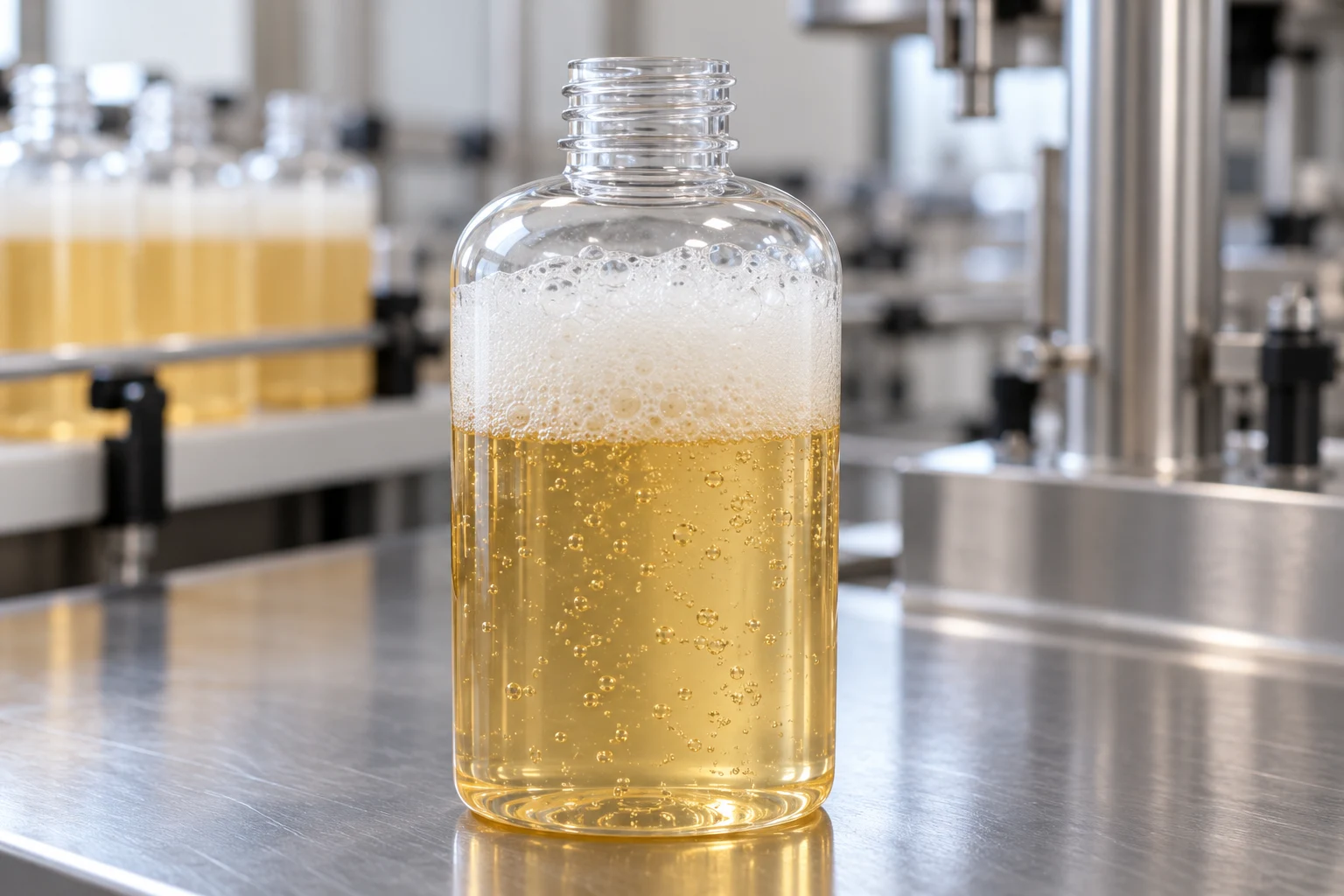
Surfactants contribute to foam in shampoo. Excessive agitation in the mixing tank or product transfer system may introduce air into the formula. During your trial, record the condition of the supplied product before changing the dispensing settings. Keep separate observations for the supply, the bottle during filling and the bottle before closure.
Aeration can cause problems when shampoo packaging is filled by volume rather than weight. Aeration can also cloud clear shampoos. Include the product appearance and the quantity check in your trial record. Ask for the bottle to be observed immediately after dispensing and again at the intended closure point, with the corresponding settings written alongside the observations.
Foam may slow capping. It may also leave residue around the bottle opening. Inspect the neck as well as the liquid surface. Record any residue and the point at which it appears, then repeat the observation with the proposed nozzle and flow settings. Keep the actual product available throughout the comparison.
Choose the dosing basis before the nozzle details
Shampoos are typically shear-thinning mixtures requiring low-shear pumping action. Record the viscosity information supplied for your formula, together with its measurement conditions. Ask the trial team to identify the product being tested and the condition in which it reaches the filler. Put the transfer arrangement and the proposed dosing method in separate fields of the equipment brief.
Piston filling meters a set volume. Net-weight filling may be worth evaluating for larger containers or applications where the filled weight is the main control target. Decide which quantity the acceptance record will report before comparing configurations. Write down the target, the measurement method and the bottle identification. Use the same record format for each proposed setup, and retain the observations alongside the selected settings.
For a filling machine for shampoo, begin the discussion with the actual formula and intended package. Ask for a named dosing method, a description of the product supply and a trial plan tied to your measurement basis. Carry those decisions into the nozzle review instead of accepting a configuration description consisting only of a head count.
Specify diving motion, flow control and shutoff separately
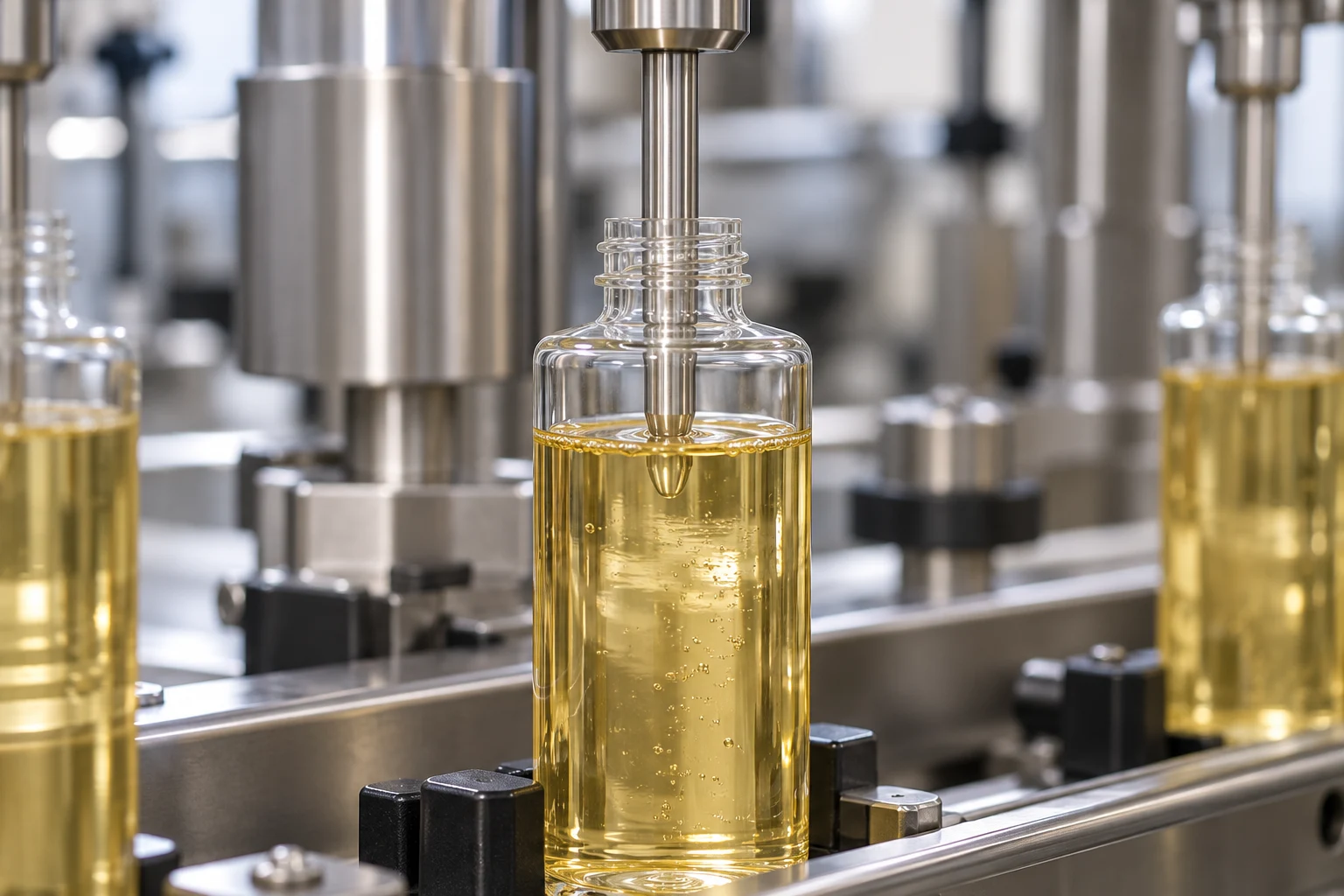
Depending on the product and bottle, a diving nozzle can move into the container and fill closer to the liquid level to help reduce splashing. A controlled filling profile can slow the flow near the end of the cycle. Ask for the proposed nozzle path and flow profile to be shown with your bottle. Review the entry, the filling position and the withdrawal as distinct parts of the demonstration.
A suitable nozzle shutoff can reduce dripping between bottles. Add a separate observation for the end of dispensing. Watch the tip after flow stops and record the condition of the bottle mouth. In the configuration description, ask for shutoff and any suck-back feature to be identified by name rather than grouped under the word diving.
Each nozzle on the FILAMATIC In-Case filling system has a tip shut-off valve and a suck-back system to prevent dripping. For your proposed configuration, ask which of these functions is included and how it will be demonstrated with your product. Keep the answer beside the nozzle-motion record and request a corresponding observation at the end of each trial run.
Include settling and bottle release in the cycle review
Confirm nozzle position, filling speed and settling time with the actual product. Set up the trial agenda around those decisions. Ask for the observations and settings to be recorded together, and identify the bottle and formula used in each run. Request another run when a proposed adjustment is made so that the resulting record remains tied to a specific setup.
Select the filling-head count using the complete cycle: bottle positioning, nozzle travel, dispensing, foam settling and bottle release. Ask the demonstration to include the handoff toward closure. Record the start and end of each activity and mark the point at which the bottle is released. Review that sequence alongside the quantity checks and the bottle-mouth observations before agreeing the configuration.
Review bleach contact materials as a separate service
Hypochlorites are alkaline and oxidising. Pitting or crevice corrosion can occur on most stainless steel grades in a 5% hypochlorite solution at ambient temperatures. Put the exact bleach formulation in the material-review brief. Request a contact-part schedule for the proposed arrangement and attach the chemical conditions against which each component will be evaluated.
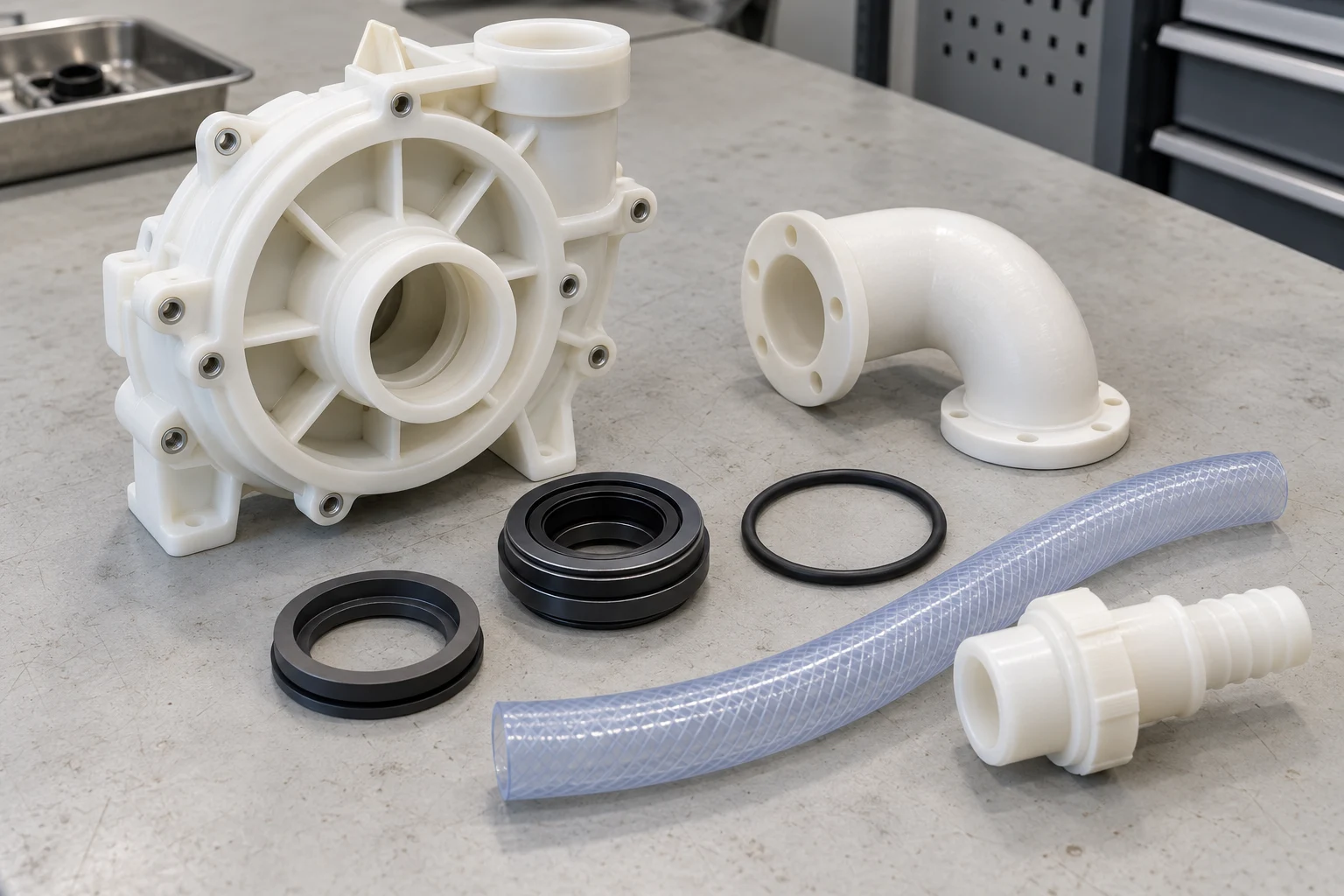
Higher temperatures add a risk of stress corrosion cracking in hypochlorite service. Include the intended exposure conditions in the same review. Ask for the product-contact components to be identified individually, including the pump, hose, valves, seals and nozzle. Keep the chemical-service assessment with the configuration record when comparing proposals.
For hypochlorite pumping, Verder recommends non-metallic construction such as polypropylene or PTFE. Use those materials as candidates for the component discussion. Ask for the specific proposed material and its supporting compatibility evidence to be entered against each part. Review the complete proposed product path before selecting the bleach-service arrangement.
Identify the acid before requesting a custom configuration
For custom automatic acid filling machines, begin the request with the exact acid identity and concentration. Stainless steel types 304 and 316 should be considered non-resistant to hydrochloric acid at any concentration and temperature. For a hydrochloric-acid project, request a material schedule matched to that service. Keep the acid-specific assessment distinct from the shampoo nozzle trial and the hypochlorite review.
Additional chlorides or chlorine in hydrochloric acid can make attack more severe. Include the full chemical description in the request rather than reducing it to the word acid. Ask the component review to address the actual formulation and its intended exposure conditions.
Do not mix bleach with ammonia, acids or other cleaners. Mixing chlorine bleach with an acid releases chlorine gas. List bleach and acid products separately in the project brief. Identify every product and cleaning chemical intended for the proposed equipment before discussing any changeover arrangement.
Complete the material review with the actual process fluid
Actual chemical content can differ between suppliers and brands. Watson-Marlow recommends compatibility testing with the process chemical fluid. Request the exact fluid identity and the proposed component details in the compatibility record. Ask for the test scope and conditions to accompany its conclusion, and keep that record linked to the corresponding part in the material schedule.
Bring the completed formulation brief, bottle drawing and trial agenda to the equipment discussion. Include the surfactant description, viscosity information, bleach content or acid identity, bottle opening and target quantity. Ask for the proposed nozzle motion, flow profile, shutoff and material schedule to be addressed individually. Use the enquiry panel below to send these inputs for your project.
Sources
- ZONESUN — Shampoo & Detergent Filling Line Design Guide
- Silverson — Manufacture of Shampoos
- Viking Pump — Shampoo
- FILAMATIC — In-Case Filler
- BSSA — Selection of stainless steels for handling sodium hypochlorite
- Verder Liquids — Pumping Sodium Hypochlorite
- BSSA — Selection of stainless steels for handling hydrochloric acid
- Washington State Department of Health — Dangers of Mixing Bleach with Cleaners
- Watson-Marlow — Chemical compatibility guide
Common questions
Why can a shampoo bottle look full before the dose is complete?
Foam can make a bottle appear full before it contains the correct quantity of product.
What should a diving-nozzle trial establish?
Confirm nozzle position, filling speed and settling time with the actual product.
Does nozzle shutoff help between bottles?
A suitable nozzle shutoff can reduce dripping between bottles.
Can stainless steel be assumed suitable for bleach?
Pitting or crevice corrosion can occur on most stainless steel grades in a 5% hypochlorite solution at ambient temperatures.
What happens if chlorine bleach is mixed with an acid?
Mixing chlorine bleach with an acid releases chlorine gas.
What to send us
Swipe to compare all columns.
| Item | Why we need it | Example format |
|---|---|---|
| Formula and surfactant description | Review the actual product for the filling trial. | Formula description and product sample |
| Viscosity and measurement conditions | Document the product condition for the proposed trial. | Viscosity report with measurement conditions |
| Bleach or acid identity | Define the chemical-service review. | Chemical identity, concentration and intended exposure |
| Bottle opening and target fill | Set the scope for the nozzle and quantity checks. | Bottle drawing, sample and fill target |
We reply within 24 hours.