
A filling sequence built around supplied pouches
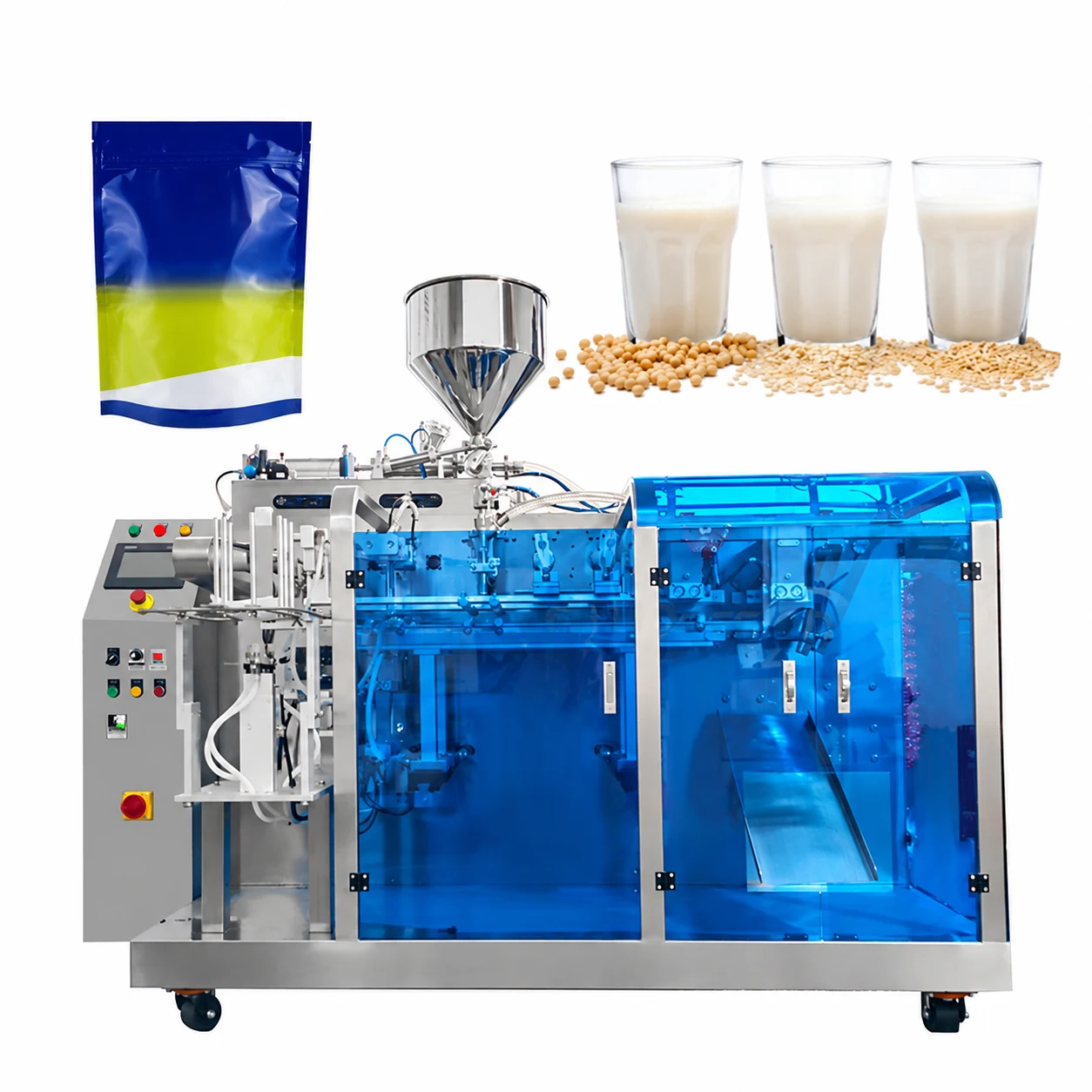
A liquid premade-pouch filling machine handles bags that arrive already manufactured. Its working sequence includes presenting a bag, opening it, delivering a portion, sealing the opening and discharging the finished pack. This equipment route is relevant when the project uses supplied flexible pouches rather than forming the package from roll stock during filling.
The configuration begins with both the pouch and the product. Provide the intended bag drawing and representative samples alongside the liquid description. State the quantity and output required for the first production format. This page describes the equipment family and the questions needed to define it; the accepted bag types, dosing arrangement and operating conditions should be confirmed in the proposal for your project.
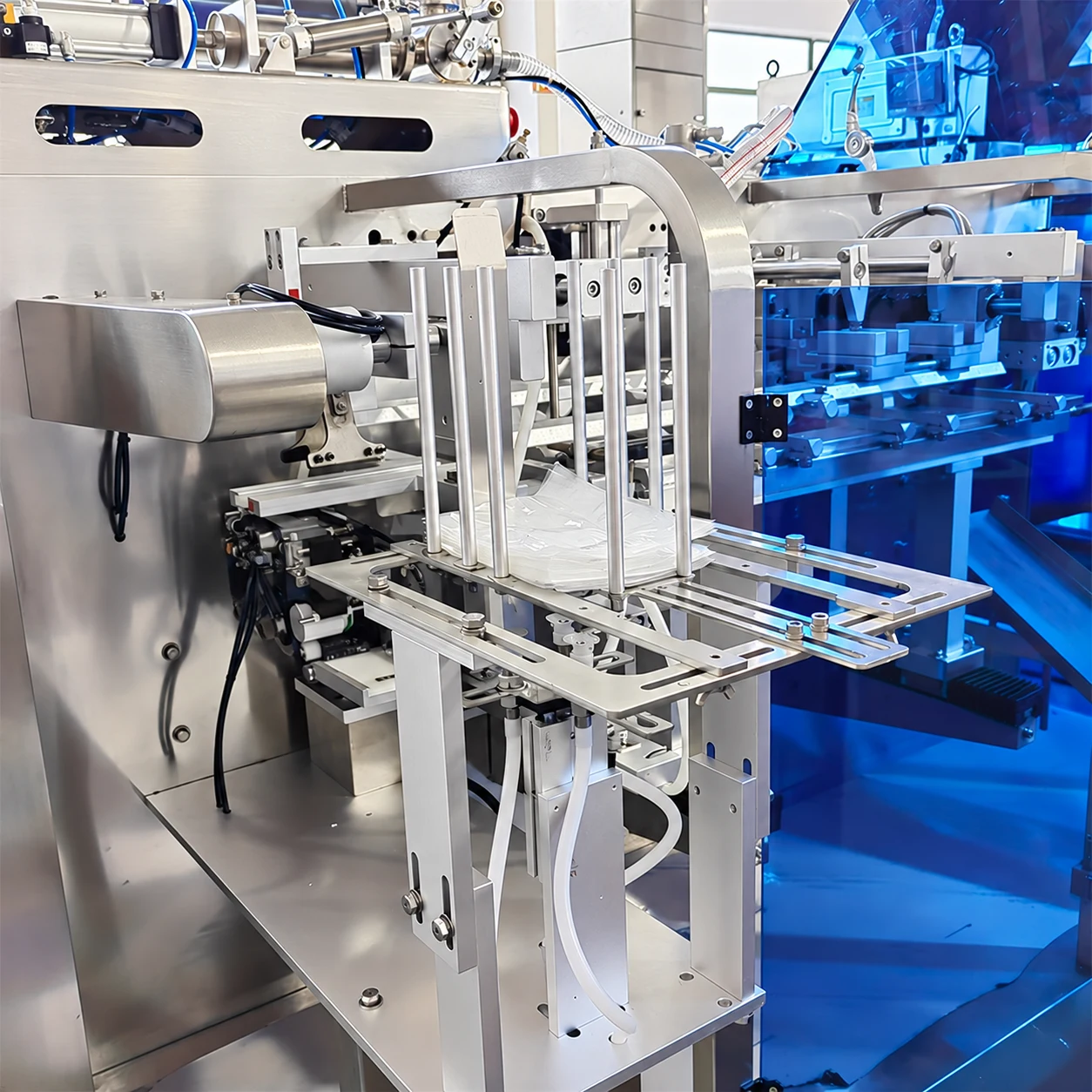
Present the bag consistently from the magazine
The bag supply and pickup arrangement introduces each pouch to the process. Review magazine loading, bag orientation and the surfaces used to handle the component. The condition of the supplied bags matters to this discussion, so use samples representative of the intended production material. Include any gussets, zippers or special features that affect presentation.
Observe pickup and transfer before evaluating filled output. Ask what the offered configuration does when a bag is missing or is not presented correctly, and identify any detection included in the scope. Run empty bags first: a clear empty-bag handling review helps separate packaging-presentation questions from liquid-dosing questions. The magazine detail image below illustrates the type of mechanism under discussion without defining tooling for every possible pouch.
Confirm opening and support at the filling position
The pouch needs an opening suitable for the proposed filling outlet and enough support during delivery. Provide the bag's usable opening dimensions, overall shape and expected filled condition. A stand-up base or reclosable feature should be identified explicitly. These characteristics belong in the handling review rather than being inferred from the outside width of a flattened bag.
During a sample assessment, observe whether the bag reaches the filling position in the expected condition. Agree the criteria for proceeding with a fill and the handling of an unsuccessful opening. Where a nozzle movement or support arrangement is proposed, review it with the actual pouch. The aim is to evaluate the package as a flexible component in motion, not simply as a dimension on a drawing.
Supply and meter the liquid for the intended portion
The dosing system should be specified against the product at its normal filling condition. Describe temperature, flow, foaming and any suspended material. Explain how product reaches the machine and who supplies the tank or transfer equipment. A clear inlet boundary helps the team review the filler under realistic supply conditions and avoids leaving upstream assumptions unstated.
Agree the target quantity and the method used to measure filled portions. If the control setting is volumetric but the acceptance check is by weight, keep those measures distinct in the test record. Examine the start and end of filling as well as the measured result. Splashing, trailing product and contact with the bag opening can be relevant even when the collected portion meets the quantity target.
Coordinate sealing with the filled pouch
After filling, the bag opening needs to reach the sealing step in a suitable condition. Discuss the material structure and the intended seal location with the packaging supplier's information available. Review how the product settles, how the bag is presented to the sealing area and whether residue reaches the closure surfaces during the agreed run.
Define the finished-pack checks before the assessment. These may include seal appearance, dimensions, external cleanliness and the agreed handling or leak check. Keep any opening feature or code position in view as well. The image of a complete machine introduces the equipment arrangement, while the actual sealing setup needs confirmation with the selected pouch and product rather than a general claim covering all flexible packaging.
Set out format changes and contact-part cleaning
List the bag sizes, portion sizes and liquids planned for the machine. Ask which changes require repositioning guides, changing holders, replacing filling parts or selecting approved settings. Include the most frequently used formats as well as the extremes. This gives the supplier a clearer basis for defining tooling and lets the production team assess the practical changeover sequence.
Review the liquid-contact path separately. Identify how product is removed, which components can be accessed and where parts are cleaned or stored. Supply the site's intended cleaning procedure and utilities for discussion. The changeover scope should include reassembly and checks on the first finished packs. This avoids describing flexibility only in terms of the adjustment range shown on a control screen.
Establish output and downstream responsibilities
Specify where acceptable output will be counted and what happens after the pouch leaves the machine. If coding, inspection or pack collection is required, identify whether it is included or supplied separately. Transfer height, orientation and handling of a newly filled pouch are useful details when connecting the machine to another operation or to an existing conveyor.
Evaluate output under stated conditions: product, bag, portion, supply arrangement and run period. Include relevant replenishment or restart events in the discussion. A nominal family speed cannot describe every packaging combination, because bag size, portion and product behavior each change the achievable rate. Ask for the proposed operating conditions and measurement method to be recorded with the configuration, so production expectations and acceptance checks refer to the same finished item.
Send the pouch and product details together
For an initial review, send the pouch drawing, material specification, product description, target portion and required output. Add photographs of the intended pack, destination and available utilities. Identify features such as a zipper, spout or unusual opening rather than assuming they fall within the standard handling arrangement. If a bag supplier is still being selected, mark that information as provisional.
Our team can then discuss the likely handling and dosing scope and identify samples needed for assessment. A focused review can follow the full sequence from magazine to discharge, recording quantity and packaging observations along the way. The final proposal should name the agreed bags, product conditions, tooling, supplied options and verification method so that the equipment description translates into a concrete project.
| Review item | Information to confirm |
|---|---|
| Pouch | Drawing, material and production-intent bag samples |
| Product | Filling temperature, flow, foam and suspended pieces |
| Portion | Target quantity, unit and measurement procedure |
| Handling | Opening features, support and agreed bag formats |
| Output | Acceptable packs at the defined discharge point |
| Supply scope | Product feed, dosing, sealing, coding and inspection |
Common questions
What does a premade pouch filling machine do?
A premade pouch filling machine takes bags that are already made, picks them from a magazine, opens them, fills the liquid and seals the opening before discharge. It does not form bags from film. Because it handles the actual flexible component, bag dimensions, stiffness and opening features matter as much as the behavior of the liquid itself.
Can a premade pouch machine fill zipper or spout pouches?
Zipper and spout pouches need specific confirmation for the offered configuration. These features, like gussets and stand-up bases, change how the bag is picked, opened, supported and sealed. Send the exact bag drawing and production-intent samples so the handling scope, tooling and any additional options can be defined before a quotation is prepared.
What should a pouch filling machine trial check?
A trial should follow the whole sequence: bag pickup, opening, filling, sealing and discharge. Record portion measurements alongside opening reliability, splashing or residue near the seal, and agreed finished-pack checks such as seal appearance and external cleanliness. Include empty-bag handling and a refill or restart if those events matter in your production.
Updated: