
Match the process to the food you actually produce
A food and beverage filling machine handles products that behave very differently at the filling point. A flowing drink, sticky dried fruit and a fine beverage powder should not be assigned the same dosing system simply because all three are foods. Our application range includes liquid pouch filling, sauce sachets, weighed dry-food packs and powder stick packs. Start with the product in its production condition, then choose a packaging process around it.
For an initial review, describe what happens between preparation and packaging. Include the normal product temperature, holding time, batch size and transfer method. A sample taken straight from a mixing vessel may behave differently after waiting in a hopper. Identify the priority recipe and pack size, then list any additional products the project needs to accommodate. This gives the equipment discussion a specific starting point.
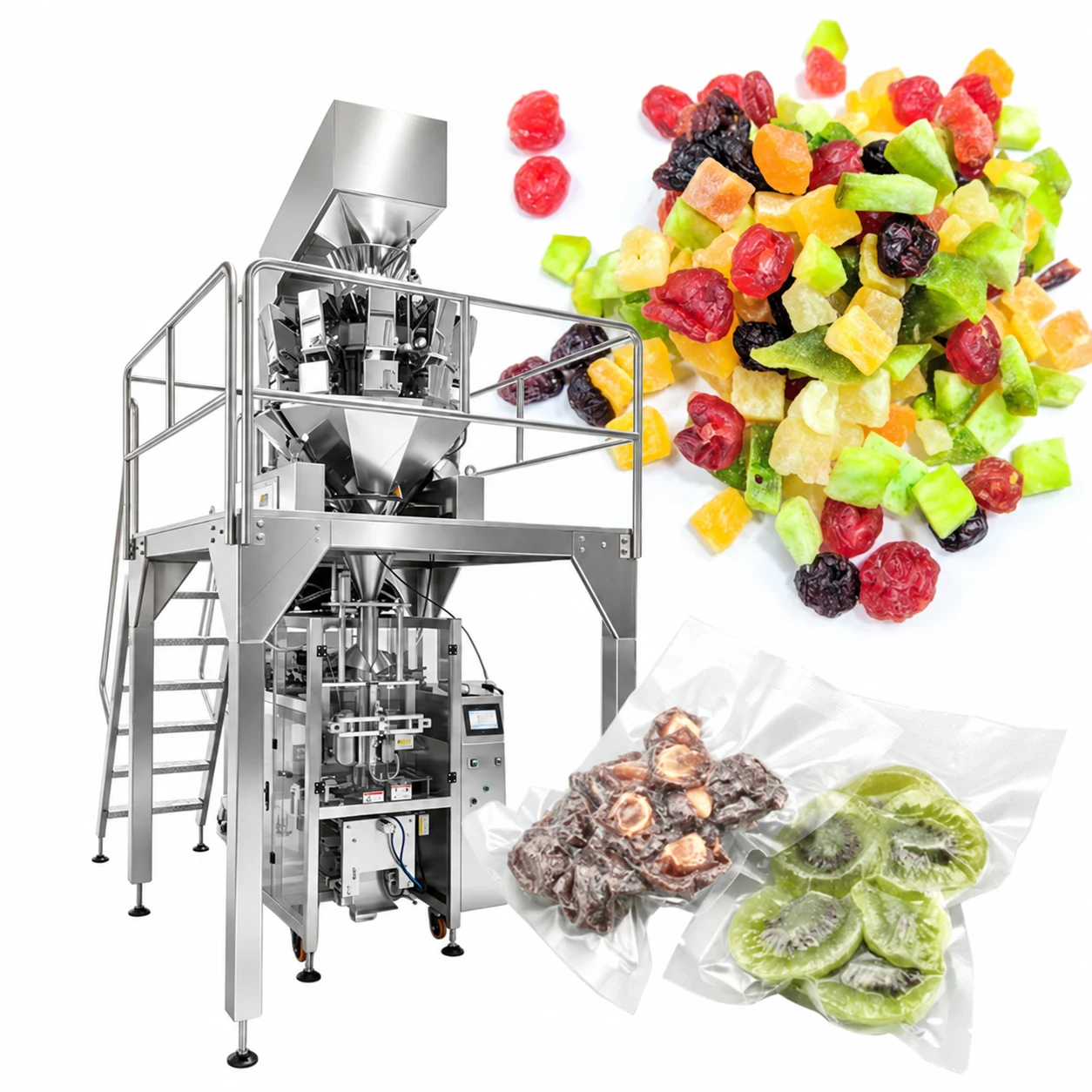
Weigh nuts, dried fruit and other dry foods as a complete flow
A dry-food installation can combine product feeding, combination weighing, a transfer chute and vertical form-fill-seal packaging. The practical task is to move individual pieces through that sequence without creating unacceptable damage or irregular supply. Raisins, fruit slices, nuts and coffee beans need their own review of size, surface condition and handling. Photographs of a product assortment are useful, but a representative production sample provides a better basis for discussion.
For mixed foods, identify whether the blend is prepared upstream or whether separate ingredients need controlled introduction. Record the acceptable appearance of the finished mix and how it will be checked. Review every drop and transfer, including the distance between the weigher and the pack, since each drop is a point where fragile pieces can break. The proposed platform, feeder and discharge arrangement should appear on the same layout as the central packaging machine.
Plan liquid foods around feeding and package handling
For beverages and pumpable foods, consider the route from the supply vessel to the dosing outlet. Explain whether the product foams, contains pulp or pieces, separates while standing, or changes its flow as it cools. These observations guide a review of the hopper, transfer arrangement and filling outlet. The selected contact path must also suit the cleaning process used by your production team.
Premade-pouch equipment handles a bag supplied in its finished shape; a film-based machine forms the pack as part of the production cycle. Provide a pouch drawing or film specification, including the filling opening and seal area. Where a spout or special closure is involved, make its supply and handling explicit. Filling and sealing must be assessed together using the actual package rather than assuming any bag can pass through the same configuration.
Give drink powders their own dosing and sealing review
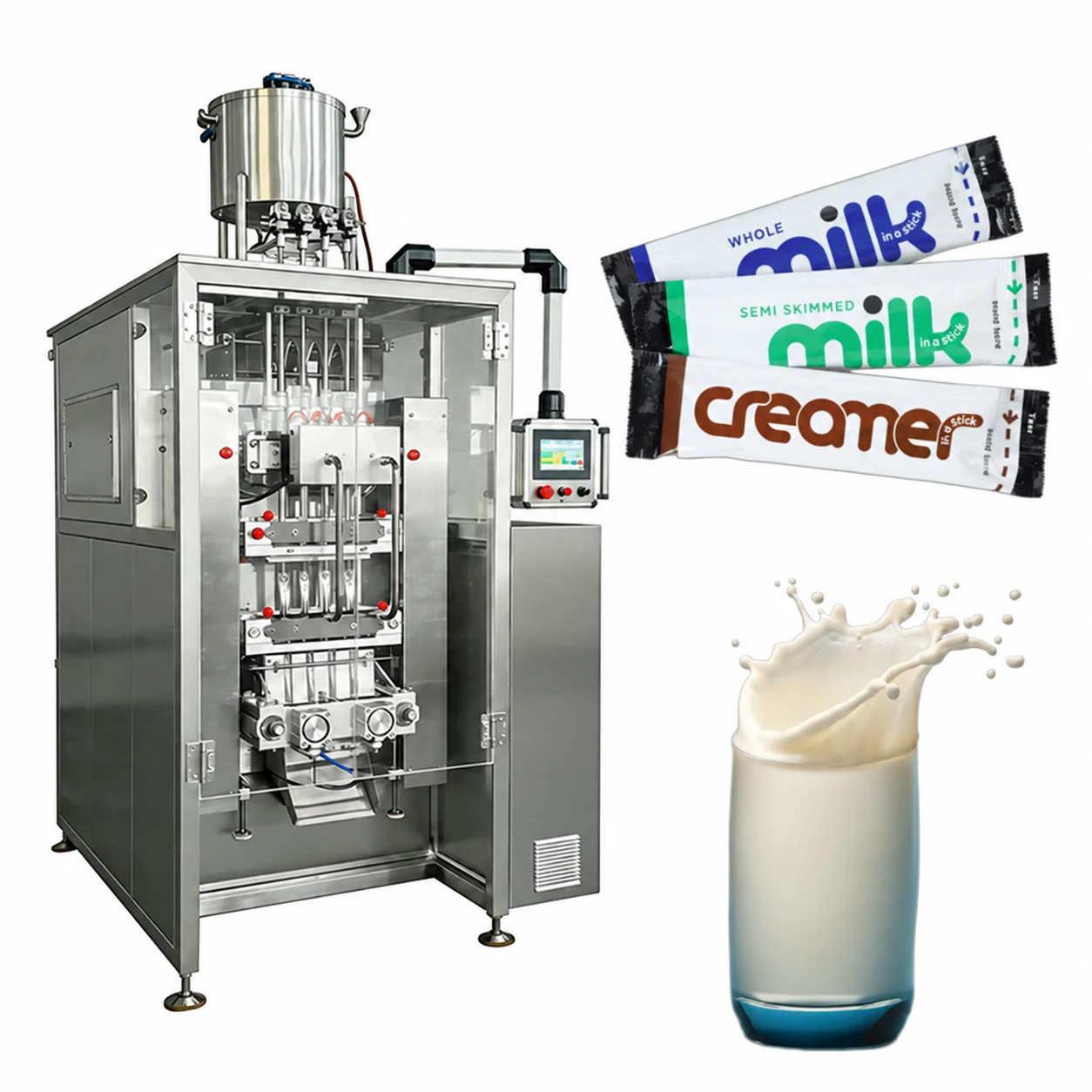
Milk powder, instant drink mixes and similar dry blends can be packaged in small film-formed portions. Multi-lane stick-pack equipment combines repeated dosing positions with film handling and sealing. Discuss the blend as supplied, including its tendency to settle, form lumps or release dust. Record how material will reach the machine and how replenishment will be managed during a run.
Keep the fill target and the finished-pack checks separate. A correct net quantity does not answer whether powder has reached the seal area or whether the tear opening works as intended. Collect samples by lane when reviewing a multi-lane arrangement, and retain the measured values alongside observations of the packaging. If a new flavor or ingredient changes the blend, review that change before treating an earlier trial as evidence for the new product.
Specify packaging features before adding preservation options
Prepare a packaging brief with dimensions, film construction, seal layout, opening features and print registration. For coffee, include any valve requirement and identify who supplies and integrates that function. For dry foods, state whether vacuum or gas flushing is part of the proposed process and what product and pack measurements will be used to assess it. Such modules should be identified as configuration items in the proposal.
Separate equipment operation from validation of the finished food. Packaging material, product preparation, sealing conditions and storage all belong in the wider product plan. A machine photograph or an optional gas connection does not establish a shelf-life result. Have the packaging and quality teams agree the trial conditions and acceptance questions before selecting an option based only on a general preservation claim.
Make cleaning and recipe changes visible in the layout
List the parts that contact the product, how they are reached and where removed parts will be cleaned and stored. For a weighing installation, consider hoppers and chutes; for a liquid application, include tanks, connections and outlets. Identify the ingredients that make changeovers demanding, such as oily coatings, sticky residues, strong flavors or products requiring segregation. The production team should define the cleaning procedure and how completion is checked.
Allow working space for the tasks operators perform frequently. Include access for loading film, inspecting the filling area, exchanging contact parts and removing finished packs. When comparing changeover time, distinguish mechanical adjustment from cleaning, drying, inspection and preparation of the next product. This makes the production schedule more realistic and helps reveal whether extra contact-part sets or revised access arrangements would be useful.
Measure acceptable output across the whole food line
Define the output point where a finished pack is counted. A pack leaving the filling machine may still need coding, weight inspection, collection or secondary packaging. Include these stations when discussing the required production rate. For multi-lane equipment, distinguish cycles per minute from total packs and identify the number of active lanes. Keep the agreed product, dose and format attached to any trial result.
During a review, record interruptions and rejected packs as well as the running rate. Product refill, film changes and downstream congestion can all affect the useful result over a production period. Check fill quantity, package appearance, seal condition and coding using an agreed method. The objective is a repeatable record of acceptable finished packs under known conditions, rather than the fastest setting briefly displayed on the machine.
Prepare a food packaging project brief
To begin, send the food description, target quantity and unit, packaging drawings or photographs, required acceptable output and installation location. Add the product temperature, sample availability and the supply equipment already in place. If the project includes several recipes, identify the one to evaluate first and explain how the others differ. Packaging that is still under development should be marked as provisional.
Our team can use that brief to narrow the discussion to a liquid, sauce, powder or weighing configuration and identify which sample questions remain open. Agree sample quantities and receiving details before shipment. A useful next step is a configuration outline showing the product path, package process, included modules and checks to be performed. Use the related equipment pages below or the WhatsApp project link to begin that review.
Common questions
What filling machines are used in food and beverage packaging?
Food projects usually follow one of three routes: liquid filling for beverages and pumpable foods in pouches or sachets, powder dosing for drink mixes and milk powder in stick packs, and multihead weighing with vertical bagging for nuts, dried fruit and similar dry pieces. Each route needs its own feeding and dosing review.
What should a food sample trial test?
Decide the purpose of the trial first: product transfer, dose consistency, piece damage, seal-area cleanliness or pack handling. Then use representative food and the intended packaging, and record any substitutes. A trial built around one clear question gives a result the team can act on, while a general demonstration rarely does.
Does a vacuum or gas-flush option guarantee shelf life?
No. Vacuum and gas flushing are equipment options; shelf life depends on the food, packaging material, sealing conditions and storage. Your product and packaging teams need to define and validate the finished pack under its intended conditions. Specify the option as a configuration item and agree the trial checks before relying on it.
Updated: