
Build a sauce filling brief around the recipe
Ketchup, salad dressing, honey and chili sauce may all be pumpable, but they place different demands on a sauce filling machine. A smooth sauce can flow differently after cooling, while another recipe may contain seeds, fibers or pieces that must retain their shape. Describe the sauce as it reaches the filling point, including temperature, holding time and any visible separation. That information is more useful than a product name on its own.
The starting equipment families are liquid or paste dosing combined with sachet or pouch handling. A sauce-sachet system can bring together product supply, measured dosing, film forming, sealing and cutting. The exact arrangement depends on the material and package. Begin with one recipe and target portion, then identify any variations that require a separate technical assessment.
Review the hopper, product supply and waiting time
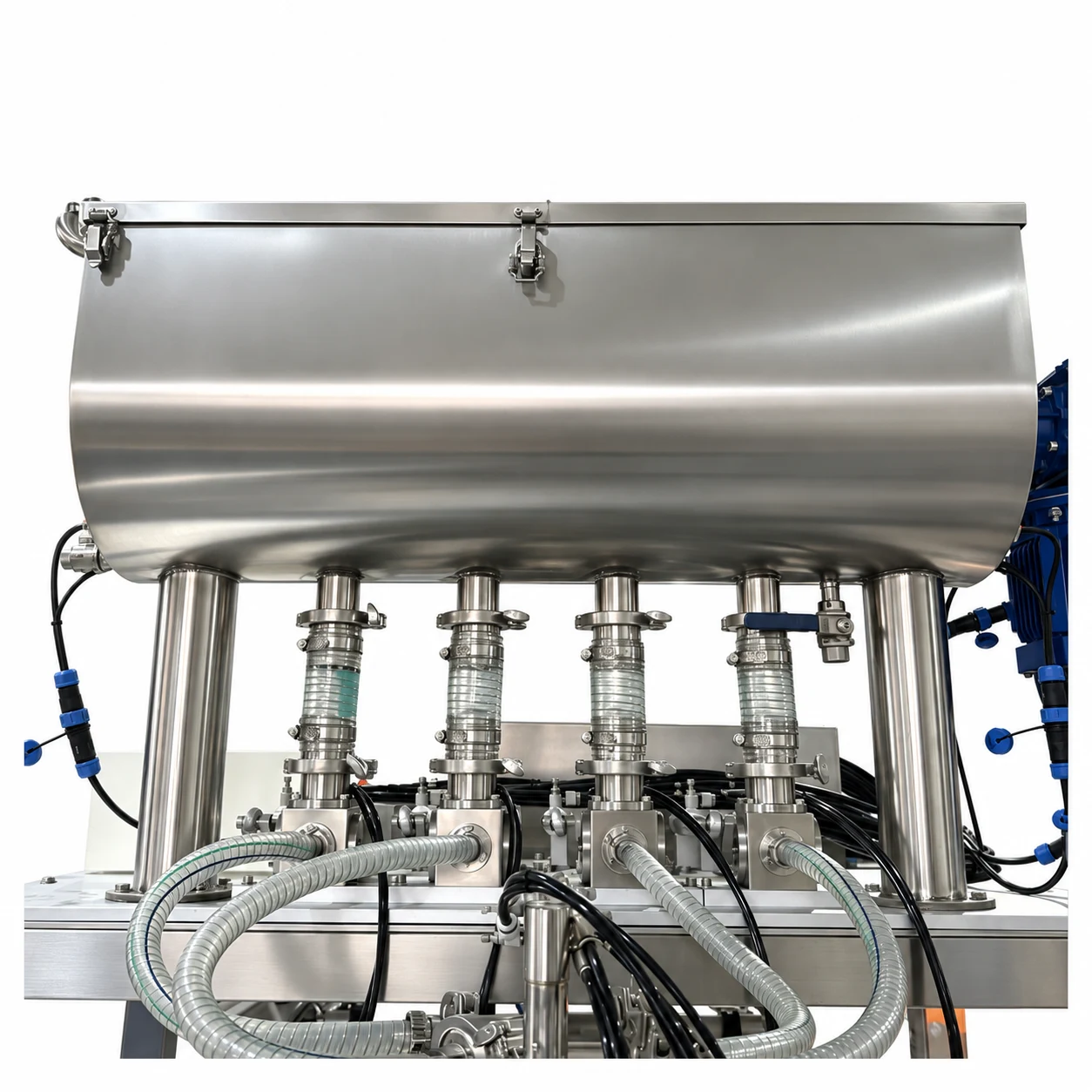
The hopper sits between preparation and dosing, so its operating conditions deserve attention. Describe whether the sauce arrives in batches or through a continuous transfer, how long it may wait, and how its consistency changes during that period. Where a recipe needs controlled temperature or mixing, discuss the intended conditions with the product team before choosing an optional heated or agitated hopper.
Clarify who supplies the transfer equipment, level monitoring and any control signals between the source vessel and the filler. Include access to the hopper lid and product connections in the installation drawing. A stable operating plan also needs a refill sequence: operators should know how replenishment is performed and which checks follow an interruption. Record these details in a configuration brief rather than assuming the tank alone resolves product handling.
Match valves and outlets to the actual sauce
Piston-based dosing is one available starting point for pumpable sauces and pastes. Review the proposed valve and outlet with representative material, especially when the recipe contains particles. Provide the typical and largest piece dimensions, whether the pieces are soft or firm, and how much product damage is acceptable. A larger opening may change other aspects of the package or filling cycle, so evaluate it as part of the complete process.
Observe what happens at the end of each dose, because cutoff behavior, not the portion setting, decides whether the seal area stays clean. Drips or trailing product can reach a surface that needs to remain suitable for sealing. Discuss outlet positioning and shut-off behavior without treating an anti-drip feature name as a guarantee. Keep photographs and observations from the trial together with the product conditions so later adjustments can be compared with a clear starting point.
Choose sachets and pouches by their packaging process
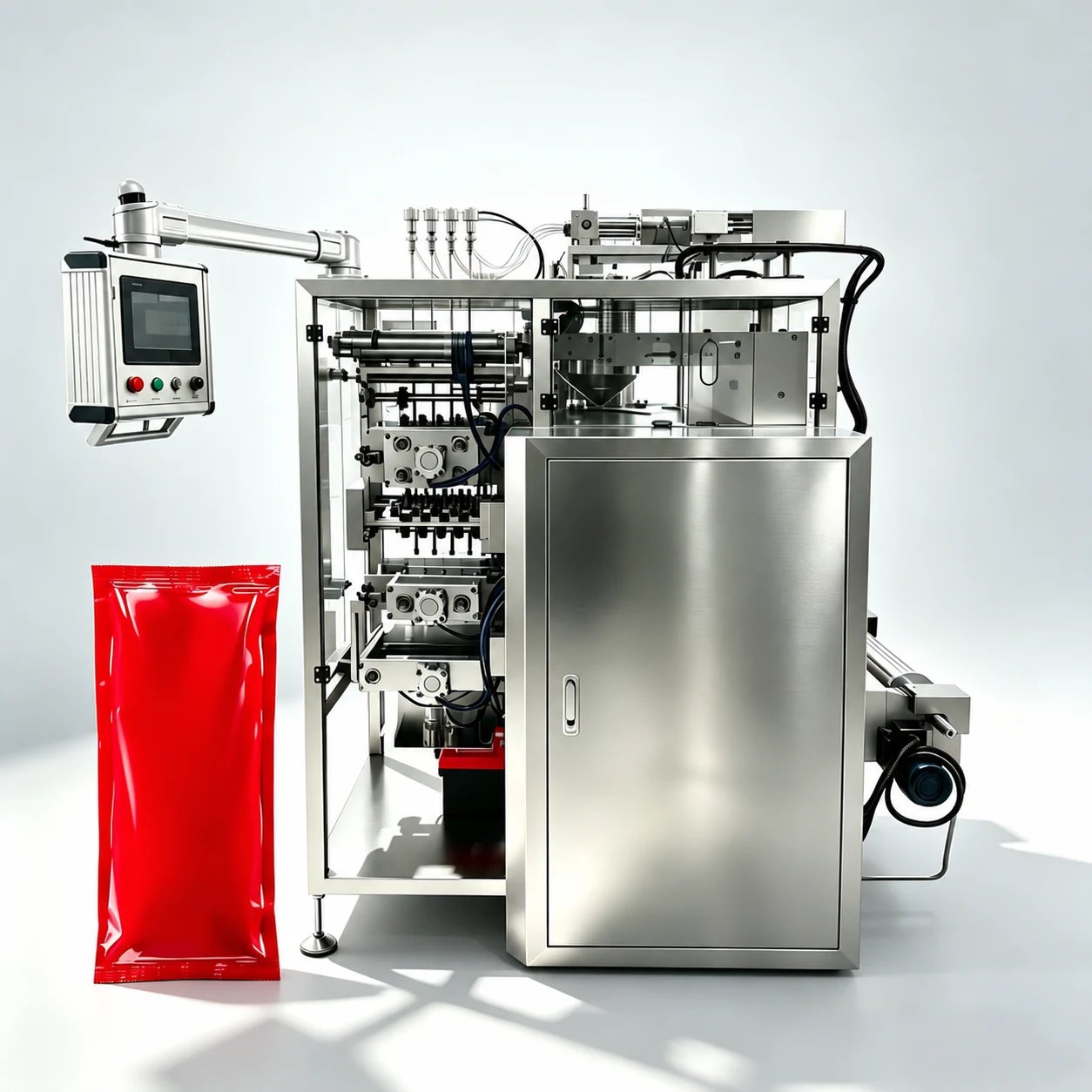
A four-side-seal sachet is formed from packaging film within the machine sequence. Premade pouches enter as finished bags and require a different handling arrangement. Select the intended format before comparing machine dimensions or output. Provide the portion size, pack dimensions, opening features, seal areas and artwork requirements. For a retail multipack or food-service portion, also describe how individual packs will be collected after discharge.
Review the film or pouch with the converter and equipment team. The package must suit the intended filling and sealing sequence, including any print registration or easy-opening feature. Confirm which format parts are included and which additional sizes need separate tooling. A change in sachet width or portion volume should be checked against both the dosing arrangement and the sealing layout, even if the new pack looks similar to the original.
Evaluate the seal area as well as the fill amount
Define the finished-pack checks before running a sample. Record how net content will be measured, which seal observations are required and how samples will be identified. For a multi-lane arrangement, collect packs from each active lane rather than relying only on a combined average. Include pack appearance and coding if those functions are part of the proposed scope.
Use the actual sauce and packaging where possible. A water demonstration may show mechanical movement but leave questions about a thick or particulate recipe unresolved. Record the conditions and any adjustments made during the run. If the agreed checks are not met, identify the next action: changing a component, revising a setting, reviewing the packaging or repeating the trial. Keep leakage or shelf-life claims separate from what the demonstration actually establishes.
Plan cleaning between contrasting recipes
A line alternating between tomato sauce, a pale dressing and a strongly flavored condiment needs a clear changeover sequence. Map the contact path from the supply connection to the filling outlet and identify where material remains after draining. Review removal, cleaning, inspection and reassembly of the relevant parts with the team responsible for production. Access to a connection is as important as the way it appears in a drawing.
Agree how ingredient segregation and cleaning completion will be handled within your operating procedures. Do not equate a quick-release fitting with an approved cleaning result. When scheduling a changeover, include draining, part handling, cleaning, drying where required, reassembly and the checks needed before restarting. That complete sequence provides a more useful planning basis than an isolated mechanical change time.
Connect sachet output to the rest of production
The filling machine receives sauce from upstream equipment and hands packages to a downstream process. Review both ends of that arrangement. Identify the available product supply rate, the expected film-replenishment routine and the capacity of coding, inspection and pack collection. Where secondary packaging is included, document how individual sachets reach that station and who supplies the transfer equipment.
Specify the required result as acceptable packs within a stated period. Ask which product, portion and format were used for any proposed output figure. During an assessment, keep a record of stoppages and rejects so the team can distinguish a dosing issue from a film, supply or collection issue. A coordinated line layout and a defined counting point make capacity discussions easier to assess.
Send the details needed for a sauce project review
Prepare an inquiry with the recipe category, filling temperature, target amount, intended sachet or pouch, particle information and required acceptable output. Add a short video of the sauce flowing, photographs of the current pack and any available film or pouch drawing. Explain whether the product supply system and downstream packing equipment already exist or need to be included.
Our team can use these details to discuss an initial liquid or paste configuration and identify sample questions. If the product or packaging is still changing, state what is provisional before tooling is considered. The next useful deliverable is a written scope showing the hopper and dosing arrangement, packaging process, optional modules and review conditions. Use the project contact link to share the information available and organize that discussion.
Common questions
Should sauce portions go in a sachet or a premade pouch?
Choose the finished package first, because it determines the machine. Four-side-seal sachets are formed from film inside the machine and suit small single portions, while premade pouches arrive as finished bags and need a different handling arrangement. Provide portion size, pack dimensions, seal areas and opening features before comparing machine dimensions or output.
Can water be used for a sauce filling demonstration?
Water can show that the mechanism moves, but it cannot show how your sauce doses, cuts off or reaches the seal. Thick, particulate or separating recipes behave differently, so use the actual sauce and packaging wherever possible, and record any substitute used together with the questions it leaves open.
How should changeovers between different sauces be planned?
Plan the full sequence, not just the mechanical change. Map the contact path from supply connection to outlet, identify where sauce remains after draining, and schedule part removal, cleaning, drying, reassembly and restart checks. Ingredient segregation and cleaning completion follow your own procedures; a quick-release fitting is not an approved cleaning result.
Updated: