
Explore the options
Matcha Powder Dosing-Cap Filling System
Plan a matcha dosing cap filling system around cap orientation, fine powder micro-dosing, rim protection and foil sealing checks before you request a review.
Honey Dosing-Cap Filling Line
Review a honey dosing cap filling line from tank supply and clean cutoff to membrane sealing, cap handling, optional wrapping and restart checks.
Understand the package before choosing the dosing system
A dosing cap filling machine places a measured ingredient inside the cavity of a purpose-designed closure. The finished cap may be intended to release that ingredient into a drink or another receiving container later. This is a specialized packaging task, distinct from filling the main bottle or tightening a conventional cap onto it. The component design is therefore a central input to the equipment discussion.
Start with drawings of the cap, cavity, sealing rim and any mating components. Include production-intent samples and explain the intended opening or activation sequence. The equipment team needs to understand how the cap is presented, supported, filled and sealed. A retail concept image can explain the idea, but it cannot replace the dimensions and material information needed to review tooling and handling.
Choose the powder or viscous-liquid route
The two examples in this category focus on matcha powder and honey. A powder project raises feeding, micro-dosing and dust questions; a honey project emphasizes product supply, cutoff and residue around the rim. Both use a defined cavity, but they should not be treated as identical filling configurations simply because their external cap shapes appear similar.
Describe the actual ingredient under its expected operating conditions. For a powder, include settling, clumping and transfer observations. For a viscous liquid, include the normal filling temperature, consistency and any inclusions. State the intended dose and its unit. These details guide the review of the metering arrangement and help identify what a representative sample trial should investigate for the chosen packaging design.
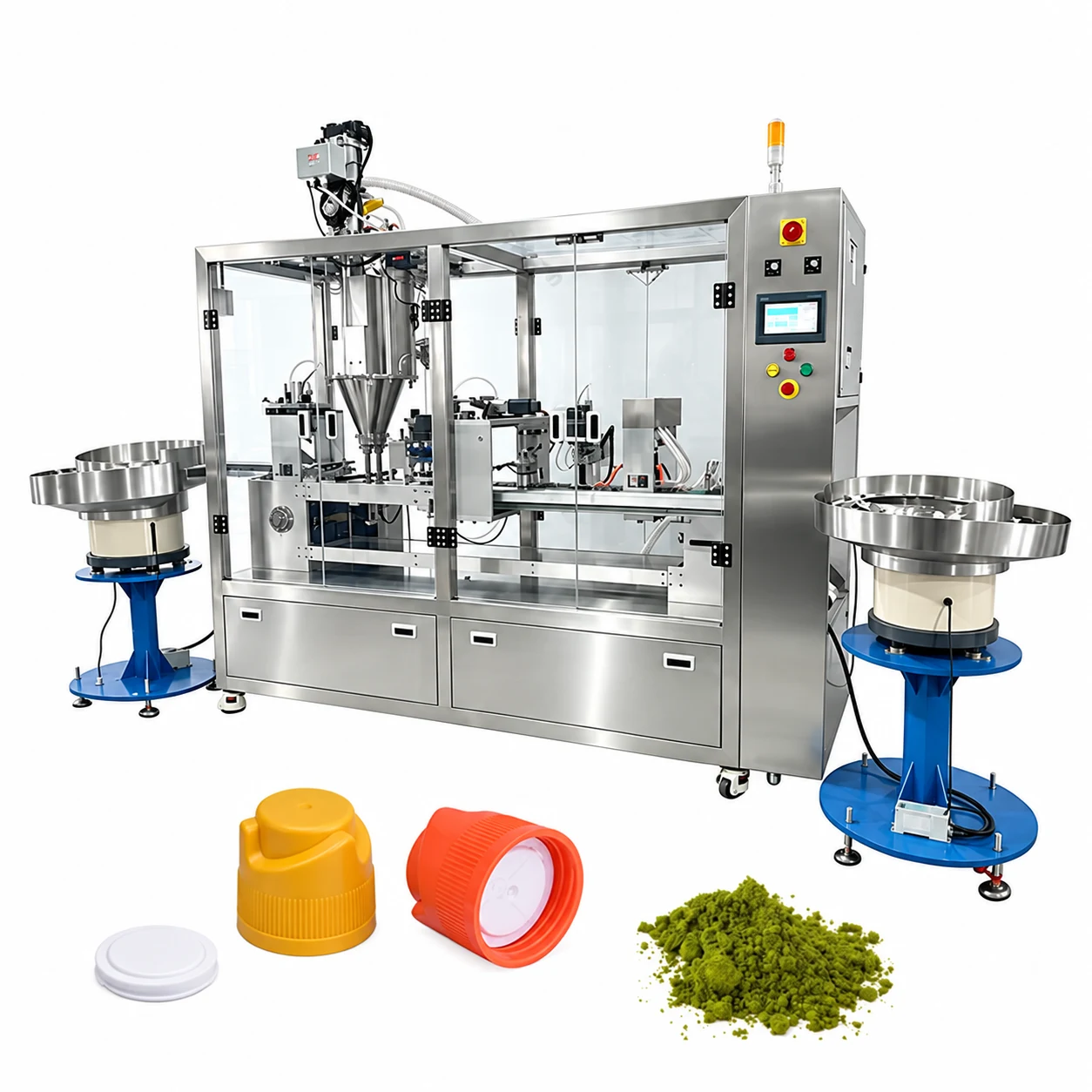
Review component presentation from the feeder
Loose caps need to reach the filling position in a suitable orientation. The feeder, track and transfer tooling should be considered alongside the component's shape, surface and dimensional variation. Send samples from the intended production material and identify any differences between prototypes and the parts planned for routine manufacturing. Those differences may be relevant to the handling assessment.
Ask how the proposed arrangement presents and supports the cap without interfering with its functional surfaces. Discuss the supply method, replenishment and what happens when a component is absent or incorrectly positioned. A bowl-feeder photograph introduces one handling approach; the actual track and tooling need to be matched to the selected cap. Keep that component review connected to the rest of the filling sequence.
Match the dosing outlet to the usable cavity
The useful filling space is the part of the cavity that the outlet can reach and fill cleanly, and it depends on the cavity shape and the access available to the outlet. Discuss the target amount together with the component drawing and the required condition before sealing. A dose that fits by nominal volume still needs to enter the cap cleanly under the proposed operating conditions. Include how the part is held during this step.
For powder, focus the trial on material delivery and the condition of the surrounding rim. For honey, observe the end of delivery and any product trailing from the outlet. Record the quantity measurement method and samples used. These observations support a specific tooling discussion instead of relying on a universal precision or no-spill claim across different ingredients and cavity designs.
Treat the sealing rim and membrane as an interface
A dosing-cap project needs information about both the cap and the sealing material. Provide the rim dimensions, material specification and intended foil or membrane. Explain any opening or activation requirement that the finished package must support. The seal process is part of the configuration review, and its evaluation should use the intended components whenever practical.
Agree checks for the filled rim, membrane placement and finished closure condition. Include representative handling after sealing if that is part of the assessment. Equipment operation alone does not establish product shelf life or the behavior of the complete consumer package. Those questions need appropriate packaging evaluation under defined conditions, with responsibilities shared clearly between the equipment and product-development teams.
Define inspection, coding and secondary packaging
Identify what happens after the cap is sealed. It may be collected as a component, coded, inspected or individually wrapped before another assembly step. Each operation changes the scope and the required condition of the discharge. Describe the destination of the filled cap so the proposed line can be assessed as a complete sequence up to an agreed boundary.
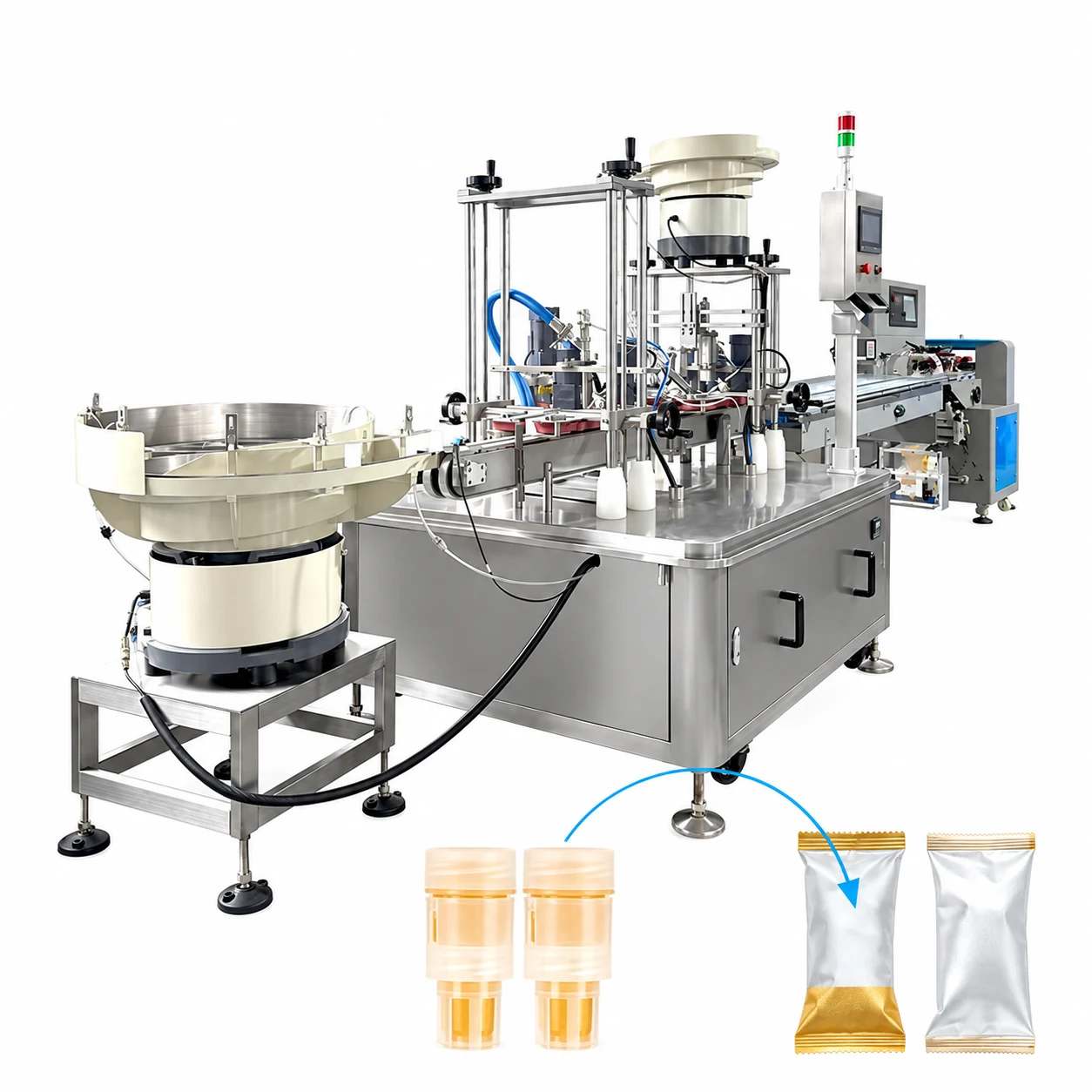
Ask which inspection functions are included and what they are intended to detect. Define handling for accepted and rejected components where relevant. If wrapping is required, provide the wrapper format and material information. A picture of an integrated installation is a starting illustration; the supplied modules, control interfaces and downstream responsibilities belong in the written proposal for your particular cap project.
Plan tooling changes and product-contact access
A different cap geometry can affect feeder tooling, holders, the filling outlet and the sealing interface. List the formats planned for the machine and prioritize those needed at startup. Ask which parts change and how they are identified. A clear list of format parts is more useful than assuming that every adjustment can be made from a screen.
Review access for material removal and cleaning separately from component-format changes. Powder-contact parts and viscous-liquid paths involve different operating tasks, even if they are installed on a similar handling platform. Provide the intended cleaning procedure and discuss component removal, drying and storage. Include restart checks so the changeover plan ends with an acceptable filled and sealed cap, not merely an assembled machine.
Prepare a cap-development brief for an equipment review
Send the ingredient description, target dose, cap drawings, component samples, sealing material and desired output. Include the intended opening mechanism and downstream packaging sequence. Mark any packaging dimensions still under development. This allows the team to identify which equipment questions can be reviewed now and which depend on a later component decision.
Use the matcha and honey machine pages to explore the two dosing routes in more detail. A focused assessment can examine presentation, portion delivery, rim condition and sealing using the agreed samples. The project specification should then identify tooling, included modules, utilities and verification conditions. Keeping the ingredient, cap and closure material in the same discussion provides a practical basis for developing the proposed filling system.
Common questions
What is a dosing cap?
A dosing cap is a closure with a sealed internal cavity that holds a separate ingredient, such as a powder or honey, until the consumer opens or activates it. Filling one means feeding and orienting the cap, dosing into the cavity and sealing it with a foil or membrane, which is a different process from filling a bottle and capping it.
What drawings and samples are needed for a dosing-cap project?
Send dimensioned drawings covering the cavity, sealing rim, material and any mating components, plus production-intent cap samples. Add the foil or membrane specification and the intended opening or activation method. Prototype parts are useful for an early discussion, but tooling and handling need the dimensions and material of the component planned for production.
Can one dosing-cap machine fill both powder and honey?
Not by assumption. Powder and honey caps may share a cap concept, but powder raises feeding, micro-dosing and dust questions, while honey raises supply, cutoff and residue on the rim. Each ingredient needs its own feeding, outlet and cleaning review, so list every product you plan to run on the same system before a configuration is proposed.
Updated: