
Package honey inside a purpose-designed closure
A honey dosing-cap filling line places a measured honey portion into a dedicated cap cavity, then connects filling with the required closing and handling operations. This is different from filling a retail honey jar or applying a standard cap to a bottle. The product path and component tooling are designed around the specific cavity and its sealing interface.
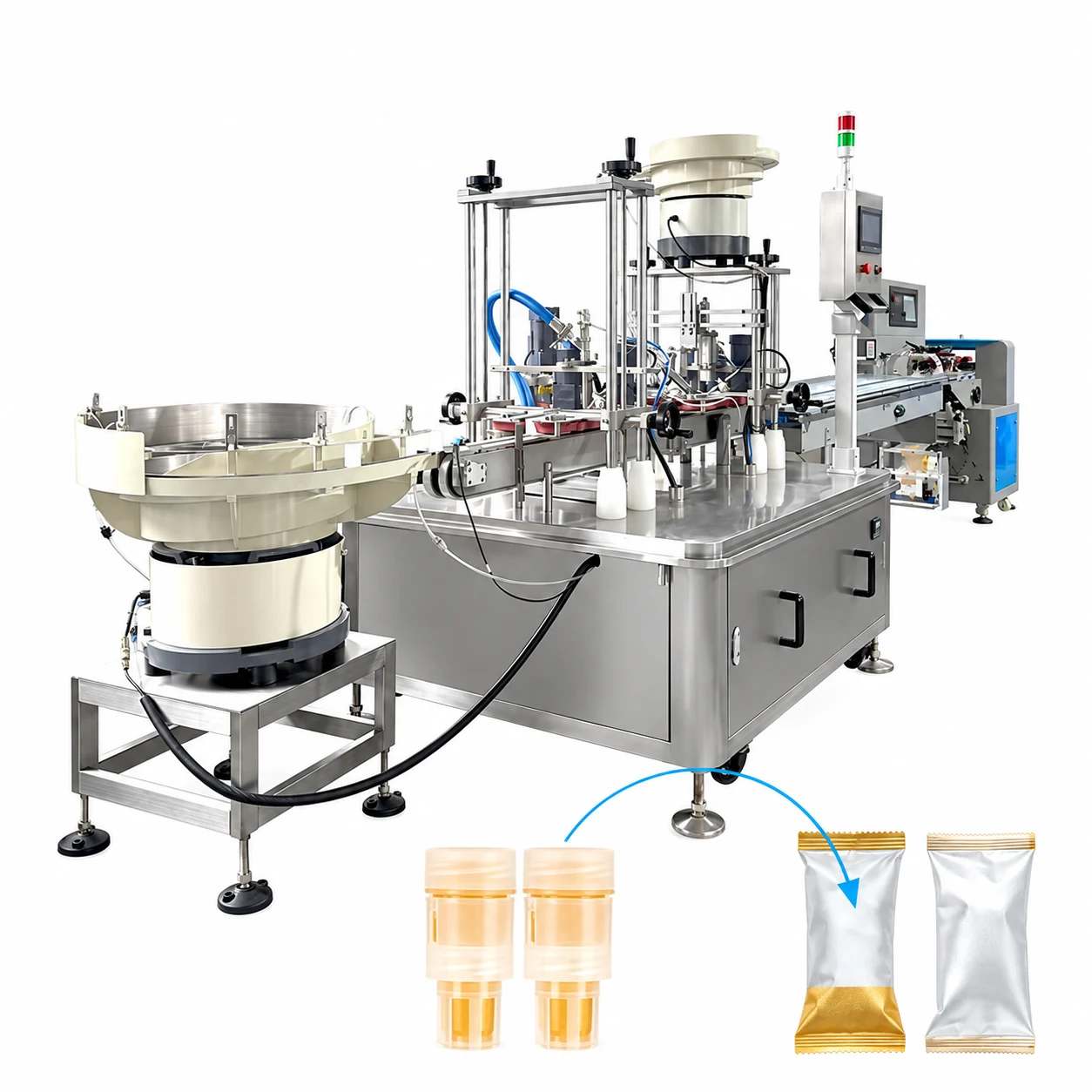
Begin with the complete cap assembly drawing and explain how the ingredient is intended to be released. Include the target quantity, component material and membrane or foil information. The line illustration introduces a possible arrangement with several connected operations; the proposal for your project should state which modules are included and where the supply ends, rather than relying on the image alone.
Define honey at its normal filling condition
Describe the honey as it will arrive at the dosing system. Include the normal filling temperature, consistency, transfer method and whether crystals or inclusions may be present. Explain the expected holding period and batch size. These details help identify the questions that need to be answered before a supply tank and metering arrangement can be specified.
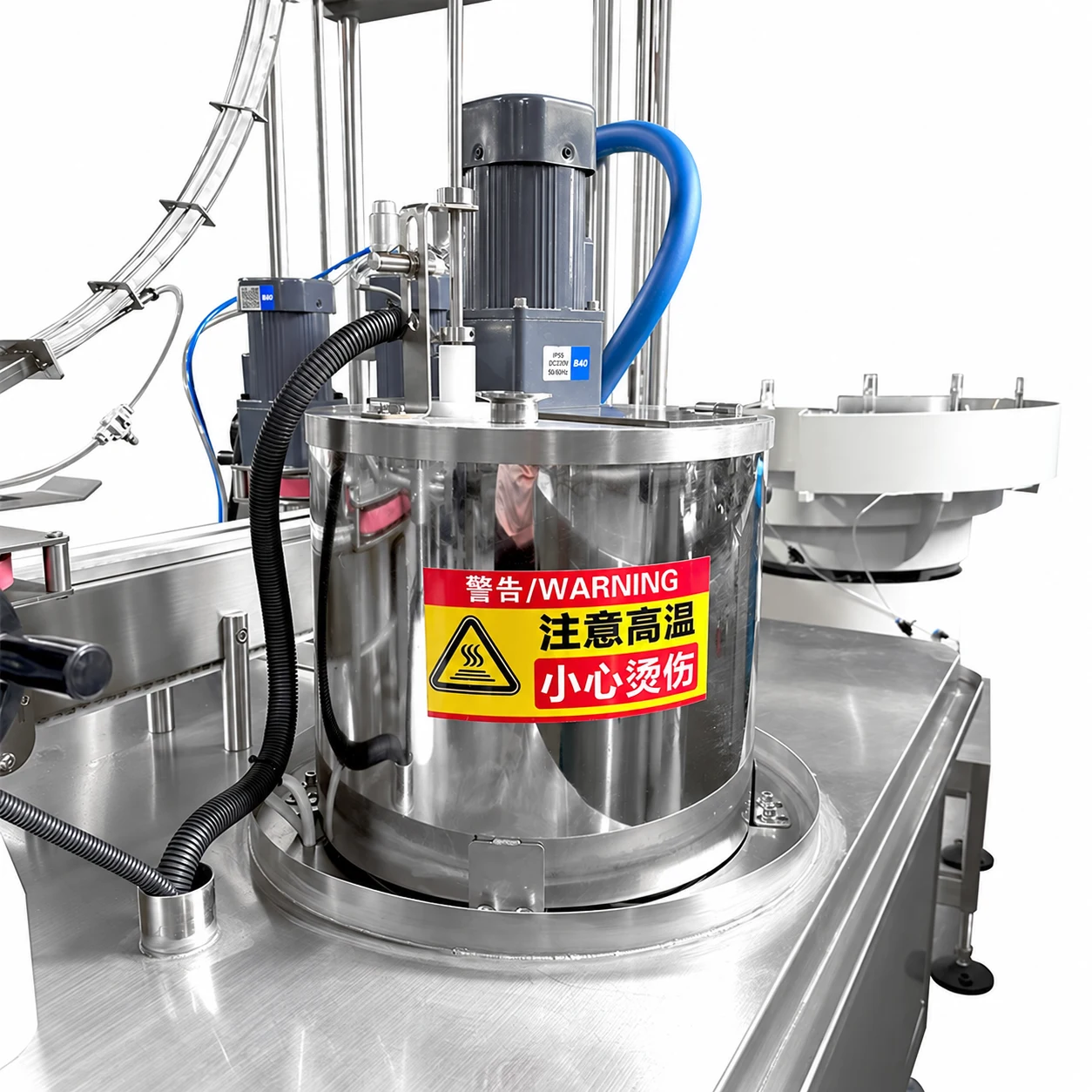
Temperature-related options should be discussed against the product requirements. A photographed tank with a heating warning illustrates one arrangement, but heating is not assumed for every honey project. State the conditions the ingredient team permits and the purpose of any requested control. The equipment discussion should connect those limits with supply, dosing and cleaning requirements without making product-quality claims from the appearance of a component.
Coordinate the tank, transfer path and dosing unit
Identify how honey enters the machine and who supplies any upstream transfer equipment. Review the tank, outlet connection and metering inlet as one path. Ask how replenishment, drainage and access are handled in the proposed arrangement. A representative supply setup is useful during assessment because a small freshly loaded sample may not cover every condition expected over a longer production run.
A volumetric metering route may be considered for the application, with the final mechanism and contact parts agreed against the honey sample. Discuss the required portion range and adjustment method. If acceptance is based on weight, define how filled quantities are measured and recorded. Keep the product condition attached to the result so that an adjustment can be interpreted in the context of the actual trial.
Deliver the portion without carrying honey onto the rim
The filling outlet needs access to the cavity while the cap is supported in its tooling. Review outlet position and dose completion using the intended component. Honey trailing from the nozzle or reaching the sealing flange is a practical observation for the assessment, because product on the flange sits between the rim and the membrane during sealing. A satisfactory quantity measurement and a clean closing surface are related requirements that should be reviewed together.
Ask how the proposed cutoff arrangement is evaluated and what settings or parts are involved. Record the condition of the cap immediately after filling, before another operation obscures it. If a different honey or portion is planned, include that change in the review. A broad anti-drip description should be translated into observed behavior under agreed product, temperature, quantity and cap conditions.
Connect filling with membrane placement and sealing
Provide the sealing rim dimensions, cap material and intended membrane or foil. Explain the consumer opening or activation method, because the finished closure is part of a larger packaging concept. Discuss the placement and sealing arrangement with those components available. The equipment specification should identify the relevant tooling and the materials used during the agreed review.
Check the rim condition, membrane position and finished closure using a defined procedure. Include any handling step needed to assess the output before collection or wrapping. A completed sealing cycle is an equipment event; it does not by itself establish storage life or every property of the finished package. Keep the packaging team's evaluation requirements connected to the line acceptance discussion and clearly assign responsibility for unresolved questions.
Decide whether the line includes individual wrapping
Filled caps may need further handling, coding or individual wrapping before they leave the agreed line boundary. Describe the intended output and provide any secondary-package drawing or film specification. The equipment image shows how these stages can be connected, while the written scope must name the supplied functions and the condition of the cap at each transfer.
Review component orientation, spacing and the handling needed between sealing and the next module. Ask what happens when downstream equipment pauses and how affected items are managed. If wrapping is supplied separately, identify the interface information and commissioning responsibility. This helps the production team compare proposals that end at the same point, with the same requirements for the finished component or wrapped item.
Plan cleaning, cap changes and restart checks
Honey-contact components need a defined method for product removal, access and reassembly. Discuss the site's intended cleaning procedure with the proposed tank, metering unit, connections and nozzle in view. Identify removable parts, available utilities and the place where components are cleaned and stored. The review should follow the complete product path, including connections that are less visible in an equipment photograph.
For cap changes, ask which feeder, holder and sealing parts are replaced or adjusted. Keep component revisions and setup information with the format tooling. A changeover is complete only after the new arrangement has been checked at startup. Include portion measurement, rim condition and closure checks so the line returns to an agreed operating condition after maintenance, cleaning or a format change.
Prepare a honey-cap line inquiry and verification scope
Send the cap drawings, component samples, honey description, normal filling condition, target quantity and required output. Include membrane information, the downstream packaging sequence, destination and available utilities. Identify the first production format and any later variants. Mark unfinished packaging decisions clearly so that the equipment review can distinguish confirmed requirements from items still being developed.
A useful assessment follows the ingredient and cap from supply through dosing, sealing and the agreed discharge point. Record acceptable output with the materials and operating conditions used. Our team can then discuss the included modules, format tooling and remaining verification questions. A clear proposal ties these details together, giving purchasing and production colleagues a shared basis for reviewing the complete honey-cap project.
| Review item | Information to confirm |
|---|---|
| Honey | Normal filling condition, consistency and inclusions |
| Component | Cavity, sealing rim and complete assembly drawing |
| Portion | Target amount, unit and measurement method |
| Contact path | Tank, metering, connections and cleaning access |
| Closure | Membrane material and intended activation method |
| Line boundary | Sealed-cap discharge or additional coding and wrapping |
Common questions
What is a honey dosing-cap filling line?
It is a line that feeds purpose-designed caps, fills a honey portion into each cap cavity, places and seals a membrane or foil, and can continue to coding, inspection or individual wrapping. It is not a conventional honey bottle-filling line; main-container filling or bottle capping should be identified as separate project requirements.
Does honey need to be heated before cap filling?
Not in every project. Heating is a configuration decision based on the honey's consistency at its normal filling temperature and the limits your ingredient team permits. Describe any crystals or inclusions, the holding time and the transfer method, and state the purpose of any temperature control you request so it can be reviewed against that purpose.
Is individual wrapping included in a honey cap line?
Only if it is written into the scope. Confirm whether the supply ends at sealed-cap discharge or continues through coding, inspection and wrapping, and who handles each interface. If wrapping equipment comes from another supplier, provide its format and interface information so commissioning responsibility is clear before the line is ordered.
Updated: